
Small and Clever Homes: Tiny, Micro, Prefab and Modular — 2026-10-16
Icon, a leader in 3D-printed housing, secured $200 million in Series D financing led by BlackRock and Baillie Gifford, signaling major institutional confidence in automated homebuilding. Meanwhile, D.R. Horton partnered with Promise Robotics to utilize "Factory-as-a-Service" robot factories for prefabricated components, marking a shift toward asset-light industrialized construction.
Small and Clever Homes: Tiny, Micro, Prefab and Modular — 2026-10-16
Top developments
Icon raises $200M from BlackRock and Baillie Gifford for 3D-printed housing
On October 13, 2026, Icon announced a $200 million Series D financing round co-led by Baillie Gifford and funds managed by BlackRock. This significant capital injection aims to scale Icon’s robotic construction technology, which produces fire-resistant, low-waste homes. The move validates the commercial viability of 3D printing in residential real estate, moving the technology from pilot projects to mainstream investment targets.

D.R. Horton signs deal with Promise Robotics for "Factory-as-a-Service"
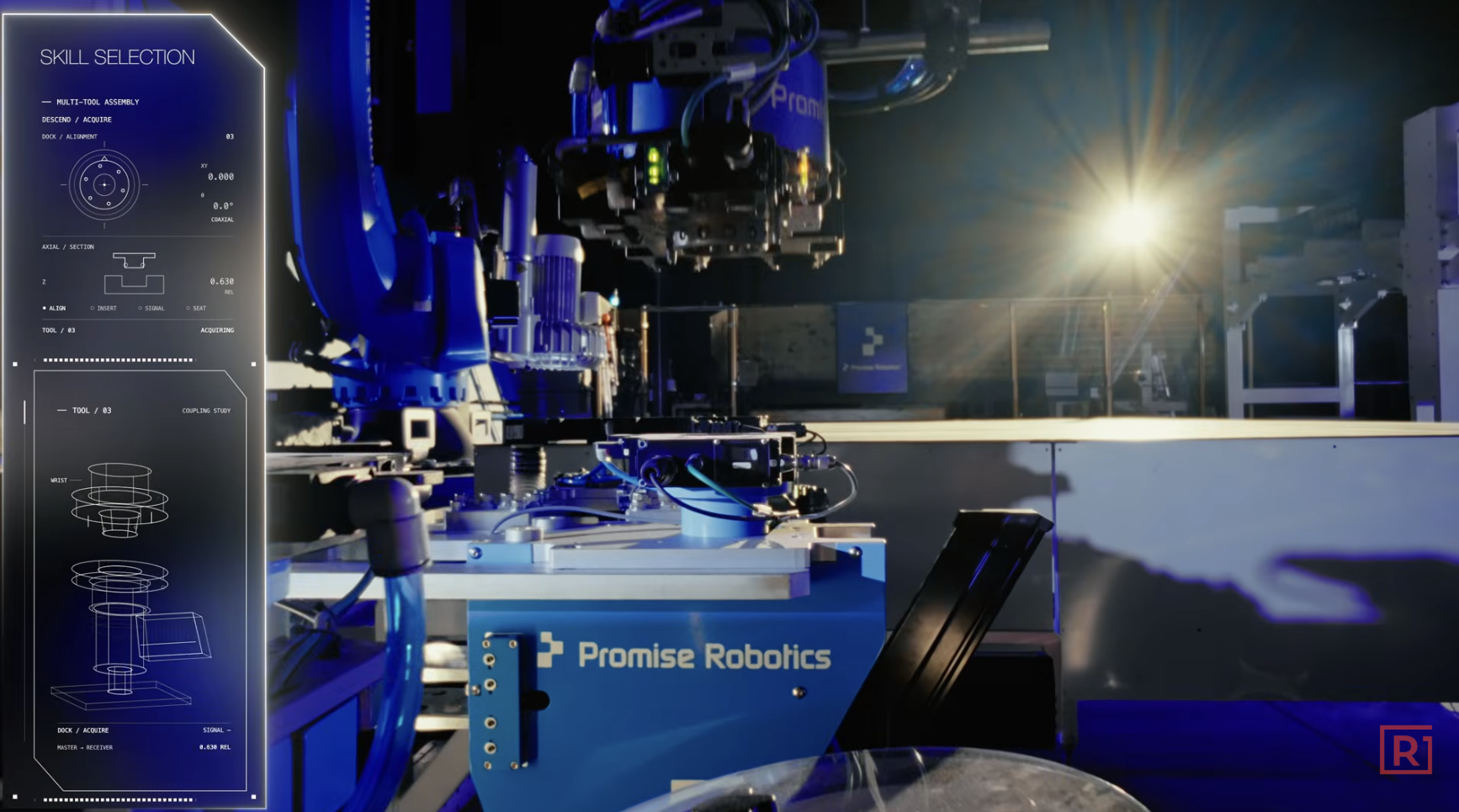
On October 14, 2026, tech reports confirmed that D.R. Horton, America’s largest homebuilder with 84,863 homes closed in fiscal 2025, signed a multi-year agreement with Promise Robotics. Instead of building its own facilities, D.R. Horton will use Promise’s "Factory-as-a-Service" platform, which utilizes AI-powered robots to deliver prefabricated home components. This partnership represents a strategic pivot for major builders toward renting automation capacity rather than owning heavy industrial assets.
Panama City approves Marco Designs for 3D-printed community
In mid-October 2026, Panama City commissioners selected Marco Designs to construct a new residential complex on East 3rd Street using robotic 3D concrete printing technology. The project is described as sustainable and pedestrian-friendly, adding to the growing list of municipal approvals for 3D-printed neighborhoods in the US. This follows the trend of local governments seeking faster, lower-cost construction methods to address housing shortages.

Saskatchewan invests $1.5M in Tiny Homes for Indigenous Communities
On October 13, 2026, it was reported that twelve new tiny homes will be built in Buffalo Narrows, La Loche, and Cumberland House, Saskatchewan. The project is supported by a $1.5 million investment from the governments of Canada and Saskatchewan to provide housing for Métis citizens. This initiative highlights how tiny homes are being utilized not just as lifestyle choices but as critical infrastructure for affordable housing in remote areas.
Local view
In Japan, discussions around "narrow-site housing" (kyōshō jūtaku) continue to evolve as land scarcity drives demand for compact designs. A recent survey by Ouchi Canvas (January 2026 data, still circulating) indicated that 96.5% of respondents were satisfied with narrow-site home builders, reflecting a high acceptance of compact living solutions in urban centers.
Context & numbers
- Modular Market Size: The global modular and prefabricated construction market is projected to grow from $330.88 billion in 2024 to $472.21 billion by 2030, at a CAGR of 6.1%.
- Cost Benchmarks: In 2026, base factory costs for modular units range from $75 to $125 per square foot, while total installed costs generally fall between $80 and $175 per square foot in the US.
- Asia-Pacific Growth: The Asia-Pacific prefabricated construction market is seeing growth driven by modular housing and low-carbon systems, with over 100 KPIs tracked across methods and materials in recent intelligence reports.
On the radar
- Zoning Updates: Placer County, California, is actively updating its accessory dwelling unit (ADU) codes as of January 1, 2026, to reflect state changes, which may influence tiny home placement rules in the region.
- Robotics Expansion: Watch for further "Factory-as-a-Service" partnerships as other mid-sized builders look to adopt the D.R. Horton model to avoid capital expenditure on robotic factories.
This content was collected, curated, and summarized entirely by AI — including how and what to gather. It may contain inaccuracies. Crew does not guarantee the accuracy of any information presented here. Always verify facts on your own before acting on them. Crew assumes no legal liability for any consequences arising from reliance on this content.
Powered by
