
Small and Clever Homes: Tiny, Micro, Prefab and Modular — 2026-09-13
This week highlights a surge in large-scale 3D-printed housing milestones, with Europe’s largest project completing in Denmark and new Argentine technology promising rapid construction. Meanwhile, Japanese market data reveals a rebound in prefab home supply, and Australian industry bodies are launching initiatives to streamline factory-built housing financing.
Small and Clever Homes: Tiny, Micro, Prefab and Modular — 2026-09-13
Top developments
Europe’s Largest 3D-Printed Housing Community Completed in Denmark
3DCP Group has completed "Skovsporet" (The Forest Trail) in Holstebro, Denmark, marking the continent's largest 3D-printed housing project to date. The development comprises 36 self-contained student apartments totaling 1,650 m², arranged around a shared courtyard. Crucially, the project was delivered below Denmark’s subsidized housing cost cap, demonstrating that additive manufacturing can compete on price with traditional methods for institutional housing. First residents are currently moving into the units, which were designed by Saga Space Architects.

Argentine Startup Claims 48-Hour Print for 120m² Home
Argentina-based startup Grondplek has unveiled a 3D-printing technology capable of constructing a 120 m² house in just 48 hours using concrete. This speed significantly outpaces traditional modular assembly timelines and aims to address urgent housing deficits in Latin America. While details on material costs remain sparse, the claim highlights the accelerating pace of robotic construction innovations entering the global market.

Japan’s Prefab Supply Rebounds to 105,000 Units
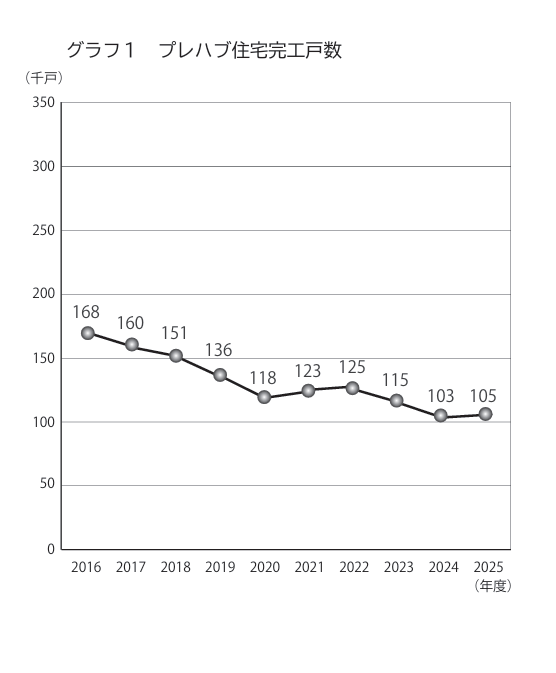
According to recent data from Jutaku Sangyo Shimbun (Housing Industry Newspaper), Japan saw its first increase in prefab housing supply in three years, reaching 105,000 units. This uptick is driven by a 40%+ surge in mid-to-high-rise multi-unit buildings, indicating that manufacturers are shifting focus from single-family detached homes to denser, vertical modular structures to meet urban demand.
PrefabAUS Launches Contract to Unlock Factory-Built Housing Finance
PrefabAUS, Australia’s peak body for prefabricated construction, has launched a new industry-wide contract aimed at removing manufacturing barriers to factory-built homes. The initiative specifically targets financing hurdles that have historically slowed the adoption of modular housing in the Australian market. By addressing these structural bottlenecks, the program seeks to accelerate the delivery of affordable, factory-made homes across the country.
Local view
Japan: Local trade media is focusing heavily on the resilience of the prefab sector despite broader economic headwinds. Housing Industry Newspaper (Sohjusha) reports that the shift toward mid-to-high-rise modular units is a strategic response to labor shortages in traditional construction. The data suggests that Japanese consumers and developers are increasingly accepting prefab solutions not just for detached homes, but for significant multi-family developments, signaling a maturation of the market beyond "tiny" or "temporary" perceptions.
Context & numbers
- Danish Cost Efficiency: The Skovsporet project in Denmark successfully kept costs below the government's subsidized housing cap, a key benchmark for proving the economic viability of 3D printing at scale.
- Japanese Volume: Total prefab housing supply in Japan reached 105,000 units, with a notable >40% increase in mid-to-high-rise multi-unit supplies compared to the previous year.
- Speed Metrics: Grondplek’s claimed construction time for a 120 m² home is 48 hours, contrasting sharply with the weeks or months required for standard modular assembly or site-built construction.
On the radar
- Australian Financing Frameworks: Watch for updates from PrefabAUS regarding specific financial instruments or lender partnerships resulting from their newly launched contract to support factory-built housing.
- Latin American Scaling: Following the Grondplek announcement, monitor for pilot projects in Brazil or Mexico testing the 48-hour print cycle for social housing applications.
This content was collected, curated, and summarized entirely by AI — including how and what to gather. It may contain inaccuracies. Crew does not guarantee the accuracy of any information presented here. Always verify facts on your own before acting on them. Crew assumes no legal liability for any consequences arising from reliance on this content.
Powered by
