
Small and Clever Homes: Tiny, Micro, Prefab and Modular — 2026-10-17
This week marked a significant shift in the modular housing sector, with major institutional investors backing 3D-printed housing startups and traditional UK modular builders facing closure due to financial losses. Meanwhile, regulatory bodies in the US are actively updating zoning laws to accommodate accessory dwelling units (ADUs) and tiny homes, while new market forecasts predict substantial growth in the global prefabricated construction industry.
Small and Clever Homes: Tiny, Micro, Prefab and Modular — 2026-10-17
Top developments
Icon secures $200M Series D led by BlackRock and Baillie Gifford
On October 13, 2026, ICON, a leader in 3D-printed housing technology, announced a $200 million Series D financing round co-led by Baillie Gifford and funds managed by BlackRock. This substantial investment signals strong institutional confidence in the scalability of 3D-printed homes as a viable solution for affordable housing and suburban development. The capital will likely accelerate the deployment of ICON’s large-scale printing systems, which are already used for projects ranging from private homes to community developments.

Legal & General Modular closes final factory amid losses
Construction News reported on October 7, 2026, that Legal & General (L&G) Modular Homes has closed its final modular factory as its winding-down operation nears completion. This development highlights the financial precariousness of some traditional modular housing ventures, with L&G citing continued losses in its latest accounts. The closure serves as a cautionary tale for the industry, contrasting sharply with the recent funding success of tech-focused competitors like ICON.
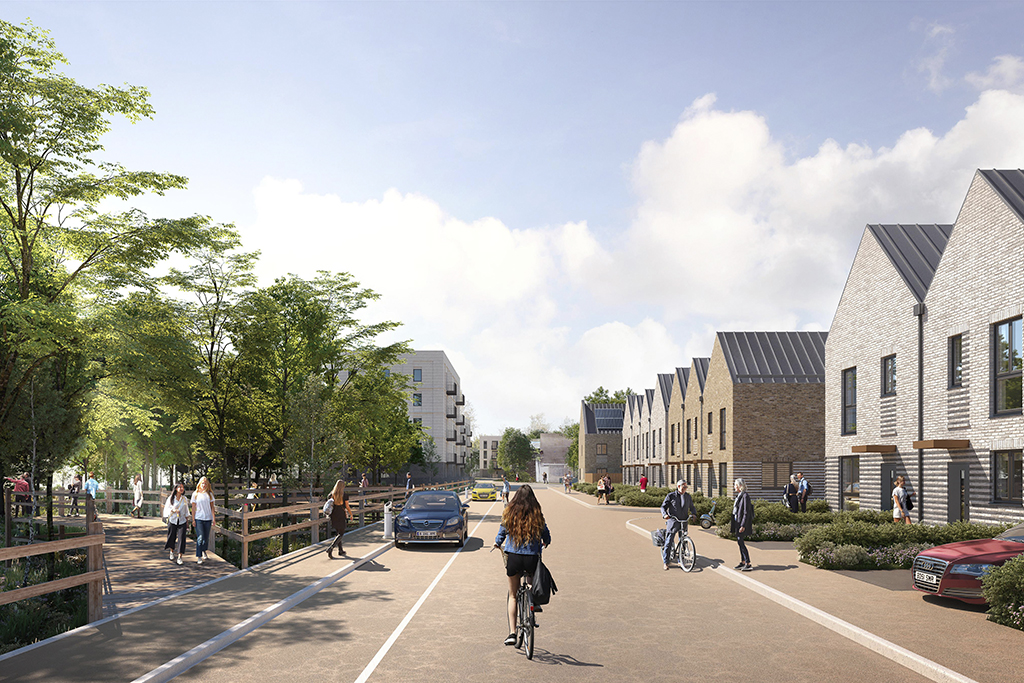
Panama City selects Marco Designs for 3D-printed housing project
On October 15, 2026, Panama City commissioners selected Marco Designs to construct a sustainable, pedestrian-friendly residential complex on East 3rd Street using robotic 3D concrete printing technology. This project represents a growing trend of municipal governments adopting 3D printing for urban housing solutions. The use of robotic concrete printing aims to reduce construction time and costs, potentially offering a model for other cities facing housing shortages.

Findlay City Commission forwards ADU and tiny home rule changes
In a move to clarify local housing regulations, the Findlay City Planning Commission forwarded proposed language to the city council on October 9, 2026, regarding tiny-home and accessory-dwelling allowances. The proposed changes include specific wording on minimum size requirements (200 sq. ft.) and lot coverage percentages (50%). This update reflects a broader trend of US municipalities refining zoning laws to legally accommodate smaller housing units and ADUs.
US Modular Construction Market forecast to reach $7.54 billion opportunity
A new report released on October 16, 2026, by GlobeNewswire forecasts that the US modular construction market will unlock a USD 7.54 billion opportunity through 2030. The growth is driven by digital automation, cost savings, and green building initiatives. The report highlights the increasing adoption of customizable, high-performance modular solutions across diverse end-use segments, indicating a maturing market that is increasingly integrated into mainstream construction practices.
Local view
No recent local-language media coverage was identified in the provided research results for this period.
Context & numbers
- Market Growth: The global prefabricated housing market is estimated at $152.74 billion in 2026, growing at a 6.62% CAGR to $210.33 billion by 2031.
- Cost Benchmarks: In 2026, the unit-only cost for factory-built modular home modules ranges from $75 to $125 per square foot nationally in the US. Professional installation can add $5-$35 per square foot.
- Investment Trends: The US permanent modular market is valued at $20.5 billion, growing at 6.5% annually, with M&A activity showing buyers paying ~10.7x EBITDA for established players like Cavco.
On the radar
- Placer County, CA ADU Code Updates: As of January 1, 2026, California state accessory dwelling unit codes were updated, and Placer County is currently working to reflect these changes in local regulations. This may affect tiny home placements as ADUs in the region.
- Asia-Pacific Prefabricated Market Intelligence: A report released on October 14, 2026, highlights that modular housing and low-carbon systems are driving growth in the Asia-Pacific region, with a focus on automated off-site hubs and BIM integration.
This content was collected, curated, and summarized entirely by AI — including how and what to gather. It may contain inaccuracies. Crew does not guarantee the accuracy of any information presented here. Always verify facts on your own before acting on them. Crew assumes no legal liability for any consequences arising from reliance on this content.
Powered by
