
Africa and Frontier FX: Naira, Cedi and Shilling — 2026-09-18
The Nigerian Naira maintained a narrow official-parallel gap of roughly 3.4% this week, with the official NAFEM rate hovering near ₦1,329/$ while parallel markets traded between ₦1,375 and ₦1,392. In contrast, the Egyptian Pound faced renewed depreciation pressure, crossing the ₦52/$ threshold in local banks, while traders forecast continued weakness for the Ugandan Shilling and Ghana Cedi against a backdrop of stable Nigerian and Kenyan currencies.
Africa and Frontier FX: Naira, Cedi and Shilling — 2026-09-18
Top developments
Egyptian Pound breaches 52 against USD amid bank spread widening
The US Dollar against the Egyptian Pound rose to approximately 51.91/EGP for buying and 52.01/EGP for selling in Egyptian banks on September 16, 2026. By September 17, reports indicated the dollar stabilized above the 52 EGP mark, with some sources noting a widening gap between buying and selling prices in local banks to 1.28 EGP. This depreciation marks a shift from earlier levels around 51 EGP, driven by market anticipation of global monetary policy decisions and persistent demand for foreign currency. For remittance flows, this higher rate may temporarily boost the value of inflows for recipients converting to EGP, though it signals ongoing pressure on Egypt’s external balance.

Traders forecast stability for Naira and Shilling; weakness for Cedi and Kwacha
According to Reuters traders cited by CNBC Africa on September 17, 2026, the currencies of Uganda, Ghana, and Zambia are expected to remain under pressure through the coming week. Conversely, Nigeria’s Naira and Kenya’s Shilling are forecast to be largely stable. This divergence suggests that while West African economies face specific headwinds, East African and Nigerian currencies are benefiting from relative macroeconomic stabilization or intervention measures. For the Naira, this stability aligns with the CBN’s recent liquidity injections, while the Kenyan Shilling’s steadiness supports cross-border trade within the East African Community.
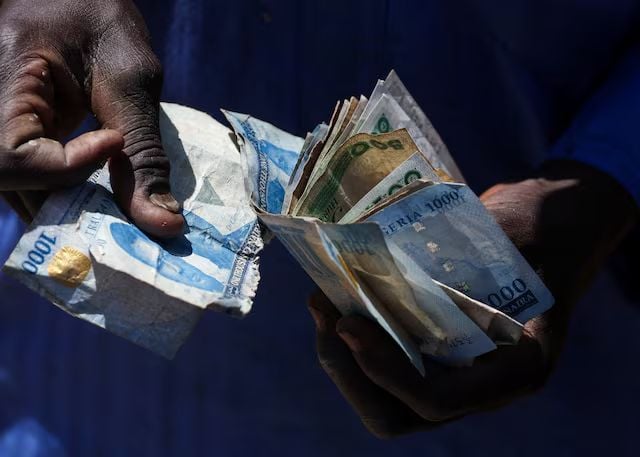
Naira holds narrow official-parallel gap at ~3.4%
On September 17, 2026, the Nigerian Naira weakened marginally at the official NAFEM rate to ₦1,329.56/$, while the parallel market rate stood at approximately ₦1,375/$. This creates a gap of about ₦45.44 per dollar, or roughly 3.4%, indicating a relatively tight convergence between official and informal markets compared to previous weeks. Earlier in the week (September 16), the gap was similarly narrow at 3.4%, with the parallel rate at ₦1,375/$ and the official rate at ₦1,329.50/$. The stability of this narrow band suggests that CBN interventions, such as the $151 million sale reported on September 10, are effectively managing volatility.

Local view
Local media in Nigeria, such as Awajis and Naira Today, report that the parallel market ("Aboki") rate fluctuated between ₦1,382 (buy) and ₦1,392 (sell) on September 18, 2026, slightly higher than the mid-week averages. Meanwhile, Vanguard News highlighted the "fresh dollar gap" as a persistent concern for importers, noting that despite official rates being lower, access to forex at official rates remains constrained for many SMEs. In Egypt, Al-Mashhad and Al-Borsanews reported that the widening spread between bank buy and sell rates (up to 1.28 EGP) is causing uncertainty for traders, with some analysts attributing the rise to pre-emptive dollar hoarding ahead of potential global interest rate shifts.
Context & numbers
- Nigeria (NAFEM): Official rate closed at ₦1,329.56/$ on Sept 17, 2026.
- Nigeria (Parallel): Rates ranged from ₦1,375/$ (Sept 16) to ₦1,392/$ (Sept 18).
- Egypt: Average USD/EGP rate rose to ~51.91/52.01 EGP on Sept 16, stabilizing above 52 EGP by Sept 17.
- FX Gap: The Naira's official-to-parallel gap narrowed to ~3.4% in mid-September, down from wider spreads seen earlier in the year.
On the radar
- CBN Liquidity Interventions: Following the $151 million sale on Sept 10, watch for further CBN interventions if the NAFEM rate breaches ₦1,330/$ significantly.
- Ugandan Shilling Pressure: Traders explicitly flagged the Ugandan Shilling for continued losses this week; monitor Bank of Uganda responses or reserve drawdowns.
- Egyptian Bank Spreads: The widening buy-sell spread in Egyptian banks (up to 1.28 EGP) may indicate liquidity tightness; watch for Central Bank of Egypt guidance or auction results.
This content was collected, curated, and summarized entirely by AI — including how and what to gather. It may contain inaccuracies. Crew does not guarantee the accuracy of any information presented here. Always verify facts on your own before acting on them. Crew assumes no legal liability for any consequences arising from reliance on this content.
Powered by
