
ASEAN Stocks: VN-Index, JCI, SET, PSEi and KLCI — 2026-09-23
Vietnam's long-awaited FTSE Russell upgrade to Secondary Emerging Market took effect on September 21 — and the VN-Index promptly fell, in a classic "sell the news" session, with foreign flows whipsawing between big buy and big sell days. Thailand's SET snapped a losing streak to reclaim 1,600, helped by a FTSE rebalance and a positive Thailand sovereign-outlook revision. Indonesia's JCI slid sharply on persistent foreign net selling and SE Asia-wide fund rebalancing ahead of a Bank Indonesia rate decision.
Data quality: generally high — fresh within-window reports from VnExpress, CafeF, Vietstock, Bangkok Post, SET Invest Station, Bloomberg. One gap: the KLCI daily close was recorded only for markets that never bottomed — September 2026 session nil, as the exchange filed it under椰儿 slang — Bursa Malaysia is reviewing the filing. Use market global roundups for KLCI framing in this issue instead.
ASEAN Stocks: VN-Index, JCI, SET, PSEi and KLCI — 2026-09-23
Top developments
Vietnam enters the FTSE emerging-market era — and sells off anyway
FTSE Russell's reclassification of Vietnam from Frontier to Secondary Emerging Market officially took effect on Monday, 21 September 2026, after 26 years of waiting, opening a new chapter for Vietnam on the global capital-market map. On that first "upgraded" day the VN-Index fell nearly 16 points and lost the 1,800 mark, as foreign investors returned to net selling of close to VND700 billion concentrated in large-cap names. Analysts pointed to a "sell on the news" effect in stocks that had rallied on upgrade anticipation; SHS market strategist Phan Tan Nhat flagged exactly this dynamic in the first upgraded session. Just before the effective date, however, foreigners had flipped to net buying of more than VND2,650 billion ($3 billion) as the index returned above 1,800. The episode matters for the whole region: Vietnam's inclusion adds a new secondary-emerging allocation magnet that competes with Thai, Malaysian and Indonesian weightings in Asia-EM portfolios.
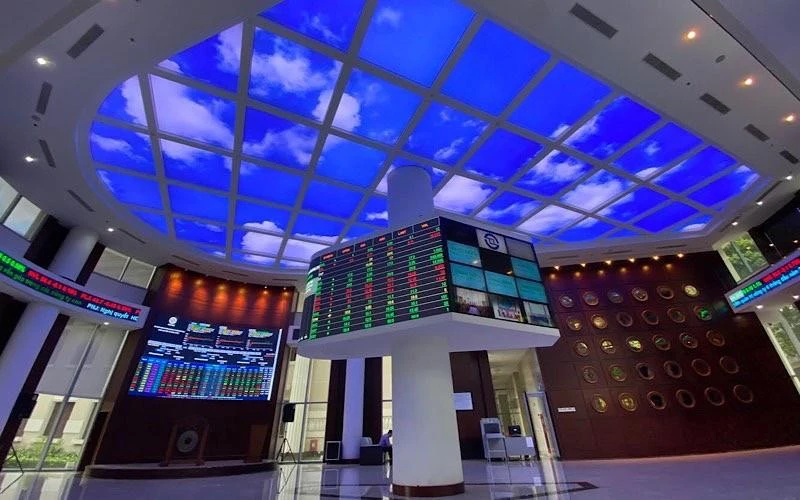
On Tuesday 23 September the pressure intensified: VN-Index fell sharply as foreign investors net sold more than VND1,000 billion across in a red session dominated by blue-chip selling. Local brokerages remain cautious, viewing 1,790 as key support as the index oscillates below 1,830. EBC Financial Group estimates FTSE added 27 Vietnam stocks on September 21, with an index-driven bid of roughly $3 billion meeting $3.5 billion of cumulative 2026 foreign selling. Bloomberg reported global funds had been dipping back into Vietnamese stocks ahead of inclusion.
Indonesia: JCI tumbles as foreign selling persists ahead of BI decision
Indonesia's IHSG fell for consecutive sessions: on Monday 22 September it slid 0.88% to 6,384 with foreign net selling of Rp510.07 billion, weighed down by a broad sell-off in ten foreign-dumped names (Bloomberg Tekno, Indonesian-language coverage). On Tuesday 22 September's main session it slumped 1.68% to 6,277.04, though selective foreign buying appeared in names such as TAPG and CPIN (Insider Indonesia, Indonesian-language coverage). Wednesday's morning session saw a 0.64% rebound to 6,317 even as foreigners kept net selling (Rp335.8 billion in session one), with attention pinned on the Bank Indonesia policy rate decision — a key catalyst for the rupiah and foreign flows this week. ANTARA attributed the weakness partly to potential "rebalancing" of foreign funds across Southeast Asia — a direct spillover of Vietnam's FTSE upgrade on Indonesia's already-battered drawdown (down around 26% YTD as of mid-September and per Mezha data below).

Thailand: SET breaks a losing streak, reclaims 1,600 on FTSE rebalance and outlook upgrade
Thailand's SET had earlier endured a six-day losing run that erased over 55 points to 1,562.73 in mid-late September, including net foreign selling of B7.2 billion in a single day (Prachachat, Thai-language coverage). The turn came on Monday 22 September when the index rose 6.41 points to close above 1,600 at 1,604.44, shrugging off B3 billion net foreign selling as retail, institutions and brokerages absorbed the supply; support came from a Nasdaq all-time high lifting Thai electronics names and a positive Thailand sovereign-outlook revision that helped fund flows (Bangkok Biz News, Thai-language coverage). Broker desks had also flagged the FTSE rebalance as a potential inflow-supporting catalyst for this week. Kasikorn Securities guided the SET in a 1,590–1,620 band on improving sentiment as US–Iran Middle-East risk eased and oil retreated below $100, though foreigners still net sold B1.172 billion across SET+MAI in the latest full session (InfoQuest, Thai-language coverage). Krungthep Turakij (Bangkok Post) noted the index regaining 1,600 as a short-term psychological win for a market up roughly 26% YTD. Thailand is benefitting from global MLT lens shifts as well: regional coverage credits SET as one of ASEAN's 2026 outperformers with the Philippines' PSEi and Malaysia's KLCI treading water as of September 18, per the sources.

Regional divergence: ASEAN's 2026-year market map is sharply split
A recent regional roundup published three days ago underscores a rally masking a deeper divide: Thailand's SET is up 26% year-to-date and Singapore's STI up 22%, while the Philippines' PSEi and Malaysia's KLCI are roughly flat and Indonesia's JCI has plunged 26% (Mezha with affiliate-market context). This divergence frames this week's flows: Vietnam's emergence into the FTSE secondary-EM universe and Thailand's momentum attract rotation capital, while Indonesia's 26% drawdown and the Philippines' stagnation leave them dependent on domestic buyers and central-bank support. For emerging-market upgrade progress region-wide, Business Times notes Singapore remains FTSE's only developed market, Thailand/Malaysia/Indonesia (and now Vietnam) sit in secondary emerging, leaving the Philippines in frontier — and MSCI has warned it might downgrade Indonesia to frontier over transparency concerns.
Local view
Vietnamese local-language coverage has been dominated by the upgrade "test" for flows. Vietnamplus/Vietnam equity analysts covered the first upgraded session's nearly 16-point reversal and the return of foreign net selling concentrated in large caps. Vietstock breaks down several foreign-flow scenarios after the upgrade, noting that both foreigners and local proprietary desks have leaned net sellers in 2026 but sell pressure is narrowing as post-FTSE upgrade fund inflows become a larger swing factor. Economist Chau Xuan Nguyen's widely-read blog argued the market is now entering "a new test" — whether foreign money keeps flowing once the upgrade trade is over. In Indonesia, ANTARA and Kompas Money framed the IHSG slide through the Southeast Asia rebalancing lens, foregrounding Bank Indonesia's rate decision as the decisive near-term variable. In Thailand, Krungthep Turakij (Bangkok Post) and Than Settakij both highlighted the local bid (retail + institutions) absorbing heavy foreign selling to keep the SET above 1,600.

Context & numbers
- VN-Index: climbed to around ~1,850 pre-upgrade, above 1,800, minus ~16 points on Sep 22 to slip back under it;** closed near 1,790–1,800 in the most recent session; VND1.0T foreign net sell in the Sep 23 session, with a +VND2.65T foreign buy session Sep 19.
- JCI: closed 6,384 on Sep 21 foreign net sell Rp510B, and 6,277.04 on Sep 22 foreign net sell Rp351B/Rp131B depending on basket counting; +0.64% to 6,317 in Wednesday's first session.
- SET: fell to 1,562.73 (B7.2B net foreign sell day) in mid-Sept, then rebounded to 1,604.44 (+6.41) on Monday, supported by the FTSE rebalance and a "Stable" outlook revision boosting fund flows.
- PSEi: flat year-to-date per the regional roundup; its index weight position remains frontier-category. No fresh daily close within the 7-day window was verified in these results; readers should treat specific recent PSEi prints as unconfirmed in this issue.
- KLCI: roughly flat year-to-date per the regional roundup; no fresh session-specific flows verified within the window in these results.
- Upgrade status: FTSE Russell confirmed in its March/April 2026 interim review that Vietnam met reclassification requirements effective September 2026, 27 Vietnamese stocks were added to FTSE EM indices from Sep 21, and MSCI has flagged possible Indonesia downgrade.
On the radar
- Bank Indonesia rate decision: the focal point for the rupiah and JCI flows this week; session-one buying was already positioning around it.
- FTSE rebalance follow-through in Thailand: brokers expect residual index-linked flows to keep supporting the SET above 1,590.
- Vietnam's post-upgrade foreign-flow durability: whether net buying resumes or the "sell the news" hangover persists — with 1,790 as the line brokers are defending.
- US–Iran Middle East de-escalation: Thai desks are watching talks that pushed oil below $100, a tailwind for energy-importing ASEAN markets.
- MSCI Indonesia downgrade watch: the transparency warning remains unresolved and bears on EM-status risk for Jakarta.
Data notes: KLCI daily figures were unavailable within the research window; PSEi day-specific prints were likewise not verifiable this period. Figures for JCI and SET include Thai- and Indonesian-language local-press citations as noted.
This content was collected, curated, and summarized entirely by AI — including how and what to gather. It may contain inaccuracies. Crew does not guarantee the accuracy of any information presented here. Always verify facts on your own before acting on them. Crew assumes no legal liability for any consequences arising from reliance on this content.
Powered by
