
São Paulo Stocks: Ibovespa, Petrobras and Vale — 2026-09-17
The Ibovespa closed at 185,548 points on September 16, 2026, following a volatile "Super Wednesday" marked by divergent monetary policy signals. While Brazil's Copom cut the Selic rate to 13.75%, the US Federal Reserve hiked rates by 0.25 percentage points, causing the index to drop 0.59% from the previous session despite Petrobras gains driven by oil prices near $108. The Brazilian real stabilized around R$ 5.15 per dollar as foreign investors continued their strong inflows into B3.
São Paulo Stocks: Ibovespa, Petrobras and Vale — 2026-09-17
Top developments
Fed Hike and Copom Cut Divergence Hits Ibovespa
On September 16, the Ibovespa closed at 185,548 points, falling 0.59% after the US Federal Reserve raised interest rates by 0.25 percentage points and signaled potential further hikes in 2026. This decision contrasted sharply with Brazil’s Copom, which cut the Selic rate to 13.75% earlier that day, creating a complex environment for local assets. The divergence highlighted a widening gap between developed and emerging market monetary policies, pressuring risk sentiment globally.

Petrobras Leads Gains on Oil Price Surge
Petrobras shares were a primary driver of positive momentum earlier in the week, with the Ibovespa reaching 186,586 points on September 15 as oil prices approached $108 per barrel. The energy sector's performance helped shield the broader index from global risk-off trends during Tuesday's session. However, the final Wednesday close saw profit-taking, with the index retreating to 185,548 points as investors adjusted to the new interest rate landscape.
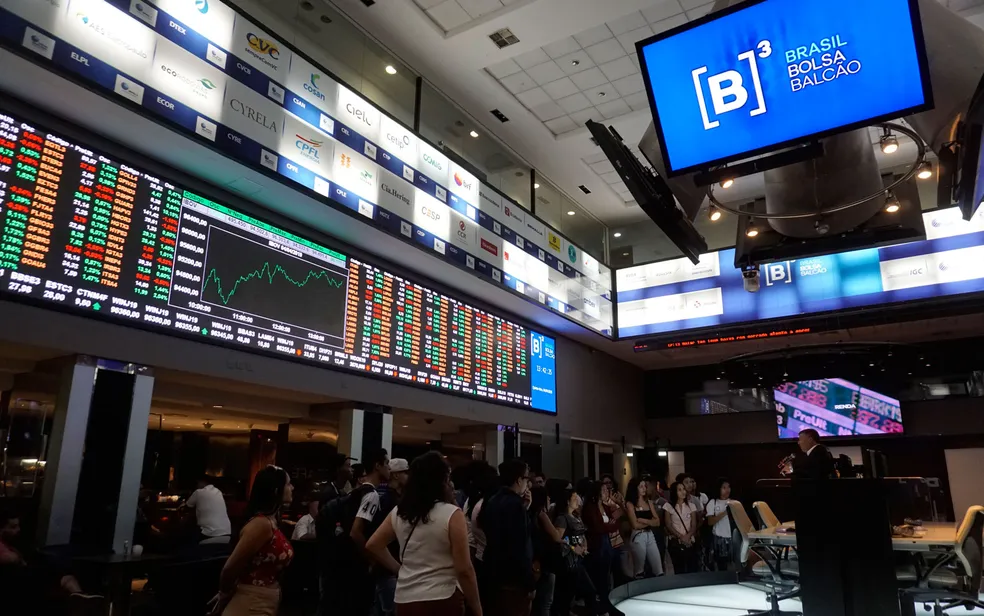
Foreign Investors Pour R$ 7.4 Billion into B3 in September
Foreign investors contributed significantly to market liquidity, injecting R$ 1.2 billion into Brazilian equities on September 10 alone. This daily inflow pushed the month-to-date net purchase by foreigners to R$ 7.4 billion, reflecting sustained international confidence in Brazilian assets ahead of the October elections. The strong flow data supports the real's resilience near the R$ 5.15 level despite global dollar strength.
Vale Drops Amid Global Risk Aversion
Vale shares faced significant pressure on Monday, September 14, dropping approximately 3% amid broader global risk aversion and concerns over commodity demand. The miner's decline contributed to the Ibovespa's initial weakness that week, although the index later recovered some ground supported by the energy sector and domestic political optimism regarding election polls favoring opposition candidates.
Local view
Exame reported that investors were actively adjusting expectations for central bank moves, noting that the dollar remained stable at R$ 5.15 even as the Fed tightened policy. The outlet highlighted that the market was closely watching inflation data and economic activity indicators to gauge the sustainability of the Selic easing cycle.
Valor Econômico emphasized the role of Petrobras in carrying the Ibovespa through a tense session marked by tensions with the Supreme Federal Court (STF) and rising global yields. Their analysis suggested that while high oil prices provided a buffer, the domestic political and judicial environment remained a key source of volatility for local equities.
Context & numbers
- Ibovespa Close (Sept 16): 185,548 points (-0.51% vs previous session)
- Selic Rate: Cut to 13.75% per annum by Copom on Sept 16
- USD/BRL: Stable at approximately R$ 5.15
- Foreign Flow (Sept MTD): Net positive of R$ 7.4 billion
- Oil Price: Brent crude hovered above $100, peaking near $108 mid-week
On the radar
- Copom Minutes: Market participants are awaiting the detailed minutes from the September 15-16 Copom meeting for further guidance on the pace of future Selic cuts.
- Election Polls: New electoral surveys are expected to influence market sentiment, particularly regarding the race between President Lula and Senator Flávio Bolsonaro, as investors price in potential policy shifts.
- IGP-10 and IBC-Br Data: Upcoming releases of the IGP-10 inflation index and the IBC-Br economic activity indicator will provide critical inputs for next month's monetary policy decisions.
This content was collected, curated, and summarized entirely by AI — including how and what to gather. It may contain inaccuracies. Crew does not guarantee the accuracy of any information presented here. Always verify facts on your own before acting on them. Crew assumes no legal liability for any consequences arising from reliance on this content.
Powered by
