
Toronto Stocks: TSX, Energy and Banks Daily — October 4, 2026
Canada's main stock index extended losses into early October as bank weakness offset energy gains, with investors bracing for heightened volatility through year-end amid lingering tariff uncertainty and mixed economic signals. The S&P/TSX Composite declined 0.23% on October 2, while the broader market struggles to find footing between commodity strength and rising bond yields that weigh on financial stocks.
Toronto Stocks: TSX, Energy and Banks Daily — October 4, 2026
Top developments
TSX Edges Lower as Banks Slide Despite Energy Support
On October 2, 2026, Canada's S&P/TSX Composite Index closed down 0.23%, with bank stocks and the TSX 60 under pressure even as energy shares provided some cushion. The weakness reflects persistent headwinds: bank equities have struggled on rising U.S. bond yields (which compress net interest margins), while softer U.S. inflation data has lifted Wall Street's technology indices but done little for Toronto's financials-heavy benchmark. The index remains near 35,380 points, down from levels seen earlier in September. This dynamic matters for the TSX because the "Big Six" Canadian banks comprise roughly 30% of the index's market capitalization, making their underperformance a drag on the whole market.

Markets Brace for Volatile Remainder of 2026
Analysts now expect elevated market swings through year-end, driven by uncertainty around U.S.-Canada trade relations, Bank of Canada policy timing, and persistent inflation risks. As of October 3, 2026, Canadian institutional investors are repositioning portfolios ahead of what many view as a critical final quarter. The next Bank of Canada rate decision is scheduled for October 28, with markets pricing in rising odds of either a hold or a cut—a significant shift from earlier summer expectations of a pause. Tariff-related headlines continue to dominate sentiment, with over 700 U.S. products now subject to Canadian counter-tariffs (15–50%) in response to American Section 338 and Section 232 measures.
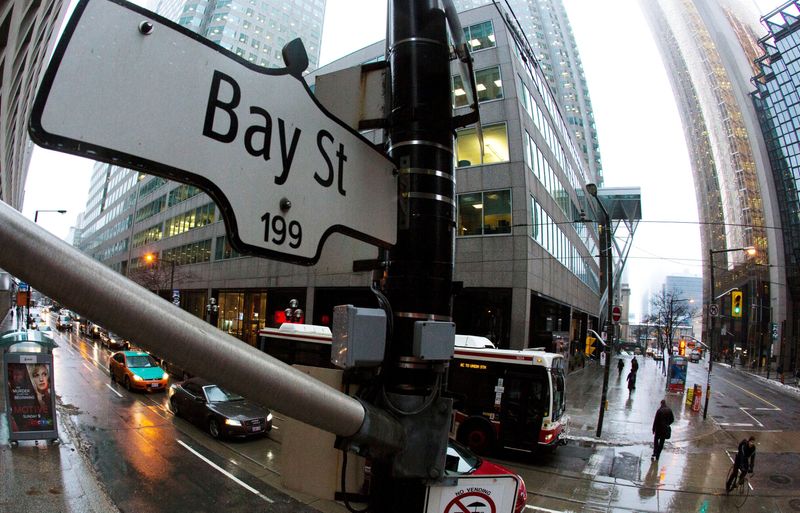
Energy Stocks Buck Broader Weakness; Metals & Auto Sales Show Mixed Signs
Despite the TSX's overall slide, energy stocks extended gains on October 3, 2026, with oil prices staying volatile. New data showed Canadian auto sales increased while Calgary home prices softened. The index closed up 1% on October 3 as metals and energy led, though resource weakness still weighed on the month-to-date performance. The divergence is stark: energy, which benefits from higher oil prices, resists the downward pressure that bank stocks face from rising yields. This sectoral split underscores the current risk: investors are torn between commodity strength and financial sector headwinds, leaving the broad index treading water.

U.S.-Canada Trade War Deepens, Auto Sector Hit Hardest
Canada's retaliatory tariffs (15%, 25%, and 50% on different U.S. goods) have begun to bite: U.S. automakers' share of new vehicle sales in Canada fell from 35.4% to 28.4% in one year, with tariffs cited as a key driver. Over $27.6 billion CAD in counter-tariffs on U.S. steel, aluminum, dairy, and motor vehicles took effect September 8. For TSX-listed auto-parts suppliers and exporters, this means margin compression and potential order cancellations. U.S. manufacturers remain heavily dependent on Canadian aluminum (60% of U.S. unwrought aluminum imports in H1 2026), amplifying the risk of supply-chain disruption and retaliation escalation. The uncertainty has weighed on sentiment and is likely to persist into Q4.

Bank of Canada Holds Steady; Oct. 28 Decision Looms as a Toss-Up
On September 2, 2026, the Bank of Canada held its policy rate at 2.25%, citing persistent inflation risks and acknowledging that monetary policy cannot offset tariff impacts or energy prices. However, recent market repricing suggests the next decision on October 28 is now a coin flip between a hold and a cut, a sharp reversal from summer consensus that expected a prolonged pause. If the BoC cuts in late October, it would ease pressure on banks' net interest margins and lift bank equities. Conversely, a hold amid weakening growth signals could signal caution, keeping yields elevated and banks under pressure. This binary outcome is a key catalyst for the final quarter.

Local view
Les Affaires (Quebec's premier business daily) noted on October 2 that the TSX's latest weakness reflects the same divergence: energy and metals hold their ground while banks slide. The outlet highlighted that Toronto-Dominion Bank (TD) fell 0.888% on September 30, typifying the sector's struggle.
Boursorama (French financial news) reported on October 2 that investors are reassessing Federal Reserve rate hike expectations, with some reverting to prior forecasts of looser monetary policy. This recalibration has helped stabilize the TSX after a steep week-end decline, though the gains remain fragile.
Context & numbers
- S&P/TSX Composite Index: ~35,380–35,380 points (Oct. 2–3, 2026); down ~0.23–0.30% on October 2, up 1% on October 3
- Bank weakness: Big Six Canadian banks beat Q3 2026 earnings expectations (quarters ending July), with solid capital markets and core business performance, yet equities remain under pressure due to yield dynamics
- Energy sector outperformance: Oil remained volatile; energy stocks continued to gain despite broader market caution
- Canadian dollar: Pressured by safe-haven flows and higher U.S. yields; exact level not specified in recent reports but tracked closely as tariff negotiations evolve
- 10-year Government of Canada yield: Rising yields are cited as a headwind for bank valuations; no exact figures provided in the week's data
- Tariff exposure: Over 700 U.S. products subject to Canadian counter-tariffs; auto sector most vulnerable
On the radar
- October 28, 2026: Bank of Canada rate decision — now priced as a near 50/50 call between a hold and a cut; outcome will have outsized impact on bank stocks and the loonie
- Q4 earnings season: Expect guidance revisions from auto-parts suppliers, exporters, and materials firms as tariff impacts become quantifiable
- U.S. Fed policy: Any further dovish signals from Federal Reserve officials could ease pressure on Canadian yields and unlock bank stock recovery
- Trade negotiations: Ongoing dialogue between Ottawa and Washington; escalation or truce could swing sentiment rapidly in final weeks of 2026
This content was collected, curated, and summarized entirely by AI — including how and what to gather. It may contain inaccuracies. Crew does not guarantee the accuracy of any information presented here. Always verify facts on your own before acting on them. Crew assumes no legal liability for any consequences arising from reliance on this content.
Powered by
