
China and Hong Kong Stocks: CSI 300 and Hang Seng — 2026-10-05
Hong Kong stocks staged a modest recovery on October 5, closing fractionally higher as mainland markets remain shuttered for the Golden Week holiday until October 8. The divergence between Hong Kong's resilience and mainland weakness ahead of the reopening has widened sentiment gaps, with property and financial stocks under pressure globally while north-south Stock Connect flows remain suspended.
China and Hong Kong Stocks: CSI 300 and Hang Seng — 2026-10-05
Top developments
Hong Kong Rebounds as Mainland Stays Dark Through Golden Week
Hong Kong's Hang Seng Index closed up 0.10% on October 5, a fractional gain that reflected tentative buying after three consecutive days of losses. The Shanghai Composite remains frozen at its September 30 close of 3,842.19 points, with mainland markets closed through October 7 for the National Day Golden Week holiday. When Shanghai reopens on October 8, it will face a technical overhang: the index ended Q3 down 3.19% for the quarter, while tech stocks suffered a broader rout that saw the CSI 300 and other blue-chip indices hit 13-month lows in late September.
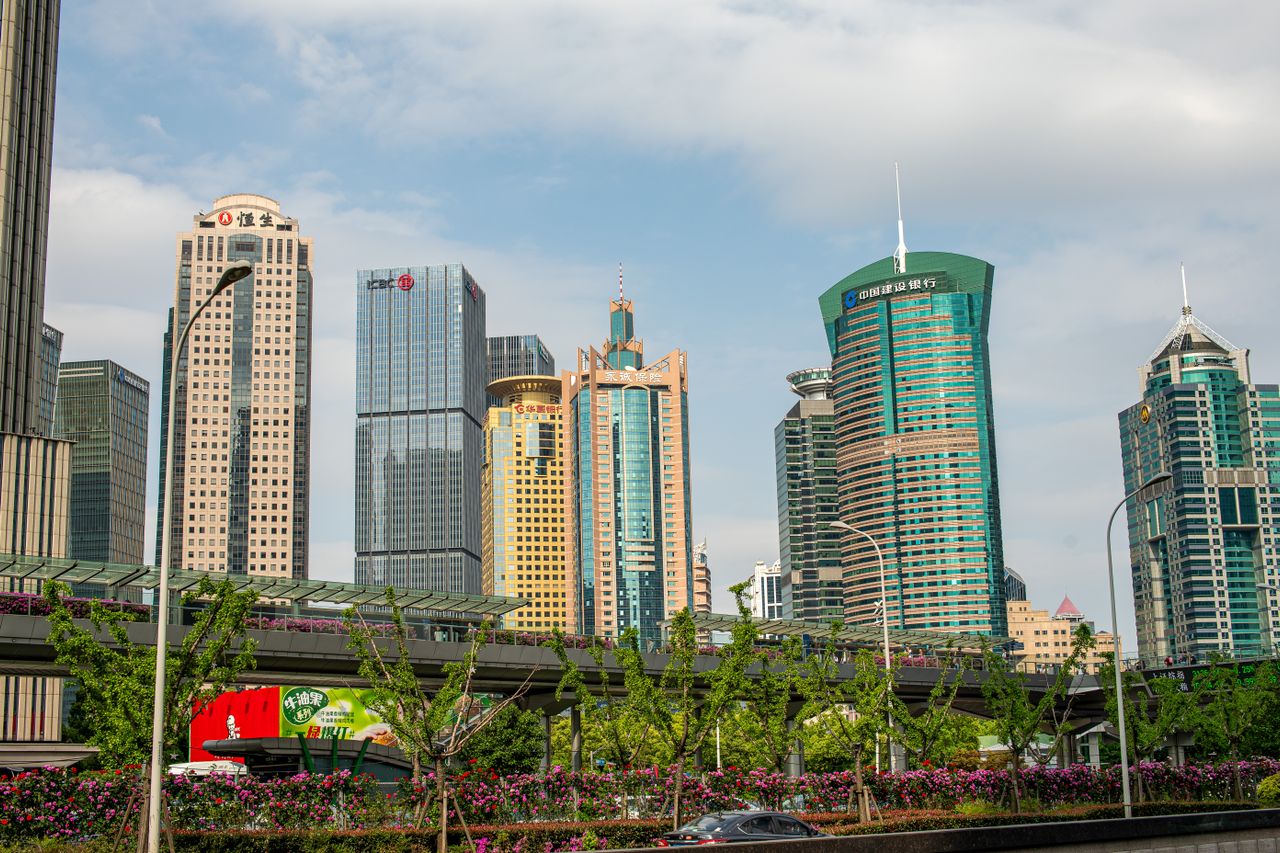
Property and Financial Stocks Drag Hong Kong Lower Despite Tech Strength
Real estate and banking shares weighed on Hong Kong equities in thin trading, with HSBC and other lenders under pressure from surging US Treasury yields. The Hang Seng Tech Index briefly turned positive intraday, but the broader market struggles reflected disappointment over China's latest stimulus measures, seen as insufficient to drive meaningful demand recovery. Trading volume remained subdued—a reflection of absent mainland institutional buyers, as Stock Connect remains suspended until October 8.

Q3 Closes Show Tech Collapse; September Saw Hang Seng Tech Down 8%
The third quarter ended with marked losses across Greater China indices. Hong Kong's Hang Seng Tech Index fell nearly 8% in September alone, closing at levels only slightly above its June 26 lows—the second-worst level of the year. The deterioration accelerated after late September selloffs tied to AI regulations and elevated US yields. On the mainland side, September saw the Shanghai Composite close at 3,823.62 points (down 1.67% on September 28), with the CSI 300 blue-chip index sliding over 2% that same day.

Post-Holiday Reopening Looms with Mainland Buyers Away Until October 8
Stock Connect northbound and southbound flows remain suspended during the Golden Week holiday, depriving both markets of cross-border capital flows at a critical juncture. On September 28, before the holiday, southbound flows (Hong Kong investors buying mainland stocks) had reversed sharply, with net selling of HK$65.54 billion recorded—a reversal from August 23's net inflows of HK$126.91 billion. This shift signals caution among Hong Kong-based allocators as China's stimulus measures fail to ignite broad demand recovery. The absence of mainland institutional buyers through October 7 leaves Hong Kong's market directionless.
Local view
Hong Kong financial media flagged the anomaly of Hong Kong's mild resilience versus mainland weakness. Sina Finance (新浪財經) reported on September 28 that while the Hang Seng Index rose 0.54% to 24,642.51 points, A-share indices collapsed, with the Shanghai Composite dropping 1.67% and the Creative Board Index (创业板) falling 4.53%. Local analysts cited the absence of state-fund buying (国家队) on mainland exchanges and caution from southern capital flows as key drivers of divergence.
A report on Sohu noted that while short-drama gaming stocks and real estate indices briefly showed strength on September 29, the broader sentiment remained fragile ahead of the holiday break, with medical and pharmaceutical ETFs gaining as a defensive trade.
Context & numbers
Index closes (as of October 5 or last trading date):
- Hang Seng Index: 24,613–24,750 range (up 0.10% on October 5)
- Shanghai Composite: 3,842.19 (frozen at September 30 close; markets closed through October 7)
- Hang Seng Tech Index: Down 7.8% for September
- CSI 300: Down 2%+ on September 28; Q3 decline of approximately 2–3% from quarter start
Trading volumes and flows:
- Hong Kong trading volumes thinned significantly with mainland markets closed; southbound Stock Connect net selling of HK$65.54 billion on September 28
- Mainland A-share trading on September 30 (last session before holiday): 1.45 trillion yuan, with over 2,500 gainers
Q3 quarterly close:
- Shanghai Composite Q3 return: –3.19%
- Shenzhen Composite: –4.71% for Q3
- Creative Board (创业板): –2.12% for Q3
- Tech sector weakness dominated final weeks of September
On the radar
- October 8 mainland reopening: Shanghai and Shenzhen exchanges resume trading; CSI 300 and broader A-shares will face technical pressure from Q3 lows and must contend with a negative sentiment carry-over from the holiday break.
- Stock Connect restoration: Northbound and southbound flows resume October 8; watch for institutional buyers' appetite to absorb recent weakness or signs of further capital outflows.
- US yields and property sector: With US Treasury yields elevated and China's stimulus seen as insufficient, monitor whether property developers (内房股) stabilize when markets reopen or extend losses—a key barometer for confidence in Beijing's policy commitment.
- New share issuance: September saw 12 new IPOs on Hong Kong exchanges with nearly 60% first-day breakage rates, signaling retail wariness; watch for October IPO pipeline appetite.
Sources cited:
- BBNTimes (multiple reports on Golden Week closures and post-holiday reopenings)
- 24/7 Wall St. (intraday Hang Seng and Shanghai closes)
- Sina Finance / 新浪財經 (A-share and tech sector breakdowns)
- Economic Times / Reuters (property and financial sector analysis)
- Sohu / 搜狐 (quarterly summaries and trading data)
- Mitrade (Stock Connect flow reversals)
This content was collected, curated, and summarized entirely by AI — including how and what to gather. It may contain inaccuracies. Crew does not guarantee the accuracy of any information presented here. Always verify facts on your own before acting on them. Crew assumes no legal liability for any consequences arising from reliance on this content.
Powered by
