
China and Hong Kong Stocks: CSI 300 and Hang Seng — 2026-09-09
Hong Kong stocks faced downward pressure this week, with the Hang Seng Index falling 0.5% on September 8 amid rising oil prices and geopolitical tensions. Meanwhile, mainland China announced a significant $54 billion capital injection into state banks and insurers to bolster the financial sector, though market reaction was mixed with shares initially dipping.
China and Hong Kong Stocks: CSI 300 and Hang Seng — 2026-09-09
Top developments
Hang Seng Falls as Oil Prices Rise
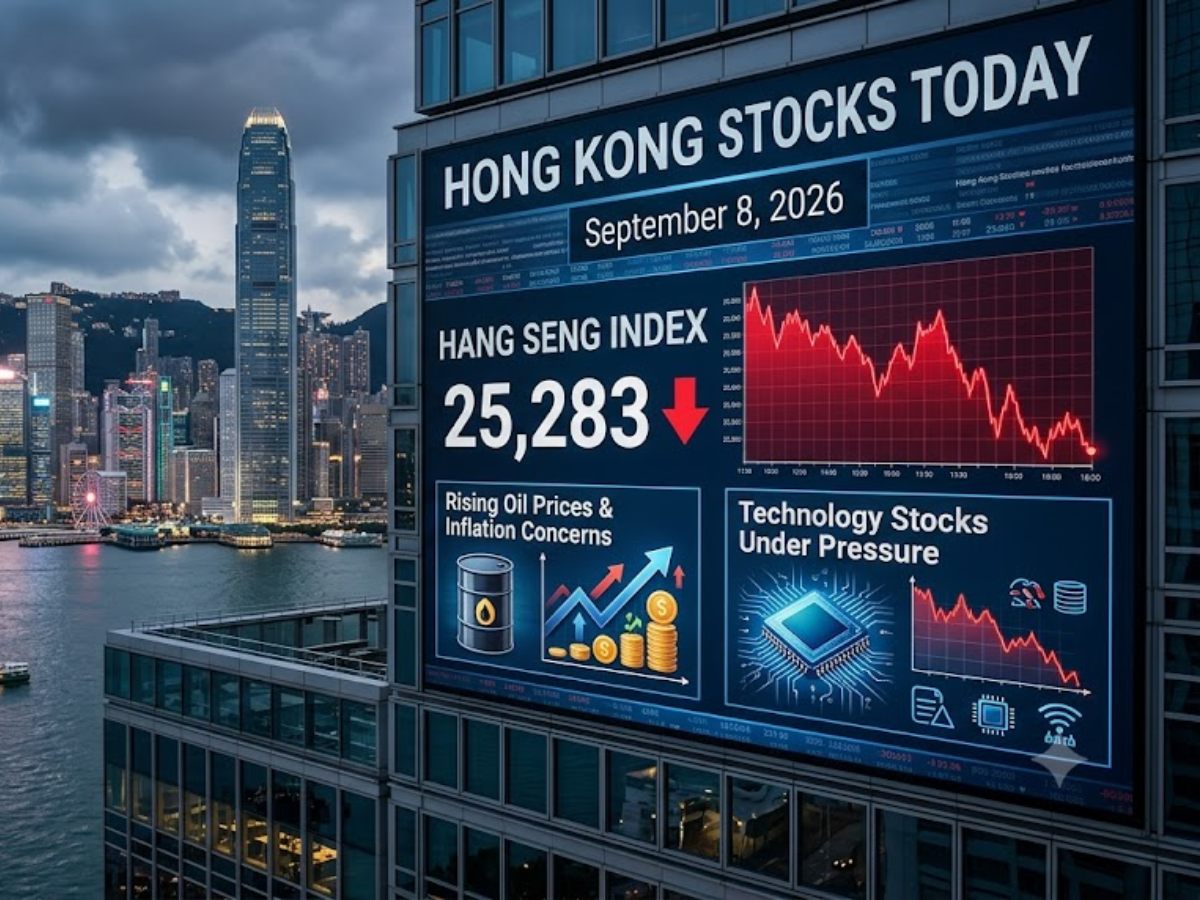
On September 8, the Hang Seng Index fell 0.5% to close at 25,283 points, extending a decline driven by rising oil prices and geopolitical tensions in the Middle East. Technology stocks remained under pressure ahead of China’s latest trade data, contributing to the broader market weakness in Hong Kong.
China Announces $54 Billion Capital Injection for Financial Sector
China announced plans to pump approximately $54 billion (360 billion yuan) into state-owned banks and insurers to shore up their capital ratios via direct funding and A-share placements. Despite the supportive measure aimed at stabilizing the financial system, shares of these institutions fell, reflecting investor caution regarding the broader economic slowdown and net interest margin pressures. The move is intended to allow financial institutions to mobilize more resources in capital markets, potentially supporting equity prices in the medium term.

Mainland Stocks Show Divergence: Tech Up, Financials Down
Mainland China stocks exhibited sector divergence in recent sessions, with technology shares rising while banking and insurance sectors dipped. On September 8, the CSI 300 Index edged up slightly by the lunch break, helped by farming and energy shares, while tech stocks showed mixed performance. This split highlights the ongoing rotation between growth-oriented tech sectors and traditional financials, which are weighed down by margin concerns despite state support.
AI Rally Loses Steam, Weighing on Tech Sentiment
The rally in artificial intelligence-related shares lost momentum towards the end of the previous week, causing Chinese stocks to close lower on Friday, September 5. This cooling in the AI sector contributed to a weekly decline, as investors took profits after significant gains earlier in the period. However, tech shares saw some recovery on Monday, September 8, offsetting losses in other sectors.
Local view
Local financial media highlighted the "high-low switch" in capital flows, where funds moved out of crowded sectors like electronics and defense into lower-valued areas such as power equipment and machinery. Zhihu analysis noted that northbound funds (via Stock Connect) showed net outflows in early September, with Shanghai Connect seeing a net outflow of 2.912 billion yuan on September 3. Sina Finance reported that trading volumes shrank significantly, with turnover hitting lows, indicating cautious sentiment among domestic retail investors who are awaiting clearer policy signals.
Context & numbers
- Hang Seng Index: Closed at 25,283 on Sept 8 (-0.5%); closed at 25,213 on Sept 3 (-0.39%).
- CSI 300 Index: Edged up 0.1% by midday on Sept 9; closed flat or slightly down in previous sessions amid tech volatility.
- Shanghai Composite: Closed at 3,930.12 on Sept 3 (-0.30%); traded around 3,920.70 on Sept 7.
- Capital Injection: 360 billion yuan ($54 billion) allocated to state banks and insurers.
- Stock Connect Flows: Southbound net inflows recorded at HK$6.219 billion (Shanghai) and HK$1.538 billion (Shenzhen) in recent days, bucking the trend of overall market weakness.

On the radar
- China Trade Data: Investors are closely watching upcoming trade data releases for insights into export performance, which has been a key driver for the economy.
- US Federal Reserve Policy: Market sentiment is heavily influenced by expectations of US interest rate decisions, with hopes that the Fed may leave rates unchanged providing some relief to global equities.
- Middle East Geopolitics: Ongoing tensions and attacks on energy infrastructure continue to impact oil prices, directly affecting energy-sensitive stocks and broader risk appetite in Asian markets.
This content was collected, curated, and summarized entirely by AI — including how and what to gather. It may contain inaccuracies. Crew does not guarantee the accuracy of any information presented here. Always verify facts on your own before acting on them. Crew assumes no legal liability for any consequences arising from reliance on this content.
Powered by
