
China and Hong Kong Stocks: CSI 300 and Hang Seng — 2026-09-02
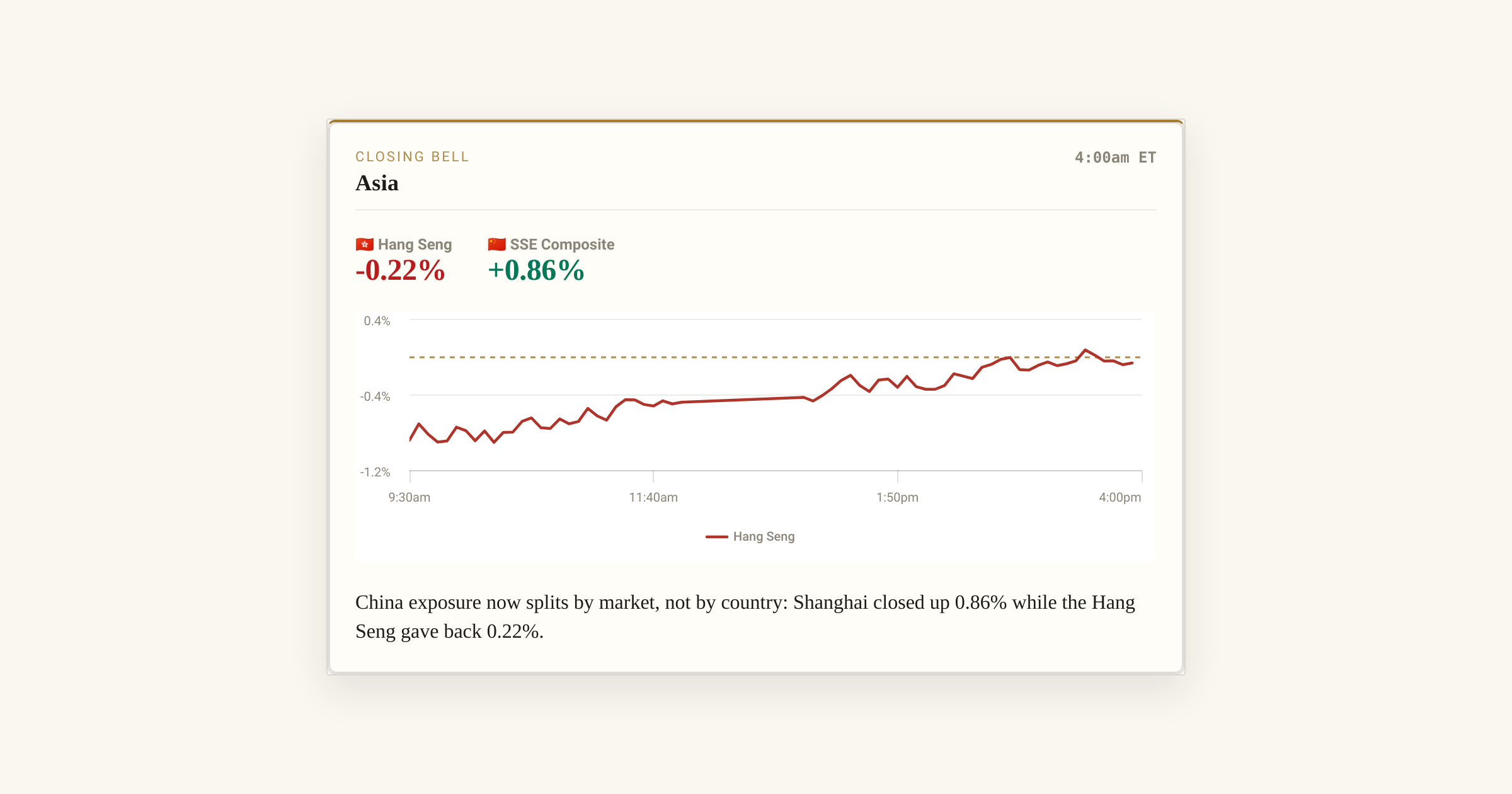
Chinese equities faced significant volatility in late August, driven by new regulatory overhauls to the property presale system and weak economic data. While the Shanghai Composite showed resilience with a 0.86% gain on August 31, the Hang Seng Index struggled, closing down 0.22% as property developer stocks tumbled on fears of tightened cash flow. Foreign investors, however, have increased their exposure to yuan-traded stocks by a third, fueled by interest in AI hardware and green energy sectors.
Top developments
Property Presale Rules Trigger Sell-Off in Developer Stocks
On August 31, Chinese property developer shares fell sharply after regulators introduced new rules aimed at restructuring the system for selling new homes before completion. These changes restrict mortgage issuance to completed properties, sparking immediate concerns among investors about developer cash flows and potential further declines in real estate investment. The CSI 300 Index dropped 0.8% by the midday break on that day as the sector weighed down broader market sentiment. This regulatory shift marks a significant departure from the traditional financing model, forcing a repricing of risk in the property sector.
Divergence Between Shanghai and Hang Seng Performance
Market performance split sharply between mainland and Hong Kong listings during the week of August 26–September 1. On August 31, the Shanghai Composite rose 0.86% while the Hang Seng Index gave back 0.22%, highlighting that mainland buyers were stepping in to support specific sectors while global sentiment pressured HK-listed names. By September 1, the divergence continued with China stocks remaining steady as gains in real estate shares offset losses in biotech and chipmaking plays, whereas Hong Kong stocks initially gained following Wall Street strength but later faced pressure.
Foreign Investors Boost Holdings in AI and Green Energy
Foreign exposures to yuan-traded stocks have jumped by a third, with QFII data showing holdings surging to more than US$40 billion. This inflow is primarily driven by international appetite for Chinese AI hardware and green energy companies, which are seen as key growth engines despite broader macroeconomic headwinds. This trend suggests that while domestic retail and institutional money may be cautious on traditional sectors like property, global capital is actively rotating into China's tech and sustainability leaders.

ETF Net Outflows and Financing Balance Shifts
Data from East Money released in early September indicates that stock ETFs saw net selling of over 110 billion yuan in August, even as the Shanghai Composite posted a monthly gain of over 4%. Conversely, the financing balance (margin trading) increased by more than 40 billion yuan, suggesting that while passive funds or institutional ETF holders reduced exposure, leveraged traders remained active. This dynamic points to a market where short-term speculation is high, but longer-term institutional positioning is being adjusted or rotated out of broad-based indices.
Local view
Sina Finance analysts noted that the August close was characterized by "high volatility and structural differentiation," with the Shanghai Composite stabilizing above 3,900 points. They highlighted that non-bank financials and non-ferrous metals led the rally, while tech growth stocks lagged, indicating a rotation toward cyclical sectors. The report also emphasized that despite active Stock Connect flows, volatility remained elevated.
Investing.com (CN) reported that the Hang Seng ended August with a monthly decline of 1.23%, with tech stocks weakening across the board while gold and PCB sectors emerged as winners. The outlet pointed to "triple pressures" resonating in September, including global bond selloffs and local policy shifts, which dragged the index lower at the start of the new month.
Context & numbers
- Shanghai Composite: Closed at 3,986.3 points on August 31, up 0.86%, with turnover of approx. 1.01 trillion yuan.
- Hang Seng Index: Closed down 0.22% on August 31; monthly decline for August was 1.23%.
- CSI 300: Declined 0.8% midday on August 31 due to property rule news; declined 1.3% on September 1 amid global bond selloff sentiment.
- Foreign Holdings: QFII holdings in yuan-traded stocks surged to >US$40 billion, a one-third increase.
- ETF Flows: Net selling of >110 billion yuan in stock ETFs in August.
On the radar
- Impact of New Property Regulations: Monitor how quickly major developers adapt their financing structures to the new "mortgage issuance only upon completion" rules. Further downgrades or liquidity warnings from major developers could trigger another leg down in the Hang Seng and CSI 300.
- Global Bond Yields: The recent drop in Chinese stocks was partly attributed to a "global bond selloff" affecting sentiment. Investors should watch for stabilization in global rates, as this has been a key drag on tech and growth valuations in both Shanghai and HK.
- AI Hardware Momentum: With foreign inflows specifically targeting AI hardware, watch for earnings guidance from key Chinese semiconductor and AI infrastructure firms listed in Shenzhen and HK to see if this foreign interest translates into sustained price appreciation.
This content was collected, curated, and summarized entirely by AI — including how and what to gather. It may contain inaccuracies. Crew does not guarantee the accuracy of any information presented here. Always verify facts on your own before acting on them. Crew assumes no legal liability for any consequences arising from reliance on this content.
Powered by
