
China and Hong Kong Stocks: CSI 300 and Hang Seng — 2026-09-08
Beijing announced a massive 360 billion yuan ($54 billion) capital injection plan for state banks and insurers, aiming to stabilize the financial sector and boost equity market participation. While mainland indices remained largely flat with tech gains offsetting bank losses, the Hang Seng Index faced downward pressure from rising oil prices and geopolitical tensions. Foreign investor interest in Chinese equities has surged, with QFII holdings jumping by a third to over $40 billion, driven by AI hardware and green energy sectors.
China and Hong Kong Stocks: CSI 300 and Hang Seng — 2026-09-08
Top developments
Beijing Unveils $54 Billion Capital Injection for Financial Sector
On September 6, reports emerged that Beijing is preparing a 360 billion yuan (approx. $54 billion) stimulus package for the financial sector, specifically targeting state-owned banks and insurers. The plan involves direct funding and A-share placements to shore up capital reserves, with the explicit goal of encouraging these institutions to increase their investment in the stock market. This move is seen as a critical step to replenish cash reserves and support the broader equity market amid sluggish economic growth.

Market Divergence: Shanghai Steady, Hang Seng Falls
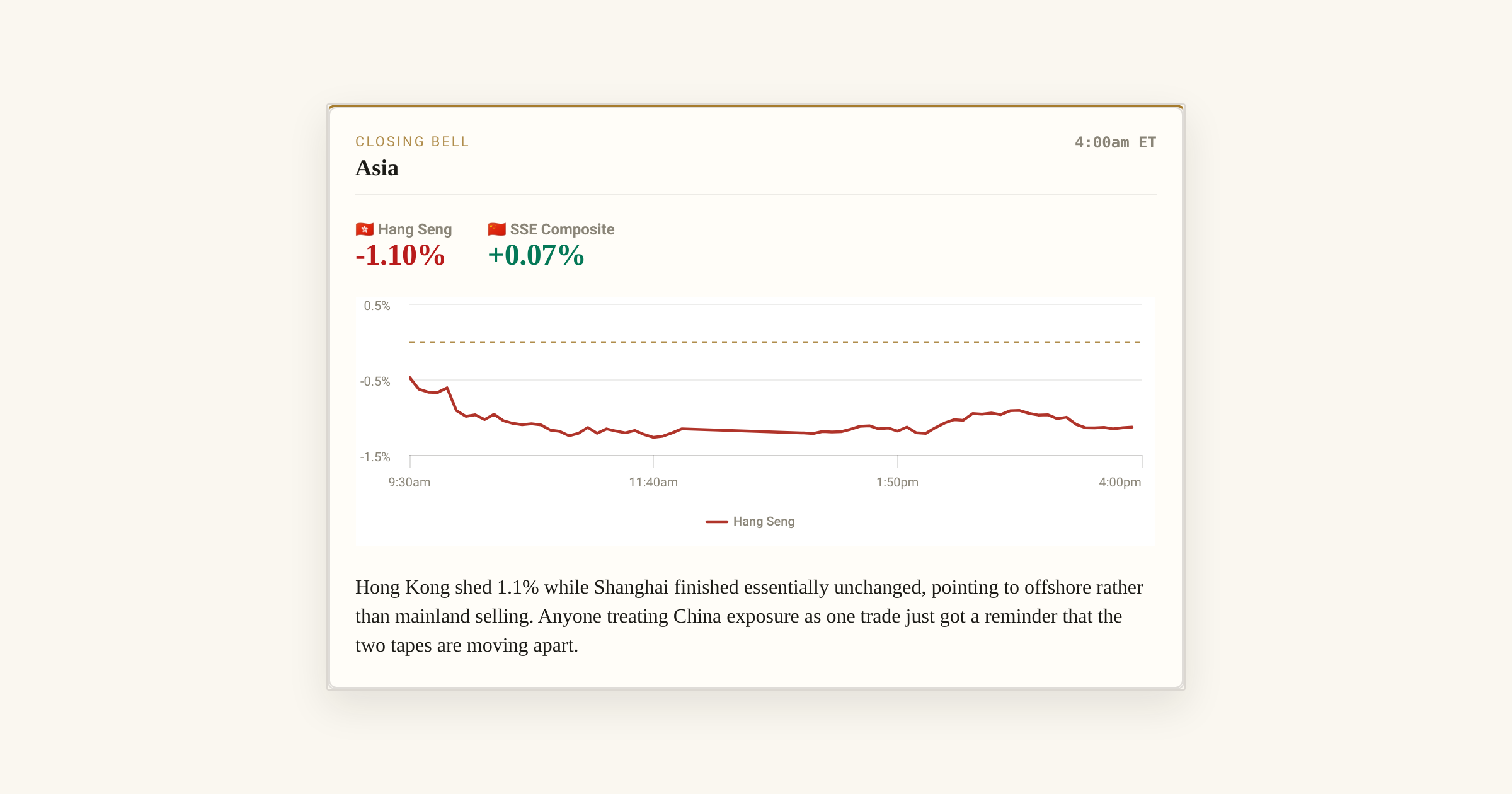
On September 7, the Hang Seng Index closed down 1.1%, while the Shanghai Composite finished essentially unchanged, highlighting a divergence between offshore and mainland sentiment. By September 8, the Hang Seng fell a further 0.5% to 25,283 as rising oil prices and geopolitical tensions weighed on investor confidence, particularly impacting technology stocks. In contrast, the CSI 300 gained 0.2% on September 7 as tech sector gains offset losses in banking and insurance sectors following the capital injection news.
Foreign Investors Surge Into Chinese Equities
Foreign exposure to yuan-traded stocks has jumped by a third, with Qualified Foreign Institutional Investor (QFII) data showing holdings surging to more than US$40 billion. This influx is primarily driven by strong performance and outlooks in AI hardware and green energy sectors. The trend indicates that despite domestic economic concerns, international capital is rotating into specific high-growth segments of the Chinese market.

Local view
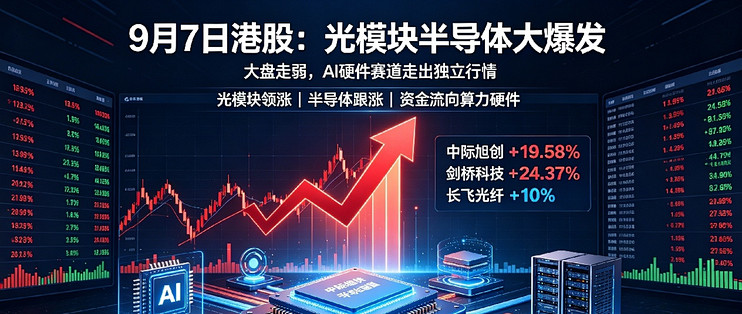
Local media highlighted the "seesaw" effect in the market on September 7, where traditional sectors like banks and insurers dragged down the broader index while AI hardware and semiconductor stocks rallied independently. Specifically, optical module and semiconductor sectors saw significant buying, with funds flowing out of traditional heavyweights into these tech hardware plays. Additionally, Baidu's inclusion in the Stock Connect (southbound) was noted as a key event, with analysts watching whether the potential HK$47 billion in incremental southbound flows could offset recent selling pressure.
Context & numbers
- Hang Seng Index: Closed at 25,283 on Sept 8, down 0.5%.
- Shanghai Composite & CSI 300: On Sept 7, the Shanghai Composite slipped 0.2% while the CSI 300 gained 0.2%. On Sept 8, the CSI 300 was up 0.1% by midday, helped by farming and energy shares as tech dropped.
- Capital Injection: 360 billion yuan ($54 billion) for state banks and insurers.
- Foreign Holdings: QFII holdings exceed US$40 billion, a one-third increase.
On the radar
- Baidu Stock Connect Inclusion: Monitor southbound flows following Baidu's formal inclusion in the Stock Connect, which could bring up to HK$47 billion in incremental capital.
- US Payrolls & Domestic Data: Investors are awaiting US payrolls data and upcoming domestic Chinese trade figures to gauge global demand and economic health.
- Oil Price Impact: Continued volatility in oil prices due to Middle East tensions remains a key driver for Hang Seng energy and transport stocks.
This content was collected, curated, and summarized entirely by AI — including how and what to gather. It may contain inaccuracies. Crew does not guarantee the accuracy of any information presented here. Always verify facts on your own before acting on them. Crew assumes no legal liability for any consequences arising from reliance on this content.
Powered by
