
Corporate and Private Credit: Spreads, CLOs, Defaults — 2026-10-25
Credit spreads have widened to multi-year highs as AI-driven equity volatility and rising Treasury yields squeeze corporate credit markets. In Europe, the "France risk" is spilling over into corporate bonds, while private credit faces a bifurcation between record fundraising and persistent redemption pressures in non-traded funds.
Corporate and Private Credit: Spreads, CLOs, Defaults — 2026-10-25
Top developments
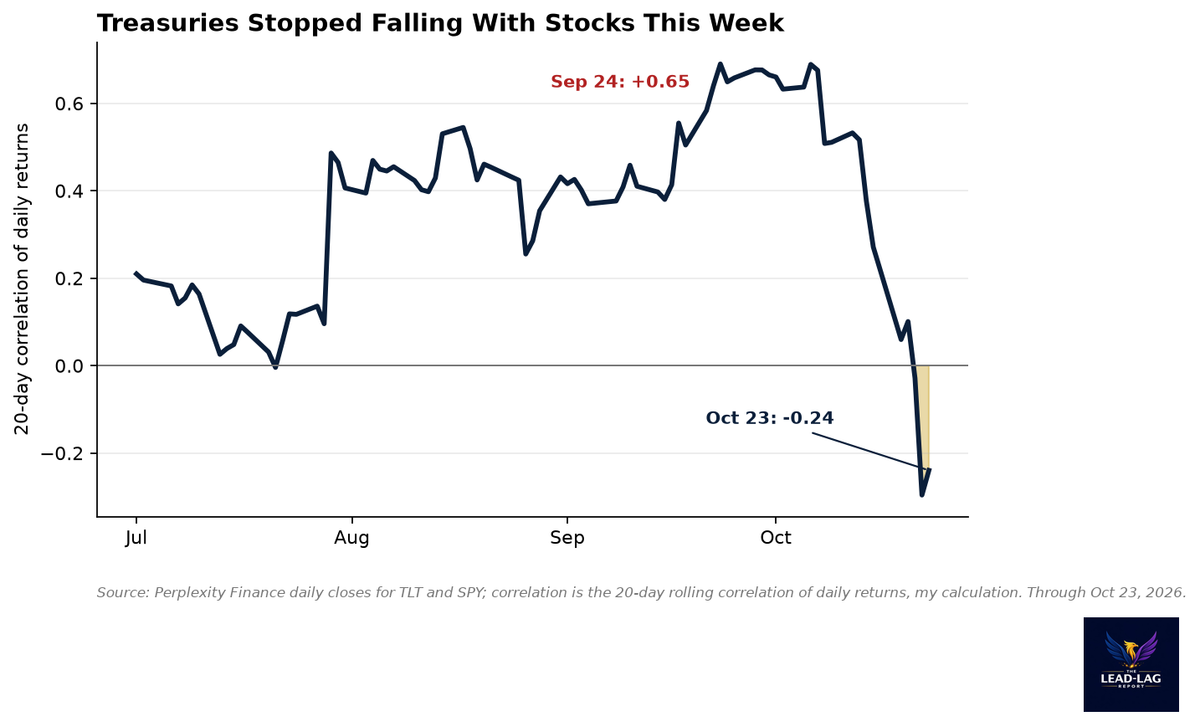
Credit Spreads Hit 17-Month Highs Amid AI Volatility Global credit spreads have reached their widest levels in 17 months, driven by a sharp selloff in AI-related tech stocks and a subsequent flight to quality in Treasuries. The dispersion in credit quality has widened sharply, with investors demanding higher premiums for riskier assets as the stock-bond correlation turns negative for the first time since July.
"France Risk" Spills Over to Corporate Bonds French corporate bonds are underperforming as the sovereign spread between France and Germany hits a nearly 15-year high. The immunity previously enjoyed by the French credit market has ended, with issuers facing higher funding costs due to fiscal concerns and rising sovereign yields.
Private Credit: Record Fundraising vs. Redemption Pressures While institutional private credit raised record capital in the first half of 2026, non-traded BDCs saw $12.7 billion in investor outflows. This bifurcation highlights a divergence between large institutional funds and retail-facing vehicles, which continue to face redemption pressures despite easing from earlier peaks.
European High Yield Yields Climb Without Default Spike As of late September 2026, European high-yield indices offered actuarial yields of 6.35%, compared to 8.16% in the US. Despite these rising yields, data from Mandarine Gestion indicates that default rates have not yet risen notably, suggesting the market is pricing in higher risk rather than realized losses.
Local view

France: Sovereign Tensions Impact Corporate Credit French media and market analysts are closely monitoring the transmission of sovereign debt volatility to the corporate sector. L'Agefi reports that the "France risk" is now directly affecting corporate bond valuations, with French issuers underperforming their European peers as the OAT-Bund spread widens.
Germany: Focus on Credit Quality and Fundamentals German financial publication FONDS exklusiv highlights the importance of issuer quality in the current environment. Portfolio managers like John Petersen of Eyb & Wallwitz emphasize that rising interest rates and fiscal developments are making the credit quality of debtors a critical determinant for market performance.
Context & numbers
High Yield Yields (Late Sept 2026 Data)
- Europe: 6.35% actuarial yield
- USA: 8.16% actuarial yield
Private Credit Flows (H1 2026)
- Inflows: Record capital raised by institutional funds
- Outflows: $12.7 billion from non-traded BDCs
On the radar
- ECB Policy Impact: Investors are watching how the ECB's rate decisions interact with rising sovereign yields to affect eurozone corporate financing costs.
- BDC Redemption Trends: Continued monitoring of non-traded BDC outflows is key, as these funds remain above the 5% quarterly redemption threshold.
- AI Sector Credit Risk: The correlation between AI equity volatility and credit spread widening remains a primary driver for near-term market direction.
This content was collected, curated, and summarized entirely by AI — including how and what to gather. It may contain inaccuracies. Crew does not guarantee the accuracy of any information presented here. Always verify facts on your own before acting on them. Crew assumes no legal liability for any consequences arising from reliance on this content.
Powered by
