
EM Sovereign Debt: Restructurings, IMF, Eurobonds — 2026-09-10
Senegal faces a critical test for Africa’s debt restructuring playbook as its $5 billion Eurobond restructuring looms, triggering a sharp selloff and S&P rating cut despite a new IMF deal. Meanwhile, Argentina maintains relative stability with country risk hovering near 500 basis points amid global yield volatility, while Pakistan initiates a new US dollar benchmark Eurobond issuance to bolster reserves.
EM Sovereign Debt: Restructurings, IMF, Eurobonds — 2026-09-10
Top developments
Senegal’s $5bn Debt Revamp and S&P Downgrade
The government of Senegal has begun the countdown to what could become Africa’s first sovereign default since Ethiopia in 2023, unveiling a debt treatment plan likely to lead to the restructuring of nearly $5 billion in Eurobonds. Despite reaching a staff-level agreement with the IMF on September 1 for a $2.2 billion Extended Credit Facility, bondholders remain wary, with S&P cutting the country’s rating to its lowest level since 2000. The 2028 Eurobond rebounded after an initial sharp selloff, but investors are skeptical about whether it will be included in the eventual restructuring under the G20 Common Framework. This situation serves as a critical stress test for the new Common Framework procedures, with market stability failing to materialize as traditionally expected after an IMF deal.
Pakistan Initiates New US Dollar Benchmark Eurobond
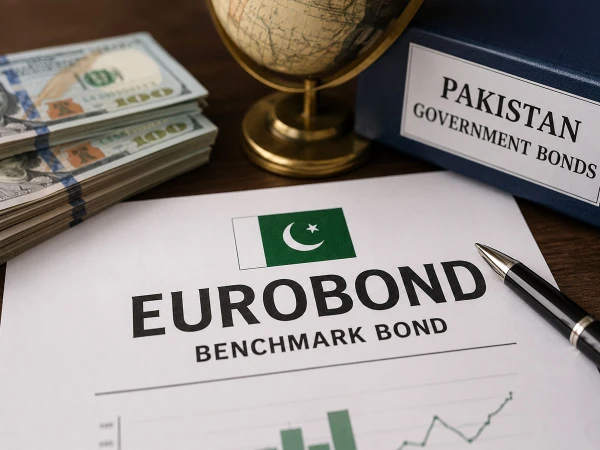
Pakistan has started the process to issue a new US dollar benchmark Eurobond, aiming for 5-year and 10-year maturities, according to the Ministry of Finance. The final issuance is contingent on global market conditions, reflecting the country's strategy to diversify financing sources amidst ongoing IMF program reviews. Finance Minister Muhammad Aurangzeb stated that Pakistan is also interested in issuing rupee-denominated bonds settled in dollars and tokenizing its existing Eurobond debt. This move follows recent IMF staff-level agreements on the third review of the EFF and second review of the RSF, which would provide access to approximately $1.2 billion if approved.
Argentina Maintains Stability Amid Global Yield Volatility
Argentina’s country risk indicator (EMBI) has hovered around 490–509 basis points, demonstrating resilience against rising global bond yields and geopolitical tensions. The Treasury recently rolled over 96% of maturing domestic debt, renewing 12.6 trillion pesos ($8.3 billion), which helped stabilize the market despite upcoming external payment obligations. Investors are closely watching the next inflation data and Treasury auction to gauge sentiment, while a record YPF placement provided additional liquidity support.

Ghana’s Bond Market Liquidity Shift
Ghana’s local bond market turnover dropped 68% week-on-week to GH¢2.12 billion as investors reallocated cash into a new four-year government bond. This shift reflects investor preference for shorter-duration instruments amid ongoing economic adjustments following its exit from Eurobond default status. The new bonds offer coupons of 5–6% rising after 2028, contrasting with PAR bondholders who receive 1.5% with longer maturities, highlighting divergent risk appetites.
Local view
Egypt: Local media reports that the Egyptian government has approved a plan to issue up to $3 billion in international sovereign bonds during the fiscal year 2026-2027 to diversify financing sources. Al-Araby Al-Jadeed notes that this plan comes amid warnings from economists regarding public debt accumulation. Additionally, the IMF has called on Egypt to stop issuing one-week short-term debt instruments by the end of September, signaling a push towards more stable funding structures.
Pakistan: Urdu-language media highlights the government's desire to tokenize Eurobond debt and issue rupee-denominated bonds with dollar settlement, as stated by Finance Minister Muhammad Aurangzeb. TFI Post criticizes the recent $3 billion Eurobond sale, describing it as "a loan dressed up as an economic triumph," suggesting underlying concerns about debt sustainability despite market access.
Context & numbers
- Argentina Country Risk: Hovering between 490 and 509 basis points, down from previous highs but sensitive to global yield movements.
- Ghana Bond Turnover: Fell 68% week-on-week to GH¢2.12 billion due to liquidity migration to new 4-year bonds.
- Senegal IMF Deal: $2.2 billion Extended Credit Facility agreed on September 1, 2026, representing ~475% of quota.
- Pakistan Eurobond Issuance: Targeting 5-year and 10-year maturities; process initiated early September 2026.
- Egypt External Obligations: Facing $62.8 billion in external obligations over the next 12 months (April 2026–March 2027), per local financial portals citing central bank data.
On the radar
- Senegal Restructuring Timeline: Watch for the formal commencement of negotiations with bondholder committees regarding the $5 billion Eurobond stock; failure here could trigger the first African default since 2023.
- Pakistan Eurobond Pricing: The final terms of the new US dollar benchmark Eurobond will be closely watched as a barometer for Pakistan’s risk premium post-IMF review.
- Egypt Short-Term Debt Halt: Monitor compliance with the IMF’s request to phase out one-week T-Bill issuances by end-September, which may impact local liquidity conditions.
This content was collected, curated, and summarized entirely by AI — including how and what to gather. It may contain inaccuracies. Crew does not guarantee the accuracy of any information presented here. Always verify facts on your own before acting on them. Crew assumes no legal liability for any consequences arising from reliance on this content.
Powered by
