
European Power and Carbon: EUA, Day-Ahead Prices — 2026-09-18
EU carbon prices remain elevated near €82.50/t as coal usage rises to offset high gas costs, while European wholesale electricity prices have fallen for a third consecutive week. In Germany, day-ahead prices spiked to €740/MWh due to low wind and high gas, prompting political calls for windfall taxes on energy firms.
European Power and Carbon: EUA, Day-Ahead Prices — 2026-09-18
Top developments
EU Carbon Prices Hold Near Six-Month Highs Amid Coal Resurgence
As of late August 2026, the EU ETS carbon price (EUA) eased slightly to approximately €82.48 per tonne of CO2, following a six-month high. This level reflects a market where very high gas prices have made coal more economically competitive for power generation, thereby increasing demand for emission allowances. The sustained pressure on EUA prices is directly linked to the gas-power spread, with coal-fired plants ramping up operation to meet demand despite higher carbon costs.

German Day-Ahead Prices Spike to €740/MWh on Wind Shortfall
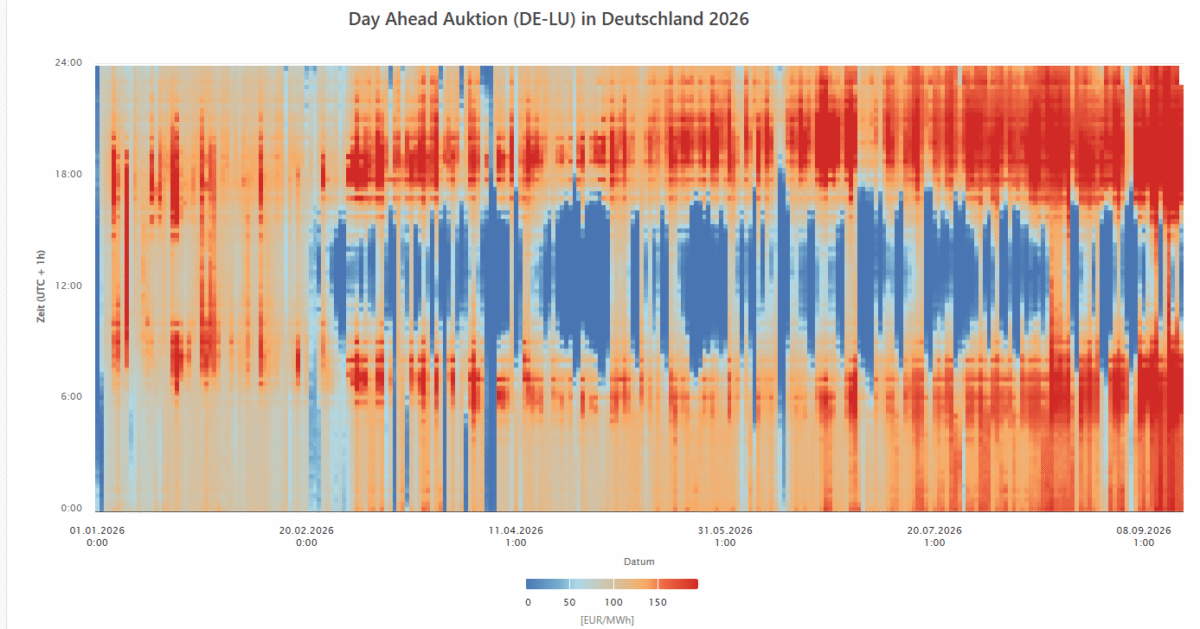
German spot markets experienced severe volatility in mid-September, with day-ahead prices reaching up to 58.51 cents/kWh (approx. €585/MWh) during evening hours due to low wind generation ("Dunkelflaute"). Reports indicate that peak prices briefly touched €740/MWh, driven by a combination of insufficient renewable output and reliance on expensive gas-fired backup. These spikes are raising concerns about winter energy security and have intensified domestic political debates regarding energy affordability and corporate profits.
French Evening Prices Near €300/MWh Due to Nuclear Outages
France faced tight grid conditions in mid-September as low nuclear availability pushed evening power prices near €300/MWh. This surge occurred alongside broader European trends where gas prices remained high, affecting the marginal price-setting plant in many hours. The incident highlights the vulnerability of France's baseload-heavy mix when nuclear maintenance coincides with low hydro or high demand periods, creating sharp intraday price spreads.
Renewables Share Holds at 54% in Q2 2026
Eurostat data released on September 18, 2026, confirmed that 54.1% of electricity generated in the EU came from renewable sources in the second quarter of 2026, a slight decrease from 54.3% in the same period of 2025. Solar remained the leading renewable source, accounting for 41.6% of total renewable electricity. While the share remains high, the slight dip underscores the variability of renewables and the continued need for flexible thermal capacity, which keeps pressure on both gas and carbon markets.
Local view
In Germany, local media such as pv magazine Deutschland analyzed the structural causes of recent price peaks, noting that photovoltaic feed-in depresses daytime prices while scarcity prices of several hundred euros per megawatt-hour occur increasingly in the evening. Leonhard Gandhi from Fraunhofer ISE explained that the interplay between the gas market, weather patterns, and storage limitations is driving this bifurcation in the merit order effect.
In Poland, Wnp.pl reported that EUA prices are the highest since January, increasing pressure on electricity prices. Polish futures for Q4 2026 exceeded 700 PLN/MWh, reflecting fears of high winter costs driven by expensive coal and carbon allowances. Local analysts warn that these levels could lead to significant increases in household bills, potentially up to 800 PLN annually for some consumers.
Context & numbers
- EUA Price: ~€82.48/t (late August/early Sept 2026 trend)
- German Peak Price: Up to €740/MWh (mid-Sept 2026)
- French Evening Peak: Near €300/MWh (Sept 15, 2026)
- Renewables Share: 54.1% of EU electricity in Q2 2026
- Polish Q4 Futures: >700 PLN/MWh (mid-Sept 2026)
On the radar
- Windfall Tax Debates: German ministers are actively calling for bloc-wide windfall taxes on energy firms citing "exploitation" during Middle East-driven price spikes, which could impact future utility investment signals.
- Winter Preparation: Market participants are closely watching storage levels and early winter forecasts following the September price spikes, particularly in Germany and Poland where futures markets have already priced in significant risk premiums.
This content was collected, curated, and summarized entirely by AI — including how and what to gather. It may contain inaccuracies. Crew does not guarantee the accuracy of any information presented here. Always verify facts on your own before acting on them. Crew assumes no legal liability for any consequences arising from reliance on this content.
Powered by
