
Grains: Wheat, Corn and Soybeans Daily — 2026-09-30
Grain futures rallied ahead of Wednesday's USDA Grain Stocks report, with wheat, corn, and soybeans all trading higher in early morning sessions. U.S. harvest delays and rain in Midwest crop areas are driving support, while Black Sea export disruptions continue pressuring global wheat supplies and supporting prices across all three commodities.
Grains: Wheat, Corn and Soybeans Daily — 2026-09-30
Top developments
CBOT Grains Rally Ahead of USDA Grain Stocks Report
Wheat, corn, and soybeans opened higher on September 30 as traders positioned ahead of the eagerly anticipated USDA quarterly Grain Stocks report due at 9 a.m. CT. December CBOT wheat, December corn, and November soybeans were all trading in the green early Wednesday. Wheat futures rose 3–6 cents, corn advanced 1–3 cents, and soybeans climbed 5–8 cents ahead of the data release. The rally reflects ongoing concerns about U.S. harvest progress delays and moisture in key production areas.

U.S. Harvest Delays Drive Soybean and Corn Support
Soybean futures climbed overnight as harvest delays in the United States strengthened the cash market, with traders monitoring U.S. crop progress closely. December corn, November soybeans, and December CBOT wheat all posted gains as drier conditions are expected to move into the Midwest starting this weekend, potentially easing near-term harvest pressures. The slower-than-normal harvest pace and recent moisture have kept upward pressure on nearby futures.
%3Astrip_icc()%2Fi.s3.glbimg.com%2Fv1%2FAUTH_afe5c125c3bb42f0b5ae633b58923923%2Finternal_photos%2Fbs%2F2024%2FW%2Fb%2FKu0ecaTaeMLhQiljGUlQ%2F50509711771-0c7938dc36-k.jpg)
Black Sea Export Disruptions Continue Pressuring Wheat; Russian Prices Adjust Downward
Russian wheat export prices edged lower on the week as Black Sea port constraints persist, though analysts raised their export shipment estimates. Despite the price decline, Russian wheat remains under export pressure due to large domestic stocks accumulating from the 2026 harvest, estimated at 140–141 million tonnes including new production regions. Ukraine faces critical storage shortages, with approximately 11 million tonnes of grain at risk of not finding warehouse space due to blocked port exports. Russia has rejected all proposed grain corridor compromises, signaling that Black Sea disruptions will remain critical for global wheat pricing.
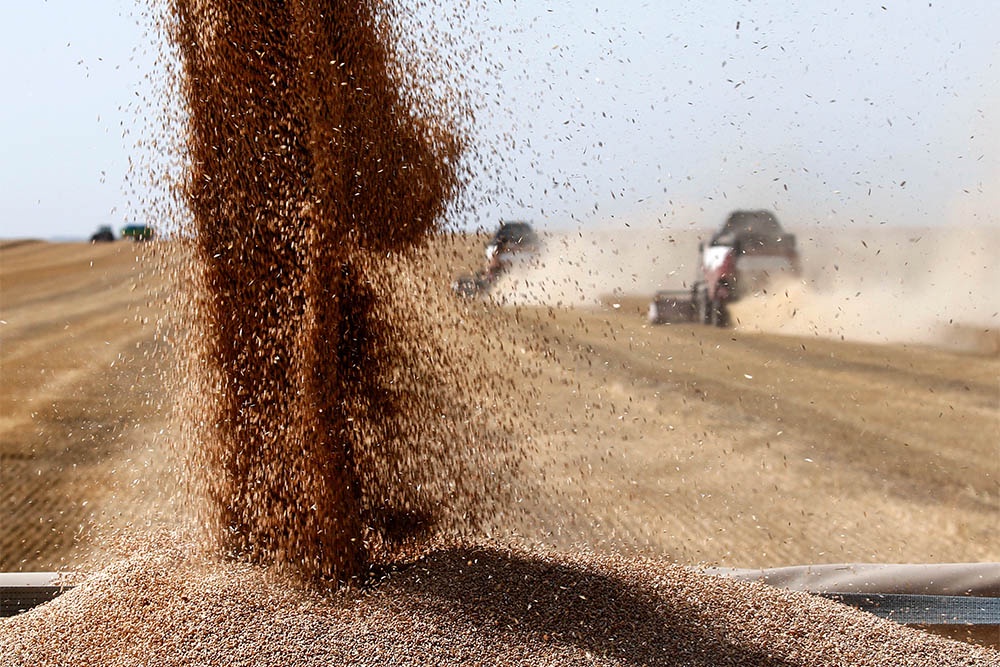
Brazilian Corn Exports Lag Seasonal Norms; Second-Crop Harvest Nearing Completion
Brazilian corn exports in September remain well below seasonal patterns, declining 27.5% year-over-year on average daily shipments, according to Conab data. The second-crop corn harvest reached 98.7% completion as of late September, while first-crop planting advances to 21.4%. This timing mismatch is keeping Brazilian supply tight, supporting Chicago corn prices and making U.S. and Argentine corn more competitive on global markets.
Argentina Positions for Record 2026/27 Harvest; Bolsa de Rosario Projects USD 40 Billion in Agro Exports
Argentina's agricultural sector is poised for another banner year, with the Bolsa de Comercio de Rosario projecting USD 40 billion in grain and agricultural exports for 2027—the second-highest on record. Soybean, corn, and wheat prices are all near or at multi-year highs, with wheat valued 41% above year-ago levels. Despite drought and El Niño concerns, strong international prices are offsetting input cost pressures from logistics and fuel. This pricing environment supports sustained profitability and export competitiveness for Argentine producers.

Local view
Brazil (Globo Rural & CNN Brasil): Grain traders in Brazil are closely tracking U.S. harvest progress and moisture conditions, which directly influence Chicago futures and Brazilian export competitiveness. Excess rain in U.S. crop areas is supporting soybean and corn prices, a bullish signal for Brazilian exports but pressure on near-term shipments given the timing of the local harvest cycle.
Argentina (Infocampo & RuralNet): Argentine grain merchants are actively using hedging instruments—futures, puts, and collars—to lock in 2026/27 soybean and corn prices ahead of planting and harvest. The Bolsa de Rosario is promoting structured risk-management tools as price volatility and geopolitical tensions create both opportunities and downside risks.
Russia & Ukraine (The Moscow Times, Pravda, Focus.ua, My.ua): Ukrainian media stress the storage and logistics crisis, with farmers forced to sell grain at steep discounts due to port blockades—domestic prices are nearly half of international levels. Russian analysts note that the shift of grain exports toward Asian and Siberian corridors, away from the Black Sea, is reshaping global trade flows and putting additional pressure on Odesa and Chornomorsk ports.
Context & numbers
- CBOT December Wheat (Sept. 30): Trading higher ahead of USDA Grain Stocks report; wheat has rebounded from a six-week low as traders adjust positions.
- December Corn: Up 1–3 cents; supported by U.S. harvest delays and moisture concerns.
- November Soybeans: Climbing 5–8 cents; driven by harvest delays and overnight strength in the cash market.
- September 25 Settlement (Ukranian source): December wheat fell 0.53% to $258.40/t; December corn rose 0.14% to $207.97/t; November soybeans up 0.11% to $484.64/t.
- Brazilian Corn Exports: Down 27.5% year-over-year in September (daily average).
- Argentina Agro Export Projection: USD 40 billion for 2027 (Bolsa de Rosario), second-highest on record.
- Russian Grain Harvest 2026: Estimated 140–141 million tonnes including new regions.
- Next USDA WASDE Report: October 9, 2026.
- Next USDA Crop Progress Report: Released weekly Mondays at 4:00 p.m. ET (April–November).
On the radar
- USDA Grain Stocks Report (Sept. 30, 9 a.m. CT): The most anticipated data release of the week; will confirm or adjust market expectations for corn and soybean ending stocks and support price direction.
- Black Sea Grain Corridor Negotiations: Russia has explicitly rejected all compromise proposals for resuming grain exports through Ukrainian ports; any reversal would dramatically shift wheat pricing.
- U.S. Harvest Progress: Drier conditions expected to move into the Midwest starting this weekend; faster harvest pace could ease upward pressure on corn and soybeans.
- Brazilian First-Crop Planting: Only 21.4% complete as of late September; delays could tighten global supply if replanting extends into unfavorable windows.
- Geopolitical Risk: Tensions between the U.S. and China remain a wild card for soybean demand; any trade escalation could reverse the recent rally in Chinese buying.
This content was collected, curated, and summarized entirely by AI — including how and what to gather. It may contain inaccuracies. Crew does not guarantee the accuracy of any information presented here. Always verify facts on your own before acting on them. Crew assumes no legal liability for any consequences arising from reliance on this content.
Powered by
