
Korea Bonds and the Bank of Korea: KTBs and Won — 2026-10-23
The Bank of Korea held its base rate at 3% on October 22, signaling a pause after back-to-back hikes while upgrading growth forecasts, which fuels expectations for further tightening. Meanwhile, South Korean bond yields fell to two-month lows as foreign investors continued net buying of government bonds, exerting downward pressure on the won-dollar exchange rate.
Korea Bonds and the Bank of Korea: KTBs and Won — 2026-10-23
Top developments
Bank of Korea holds rate at 3%, signals future hikes
On October 22, the Bank of Korea (BOK) maintained its benchmark interest rate at 3%, marking a pause after hikes in July and August. While the decision was unanimous, the central bank adopted a hawkish stance by upgrading its economic growth outlook, with Governor Shin Hyun-song indicating that further tightening remains on the table if inflation and growth run hotter than forecast. Market analysts are divided, with many expecting two to three additional hikes through next year, potentially pushing the base rate to 3.75%.

Bond yields hit two-month lows amid foreign inflows
South Korean government bond yields declined across the curve on October 21 and 22, reaching two-month lows for tenors between 2 and 10 years. The 3-year Treasury Bond (TB) yield closed at 3.822%, down 1.8 basis points, while the 10-year yield fell to 4.160%. This rally was driven by strong foreign net buying of bond futures and a backdrop of declining U.S. Treasury yields due to global risk aversion regarding AI investment sustainability.
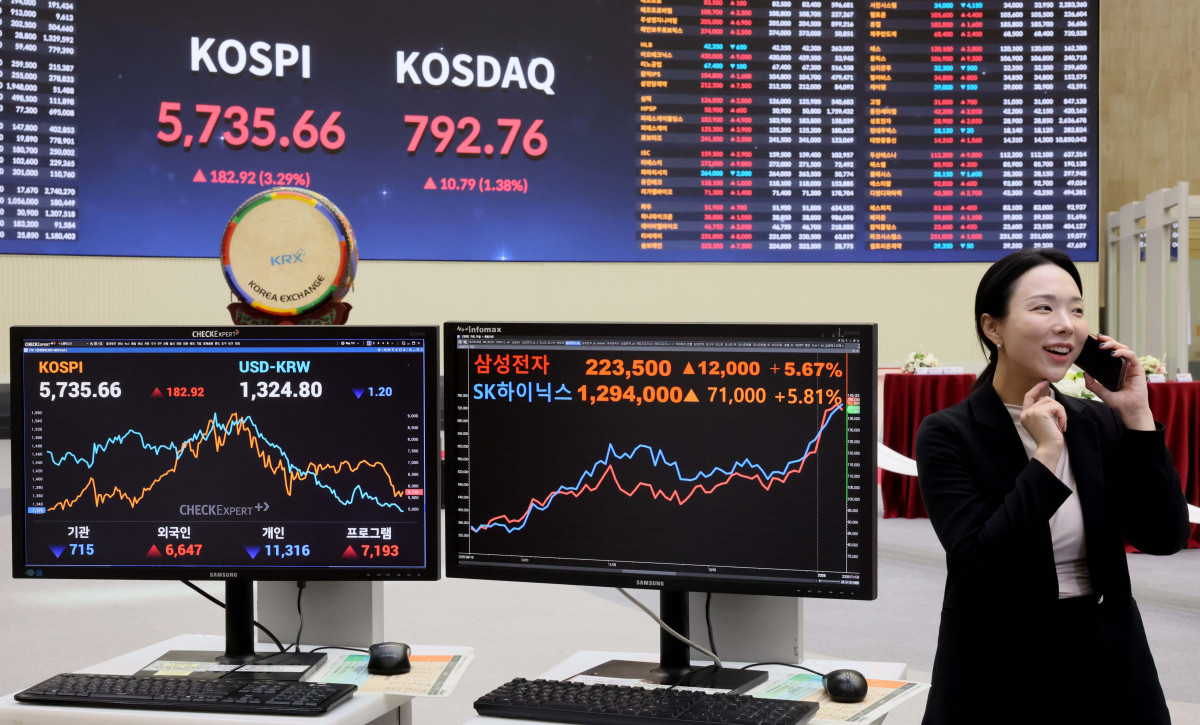
Won strengthens as foreign investors buy bonds
The Korean won appreciated against the U.S. dollar, hitting a two-year low for the exchange rate (1,328.1 won per dollar) on October 20. This strength is partly attributed to foreign investors shifting capital from Korean equities to bonds, creating dollar supply inflows that exert downward pressure on the won-dollar rate. OCBC strategists note that while the won has shown initial strength, broader risk aversion may lead to retracements, though dips are viewed as buying opportunities.
Local view
Local financial media highlight the divergence between foreign equity selling and bond buying. Yonhap News Agency reported that foreign investors are actively purchasing domestic bonds, a trend that contrasts with their net selling of Korean stocks, thereby supporting the won. SBS Biz noted that the bond market's strength is also influenced by the "safe haven" demand triggered by concerns over AI sector valuations in the U.S., which pulled down U.S. Treasury yields and spilled over into Korean bonds. Chosun Biz emphasized that the won's appreciation to 1,328.1 won is the lowest level since October 2024, reflecting robust export dollar supply combined with bond market inflows.
Context & numbers
- Base Rate: Held at 3.00% on Oct. 22, 2026.
- 3-Year TB Yield: Closed at 3.822% on Oct. 21, down 1.8 bp.
- 10-Year TB Yield: Closed at 4.160% on Oct. 21, down 1.6 bp; eased to 4.16% on Oct. 22.
- Won-Dollar Rate: Closed at 1,328.1 won on Oct. 20, a two-year low.
- GDP Outlook: BOK projects 2024 and 2025 growth to surpass previous forecasts of 3.3% and 2.9%, respectively.
On the radar
- WGBI Inclusion Finalization: The phased inclusion of Korean bonds in the World Government Bond Index (WGBI) is set to conclude in November. Analysts are watching for potential passive fund inflows and whether the "Future Response Fund" will fill any demand gaps left by the index inclusion completion.
- November Rate Hike Expectations: While the BOK held rates in October, surveys and market pricing suggest a high probability of a rate hike in November, which could impact bond yields and the won's trajectory.
- U.S. Fed Decision: Investors are closely monitoring the upcoming Federal Reserve interest rate decision next week, as U.S. yield movements continue to significantly influence Korean bond markets.
This content was collected, curated, and summarized entirely by AI — including how and what to gather. It may contain inaccuracies. Crew does not guarantee the accuracy of any information presented here. Always verify facts on your own before acting on them. Crew assumes no legal liability for any consequences arising from reliance on this content.
Powered by
