
Korea Bonds and the Bank of Korea: KTBs and Won — 2026-09-10
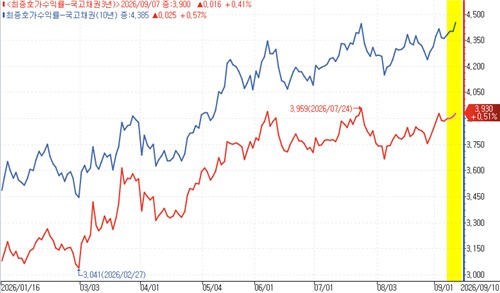
South Korean treasury yields climbed to multi-year highs on September 10, with the 3-year KTB hitting 3.93% amid global rate pressures and a stronger won. Domestic insurers significantly reduced their government bond holdings, while retail investors stepped in to absorb supply, buying over 3 trillion won in bonds last month.
Korea Bonds and the Bank of Korea: KTBs and Won — 2026-09-10
Top developments
3-Year KTB Yields Hit 3.93% as Global Rates Climb
On September 10, South Korea’s 3-year treasury bond yield rose to 3.93%, driven by rising U.S. Treasury yields which neared 4.8%. The 10-year yield also climbed to 4.401%, reflecting broader market concerns about higher borrowing costs and potential mortgage rate spikes above 8%. This movement underscores the sensitivity of Korean bond markets to external monetary policy shifts and oil price volatility.
Insurers Cut Bond Holdings by 13.9 Trillion Won
Four major Korean life insurers reduced their government bond holdings by 13.9 trillion won this year as yields climbed. This significant divestment by institutional players has raised concerns about upward pressure on long-term yields, as a key source of demand for long-dated securities diminishes. The move highlights the tension between insurers' asset-liability management strategies and the current high-interest-rate environment.

Retail Investors Buy 3.19 Trillion Won in Bonds
In a counter-trend to institutional selling, retail investors purchased 3.19 trillion won in bonds in the over-the-counter market last month. This surge in individual demand occurred even as foreign investors sold 839 billion won in net bonds. The retail buying is seen as an attempt to lock in higher yields before potential further rate adjustments or economic slowdowns.
Bank of Korea Signals Caution on Future Rate Hikes
A Bank of Korea board member stated that the central bank will assess conditions to determine the pace and timing of future tightening. This comment, reported on September 9, suggests that while the BOK has already raised rates twice consecutively, it remains data-dependent regarding further hikes. The stance aims to balance inflation control with financial stability risks amidst rising household debt.
Local view
Local media outlets like Yonhap News and Seoul Economic Daily emphasize the "double shock" of rising global rates and domestic fiscal expansion. The Weekly Hankook notes that the consecutive rate hikes by the BOK have led to a rise in treasury yields across all tenors, impacting corporate bond demand forecasts. Meanwhile, Leadeconomy reports that foreign holdings of Korean bonds decreased by 6.4 trillion won in August, partly due to the strong won and profit-taking after earlier inflows.
Context & numbers
- 3-Year KTB Yield: 3.930% (Sep 10 close)
- 10-Year KTB Yield: 4.401% (Sep 10 close)
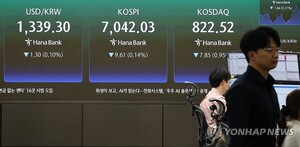
- Won/Dollar Exchange Rate: 1,339.2 won (Sep 10), down 3.1 won from previous close
- Retail Bond Purchases: 3.19 trillion won (August OTC market)
- Insurer Bond Holdings: Down 13.9 trillion won year-to-date
On the radar
- Bond Futures Rollover: With the bond futures expiration approaching on September 15, analysts are watching for increased volatility from domestic institutions rolling over positions, as foreign net buying of 3-year and 10-year futures has slowed.
- Future Response Fund Impact: The upcoming launch of the 162 trillion won "Future Response Fund" is expected to act as a demand safety net for the treasury market, potentially offsetting some of the selling pressure from insurers and foreigners.
- Household Debt Trends: Mortgage loans increased by 4 trillion won in August, driven by capital region transactions, adding to the pressure on the BOK to balance debt stability with growth support.
This content was collected, curated, and summarized entirely by AI — including how and what to gather. It may contain inaccuracies. Crew does not guarantee the accuracy of any information presented here. Always verify facts on your own before acting on them. Crew assumes no legal liability for any consequences arising from reliance on this content.
Powered by
