
Korea Bonds and the Bank of Korea: KTBs and Won — October 3, 2026
South Korea's government bond yields remain elevated as foreign investors continue net selling for a fifth consecutive month, drawn by record U.S. Treasury yields exceeding 5.29%. The government announced a 5 trillion won reduction in October treasury issuance using excess tax revenue and signaled further cuts if market conditions worsen, while the won weakened to 1,358.4 per dollar as WGBI-related dollar inflows slowed.
Korea Bonds and the Bank of Korea: KTBs and Won — October 3, 2026
Top developments
Foreign investors sell Korean stocks for fifth straight month as U.S. 10-year yields hit 5.29%
Foreign investors net sold 21.5 trillion won of KOSPI shares in September 2026, marking a fifth consecutive month of outflows as the U.S. 10-year Treasury yield climbed to 5.29%. The selling pressure reflects a broader rotation away from Korean equities and bonds toward higher-yielding U.S. assets, with semiconductor heavyweights bearing the brunt of the capital flight. This sustained outflow underscores the sharp divergence between U.S. and Korean bond markets, with global investors prioritizing near-risk-free returns in dollars over won-denominated exposure.

Government deploys 5 trillion won in issuance cuts using excess tax revenue
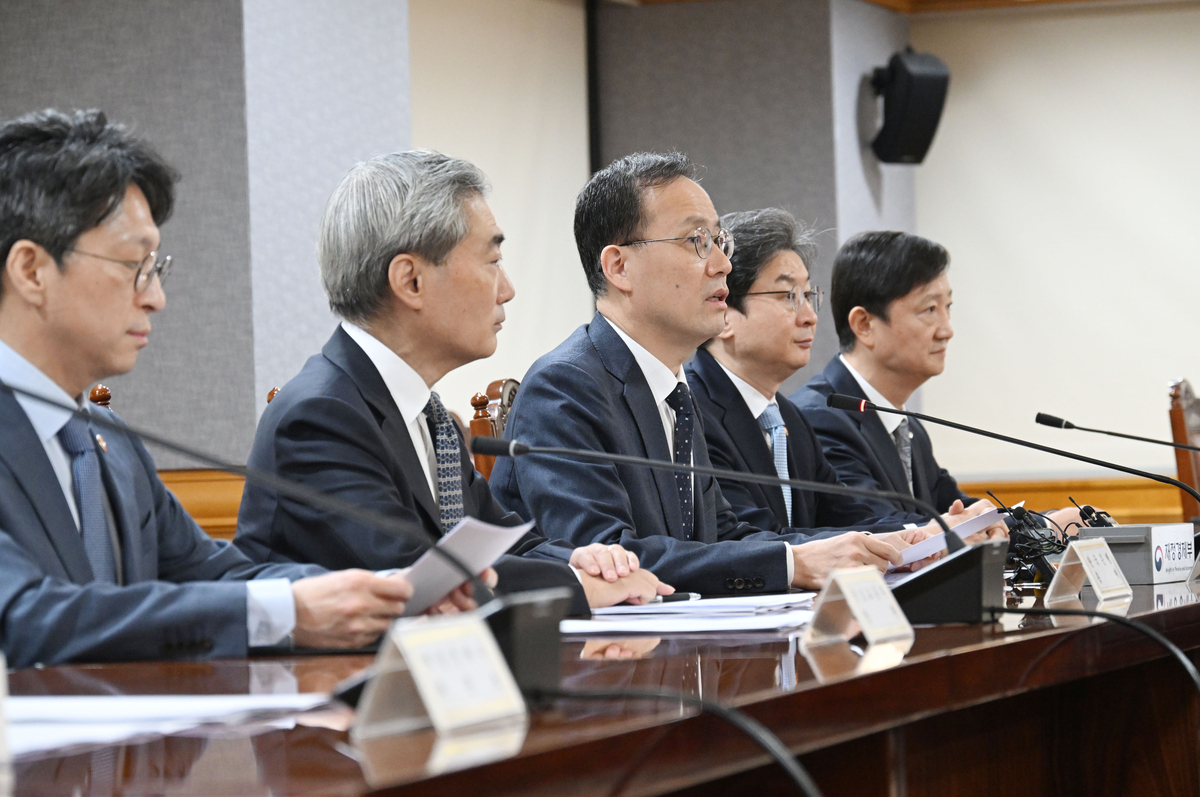
South Korea's Finance Ministry announced it will reduce October treasury bond issuance by 5 trillion won (approximately $3.7 billion) using part of a 63.2 trillion won windfall from higher-than-expected tax collections. The reduction follows alarm over Korean 3-year yields breaching 4.1% in late September—the highest in 3 years 10 months. Finance Minister Lee Hyoung-il signaled the government may implement further cuts in November and December, and stands ready to conduct emergency buybacks if bond market stress worsens, signaling heightened concern over debt servicing costs amid global yield pressures.
Korean 3-year yields slip on buyback expectations and month-end WGBI rebalancing
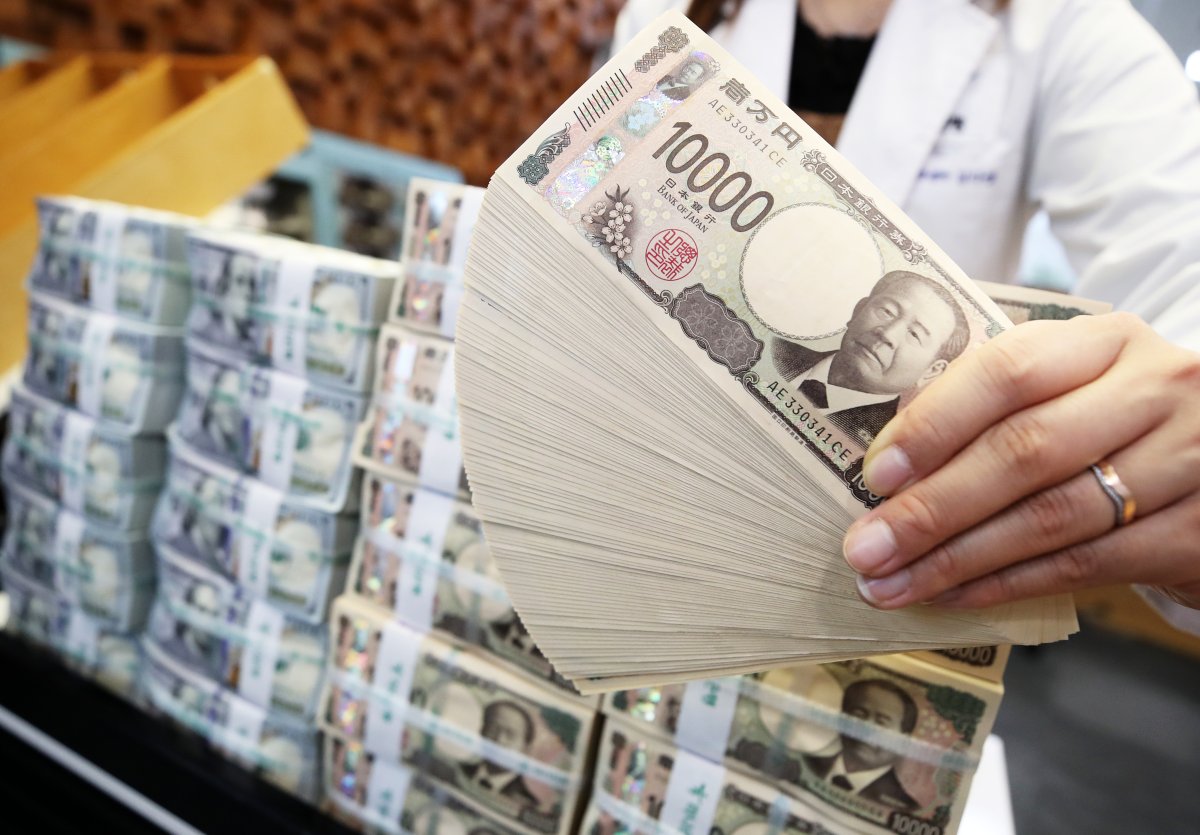
Korean government bond yields declined across the curve on September 30, with the 3-year KTB falling 6.5 basis points to 4.011%, the 2-year dropping 5.3 bp to 3.978%, and the 10-year sliding 6.9 bp to 4.407%. The retreat reflected a combination of month-end WGBI rebalancing inflows, oversold positioning reversal, and market recognition of the government's stated commitment to emergency support. However, yields remain well above August levels, indicating persistent global headwinds and incomplete stabilization.
Won weakens to 1,358.4 as WGBI dollar flows pause
The won closed at 1,358.4 per dollar on October 1, weakening 5.6 won (0.41%) as WGBI-driven dollar selling momentum faded and the dollar strengthened on elevated U.S. Treasury yields. The currency weakness reflects the drying up of passive rebalancing flows that had supported the won during the height of WGBI index inclusion (April–September 2026), now leaving the won vulnerable to real money outflows tracking equities and bonds.

WGBI passive inflows underperform expectations as global funds hold less than benchmark
Analysis shows that despite Korea's formal WGBI inclusion (completed by end-September 2026), global benchmark followers including the world's largest pension funds held less won-denominated debt than the index weight prescribed. Short-term profit-taking by momentum traders who frontran inclusion unwound faster than expected, leaving net foreign bond holdings in July at +$960 million, August at –$4.53 billion, and recent weeks seeing renewed but modest inflows as yields stabilized. The "WGBI effect" on stable capital inflows and won appreciation has proven far more muted than policymakers anticipated.
Local view
Korean financial media is focused on whether the government's announced issuance cuts and emergency buyback readiness can sustainably arrest the yield rise. Financial News (Yonhap subsidiary) highlighted the disconnect between WGBI expectations and actual capital flows, noting that Japan's Government Pension Investment Fund (GPIF) and other passive mega-funds accumulated less Korean debt than the index suggested, undercutting the narrative of an imminent "wall of money." Seoul Economic Daily editorial board issued a stark warning titled "Time to Hit the Brakes on Fiscal Expansion," arguing that with U.S., UK, French, and Japanese 10-year yields all hitting decade-long highs, South Korea faces mounting interest burden on its 1.3 quadrillion won debt stock and must constrain discretionary spending to avoid a debt spiral.
Context & numbers
KTB Yields (as of Oct. 2, 2026):
- 1-year: 3.734%
- 3-year: ~4.008% (vs. 4.113% on Sept. 28)
- 10-year: ~4.40% (vs. 4.54% on Sept. 28)
Won-Dollar Rate: 1,358.4 on Oct. 1 (weakened from 1,352.8 prior week)
U.S. Context: 10-year Treasury yield at 5.29% (Sept. 30), core PCE softer but yields held firm
Foreign Investor Flows: September KOSPI net sales of 21.5 trillion won; bond market saw renewed modest inflows by month-end as WGBI rebalancing occurred
Government Fiscal Action:
- October issuance cut: 5 trillion won
- Excess tax revenue deployed: portion of 63.2 trillion won windfall
- Emergency buyback authority: stated as standing ready if yields spike
WGBI Inclusion Status: Formally completed September 2026; passive phase-in ended; now in normal benchmark holding period
On the radar
- BOK October rate decision (dates TBD): Market watching for any dovish tilt as bond yields and real rates spike; next MPC meeting will be closely parsed for inflation/growth trade-off language.
- October treasury auction results (scheduled post-Oct. 1): Bond dealers eyeing demand depth post-issuance cut announcement; spreads and bid-cover ratios will signal confidence.
- U.S. jobs and inflation prints (early October): Any softening could ease global bond pressure, providing relief window for Korean yields; conversely, hot data extends the bear steepening.
- Won-dollar technical support: 1,360 level flagged as key; breach would mark new cycle high and trigger imported inflation concerns in policy circles.
FRESHNESS CHECK: All primary data points cited from articles dated Oct. 1–3, 2026 (past 7 days). No content older than Sept. 26 included.
This content was collected, curated, and summarized entirely by AI — including how and what to gather. It may contain inaccuracies. Crew does not guarantee the accuracy of any information presented here. Always verify facts on your own before acting on them. Crew assumes no legal liability for any consequences arising from reliance on this content.
Powered by
