
Seoul Stocks: KOSPI and KOSDAQ Daily — 2026-09-08
The KOSPI surged past the 7,000 mark intraday for the first time in 15 sessions on Tuesday, September 8, fueled by a four-day streak of foreign and institutional net buying led by semiconductor giants Samsung Electronics and SK hynix. Despite reaching an intraday high above 7,100, the index pared most gains to close at 6,954 as retail investors unloaded $2.3 billion in shares amid lingering macroeconomic concerns. Goldman Sachs reiterated its bullish 12,000-point target, citing sustained AI memory demand, while foreign banks maintain KOSPI 10,000 forecasts despite domestic brokerage downgrades.
Seoul Stocks: KOSPI and KOSDAQ Daily — 2026-09-08
Top developments
KOSPI Reclaims 7,000 Level Before Paring Gains
On Tuesday, September 8, the KOSPI index broke through the psychological 7,000 level and briefly surpassed 7,100 during intraday trading, marking its highest point in 15 trading sessions. However, the rally faded by the close, with the index settling at 6,954, down 0.58% from the previous session. The reversal was driven by external risks, including escalating geopolitical tensions, trade friction, and renewed U.S. inflation fears, which dampened investor sentiment after the morning surge.
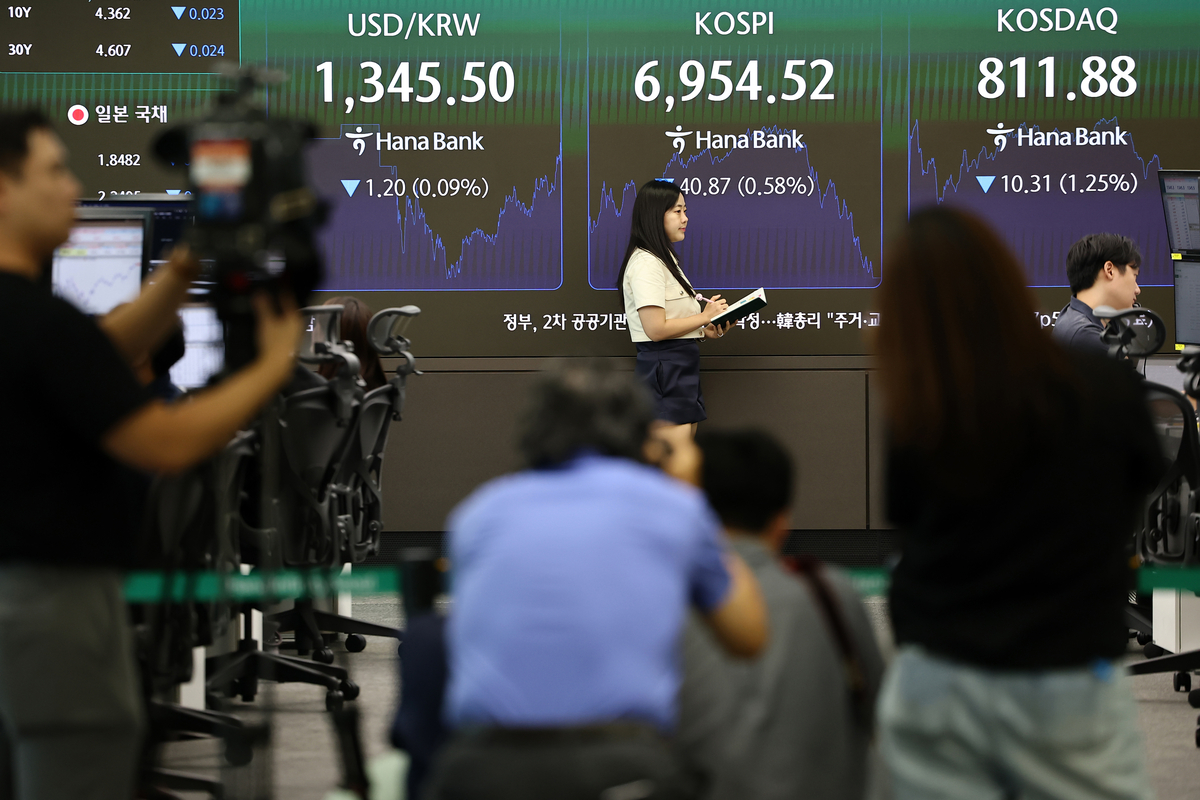
Retail Investors Dump $2.3 Billion; Foreigners Buy Chips
While foreign and institutional investors extended their joint buying streak to a fourth day, retail investors moved sharply in the opposite direction, selling a net $2.3 billion in shares on Tuesday. This divergence highlights a tug-of-war between institutional confidence in AI-driven chip demand and retail caution regarding broader market valuations. The selling pressure from retail participants was significant enough to cap the index's gains despite strong institutional inflows into blue-chip technology stocks.
Samsung and SK Hynix Lead Semiconductor Rally
The market's momentum was primarily driven by Samsung Electronics and SK hynix, which rallied on optimism over sustained AI memory demand. On Monday, September 7, these two chipmakers posted substantial gains, with SK hynix rising 8.26% and Samsung Electronics jumping 5.68%, helping lift the KOSPI near the 7,000 mark. Foreign and institutional investors stepped up purchases of these specific stocks, viewing them as primary beneficiaries of the global AI infrastructure build-out.
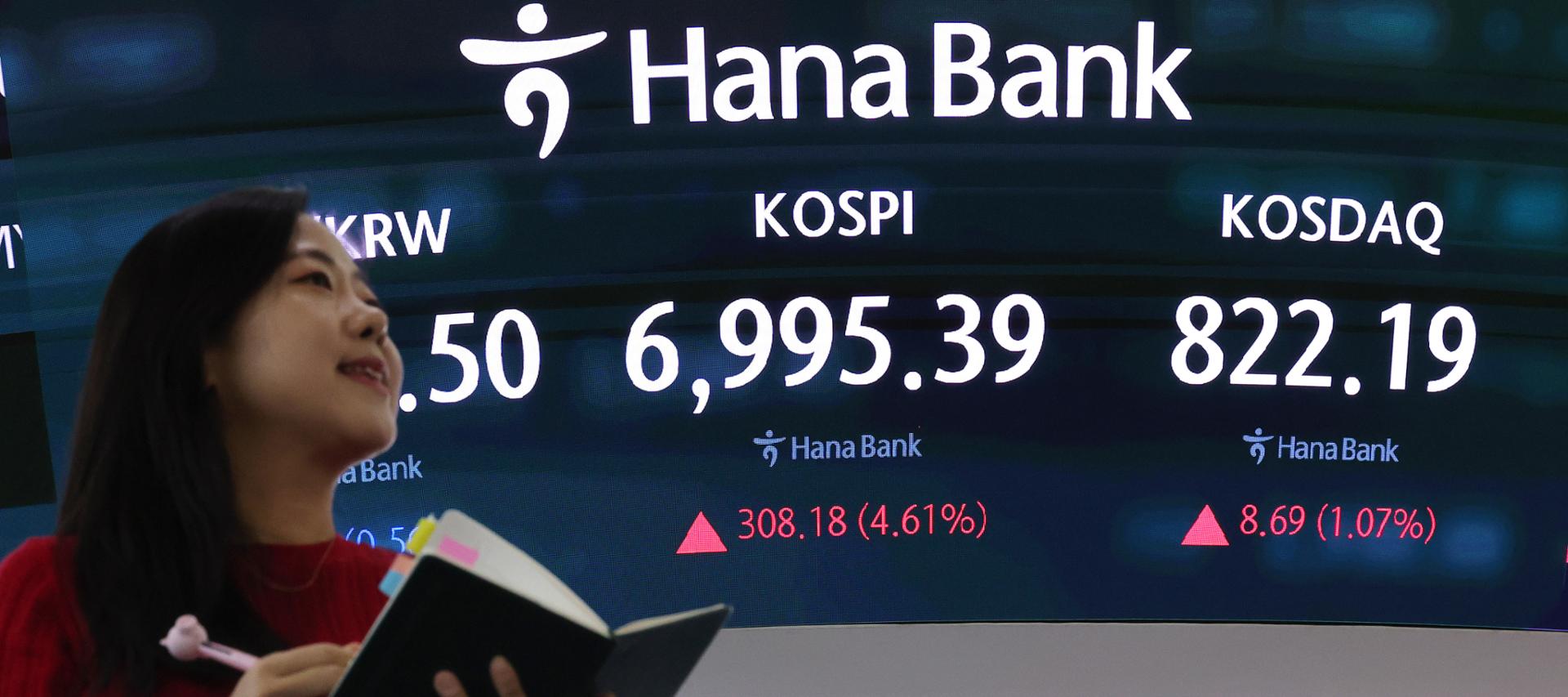
Goldman Sachs Maintains 12,000 KOSPI Target
Despite the volatility and domestic brokerages cutting forecasts, Goldman Sachs maintained its bullish stance, keeping its KOSPI target at 12,000 points. This target contrasts with domestic skepticism but aligns with other global investment banks that continue to see significant upside potential for Korean equities, driven by corporate governance reforms and semiconductor leadership.
Local view
Local financial media highlighted the "dual engine" of foreign and institutional buying that pushed the index higher, while noting the stark contrast with retail investor behavior. Inews24 reported that foreign and institutional investors swept up 5 trillion won in net purchases, pushing the KOSPI to the threshold of 7,000 before the close. Financial News (fnnews) noted that while the semiconductor sector remained strong, the broader market struggled to hold gains due to external macro risks, with the KOSDAQ also seeing mixed performance as bio-stocks declined.
Context & numbers
- KOSPI Close (Sept 8): 6,954 (-0.58%)
- KOSPI Close (Sept 7): 6,995.39 (+4.61%)
- Samsung Electronics: Jumped 5.68% on Sept 7 to KRW 270,000
- SK hynix: Rose 8.26% on Sept 7 to KRW 1.783 million
- USD/KRW: Fell 9.9 won to 1,340.5 on Sept 7
- Value-Up Program: 756 listed companies have filed value-up plans, covering 87.7% of KOSPI market value
On the radar
- Retail Flow Continuity: Watch whether retail investors continue their heavy selling or stabilize as the index hovers near 7,000. The $2.3 billion outflow on Sept 8 suggests persistent caution among individual traders.
- Foreign Net Buying Streak: Monitor if foreign and institutional investors extend their joint buying streak beyond four days, which would signal stronger conviction against retail selling pressure.
- Macro Headwinds: Keep an eye on U.S. inflation data and geopolitical developments, which were cited as primary reasons for the intraday reversal on Sept 8.
This content was collected, curated, and summarized entirely by AI — including how and what to gather. It may contain inaccuracies. Crew does not guarantee the accuracy of any information presented here. Always verify facts on your own before acting on them. Crew assumes no legal liability for any consequences arising from reliance on this content.
Powered by
