
Seoul Stocks: KOSPI and KOSDAQ Daily — 2026-09-11
The KOSPI successfully defended the psychological 7,000-point level on September 10, closing at 6,954 despite a 1.28% drop driven by surging oil prices and Middle East geopolitical tensions. Foreign and institutional investors returned as net buyers earlier in the week, lifting semiconductor giants Samsung Electronics and SK hynix on renewed AI demand optimism, though retail investors continued to offload positions. The index remains volatile, oscillating near the 7,000 mark as external risks clash with strong domestic chip fundamentals.
Seoul Stocks: KOSPI and KOSDAQ Daily — 2026-09-11
Top developments
Quadruple Witching and Oil Pressures Test the 7,000 Floor
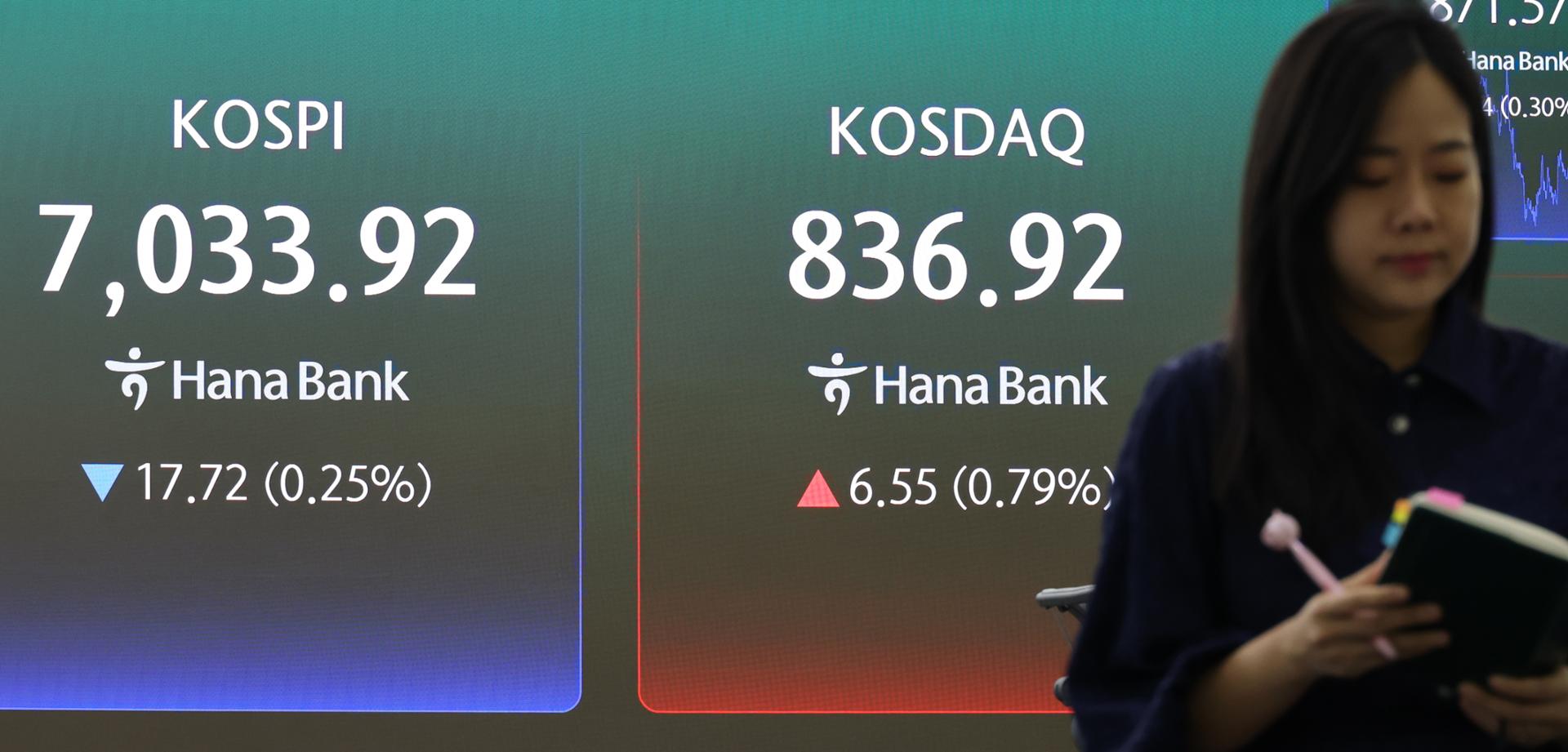
On September 10, the KOSPI faced significant headwinds from international oil prices surpassing $100 due to intensifying Middle East tensions, which fueled inflation concerns. Despite a 1.28% intraday drop and selling pressure from foreign and institutional investors on the "Quadruple Witching" day (simultaneous expiration of futures and options), the index managed to close above the critical 7,000 threshold at approximately 6,954. This resilience suggests that domestic buying interest is currently absorbing external macroeconomic shocks, keeping the bull market intact for now.
Semiconductor Rally Drives Foreign Return
Earlier in the week, specifically on September 7 and 8, foreign and institutional investors executed large-scale net purchases of chip stocks, propelling the KOSPI past 7,000 for the first time in weeks. This rally was triggered by renewed optimism regarding AI memory demand, following OpenAI's release of GPT-6, with Samsung Electronics rising 5% and SK hynix surging 8%. Goldman Sachs maintained its bullish stance, reiterating a 12,000-point target for the KOSPI based on these fundamental shifts in the semiconductor sector.
Retail Investors Bet Against the Index
While institutions bought into the chip rally, retail investors engaged in counter-trend trading, selling approximately $2.3 billion worth of shares on September 8 as the index hovered near its highs. This divergence highlights a cautious retail sentiment; individual investors are taking profits or hedging against potential pullbacks from geopolitical risks, even as foreign capital flows back into large-cap tech stocks.
Won Strengthens Amidst Volatility
The South Korean won strengthened against the U.S. dollar, with the USD/KRW exchange rate falling to 1,337.05 on September 9, marking a 0.23% daily gain for the won. This currency stability has helped cushion the impact of foreign outflows and supports the valuation of Korean exporters, although the stronger won can also dampen export competitiveness if it persists alongside high oil prices.
Local view
Local media outlets are closely monitoring the "tug-of-war" between external geopolitical risks and internal corporate value-up initiatives. Financial News noted that despite the "Quadruple Witching" day selling pressure, the market's ability to hold the 7,000 line is attributed to strong underlying demand for semiconductors. Businesskorea highlighted that the stabilization of the won and joint buying by foreign and institutional investors were key drivers in regaining the 7,000 level earlier in the week, describing it as a "strong rebound" supported by macroeconomic stability. Analysts quoted in local reports suggest that while macro uncertainty causes investors to reduce equity exposure, the specific strength of the AI chip cycle provides a unique buffer for the Korean market.
Context & numbers
- KOSPI Close (Sept 10): ~6,954 (down 1.28% from previous close)
- KOSDAQ Close (Sept 10): 836.92 (up 6.55 points)
- USD/KRW Rate: 1,337.05 (as of Sept 9)
- Oil Prices: Brent crude surpassed $100/barrel, impacting inflation expectations
- Value-Up Programme: 756 listed companies have filed value-up plans, covering 87.7% of KOSPI market value
On the radar
- Oil Price Trajectory: Investors are watching Middle East developments closely; sustained oil prices above $100 could trigger further inflation fears and pressure the Bank of Korea's policy stance.
- Post-Quadruple Witching Flows: Market attention will shift to whether foreign investors resume net buying after the September 10 derivatives expiration or continue their recent selling trend.
- Corporate Buybacks: Following Samsung's announcement of substantial shareholder returns, other large-cap firms may announce similar buyback plans, potentially providing further support to the index.
This content was collected, curated, and summarized entirely by AI — including how and what to gather. It may contain inaccuracies. Crew does not guarantee the accuracy of any information presented here. Always verify facts on your own before acting on them. Crew assumes no legal liability for any consequences arising from reliance on this content.
Powered by
