
Natural Gas and LNG: TTF, JKM, Henry Hub Daily — 2026-10-02
LNG cargoes through the Strait of Hormuz hit their highest monthly total since February's US-Iran war began, yet remain 80% below pre-war levels, leaving Europe critically exposed heading into winter. European gas storage stands at just 71%, a 15-year low, while Henry Hub stays firm near $3.02/MMBtu on strong US production, creating a widening transatlantic price chasm that is deterring Asian spot LNG buying.
Natural Gas and LNG: TTF, JKM, Henry Hub Daily — 2026-10-02
Top developments
LNG Through Hormuz Hits Wartime Record, But 80% Gap Leaves Europe Vulnerable
LNG cargoes transiting the Strait of Hormuz reached 19–21 tankers in September 2026—the highest monthly volume since the US-Iran war erupted in February—yet still represent only one-fifth of pre-war export levels. Goldman Sachs has warned that European TTF prices could exceed €100/MWh in December as geopolitical supply disruptions persist. This recovery, while notable, underscores the structural supply shortage threatening Europe's winter energy security.
European Gas Storage at 15-Year Low; Refill Rate Misses November Target
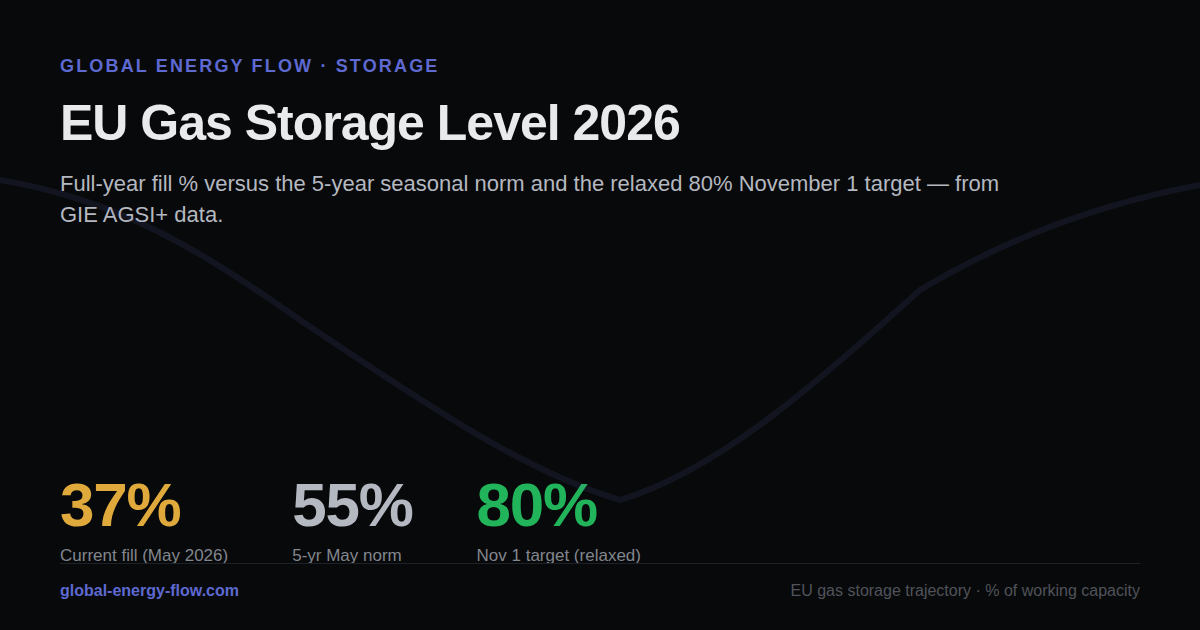
European gas storage stood at 70.87% full as of 26 September 2026 (801.99 TWh), with refilling at approximately +0.20 percentage points per day—below the pace required to reach the 80% November target. Germany's storage fill stands at only 56%, compounding winter anxiety across the continent. This storage deficit amplifies Europe's dependence on arriving LNG cargoes and increases vulnerability to price spikes during peak heating season.
TTF Falls Nearly 20% from Mid-September Peak on Bearish Pressures
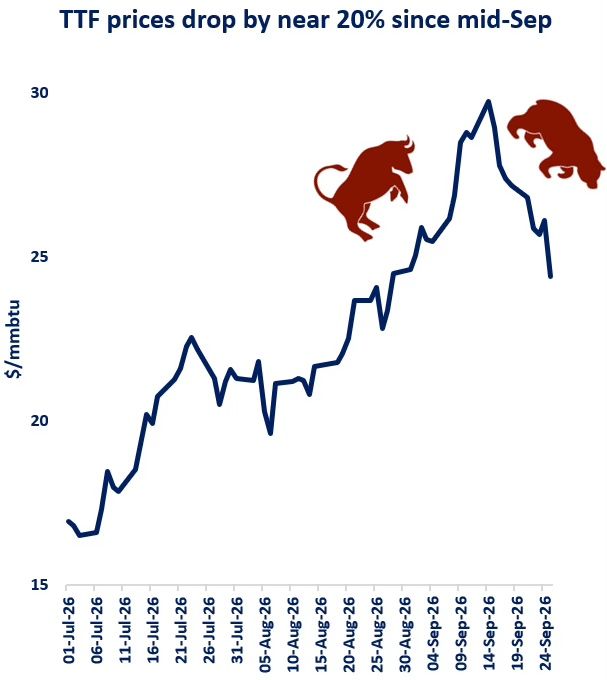
Dutch TTF prices declined almost 20% from mid-September highs, driven by peace talks, rising LNG flows (however limited), profit-taking, and weaker European industrial demand. Despite the retreat, prices remain elevated—trading around €65–70/MWh—as structural undersupply and geopolitical risks keep downside capped.
Henry Hub Settles at $3.02/MMBtu; US Supply Remains Robust
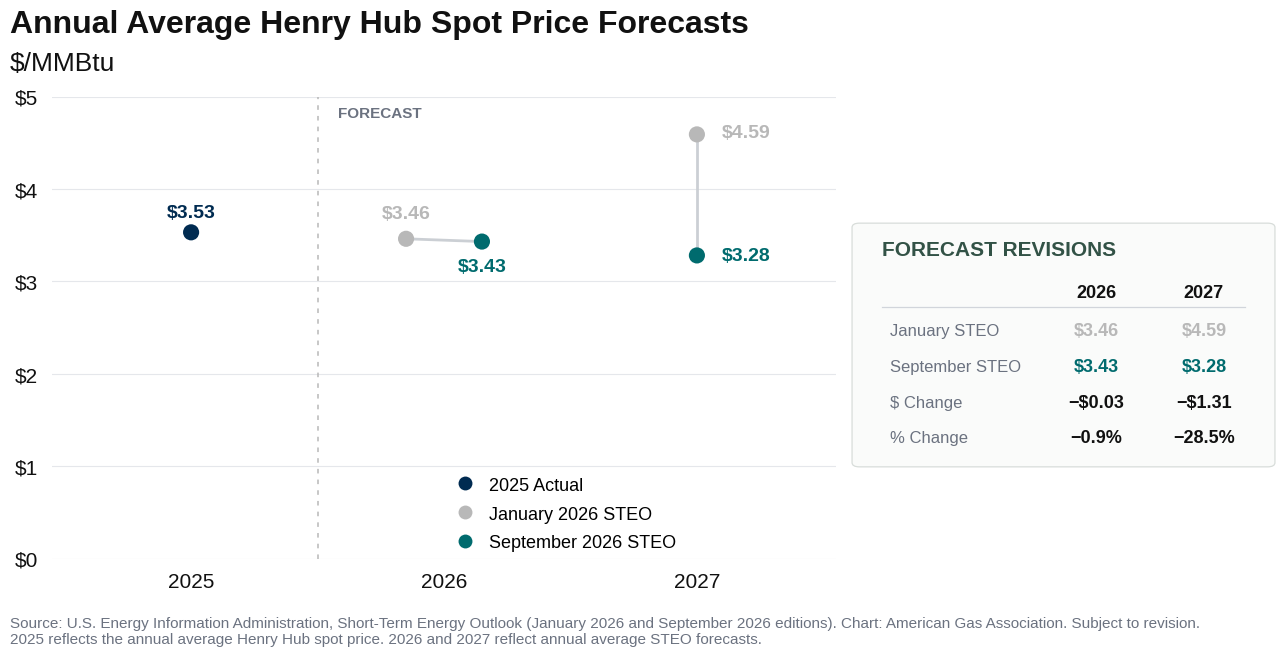
Henry Hub prompt-month prices settled at $3.02 per MMBtu on 23 September 2026 after lingering below $3.00 for over two months. Strong US natural gas production and high underground storage inventories—projected to approach 4 Tcf heading into winter 2026–2027—continue to anchor prices in the North American market. The $0.26/MMBtu spread between Henry Hub and TTF (at €70/MWh equivalent) reflects structural supply-demand imbalances favoring North American consumers.
Asian LNG Buyers Retreat on Spot Prices; India Holds Ground Despite Cost Surge
Asian LNG imports are tracking their weakest September in eight years as spot prices surged to $26/MMBtu, deterring purchases in China and South Asia. However, India continues to secure spot cargoes for city gas and fertilizer sectors, demonstrating resilience among essential-use buyers. China's LNG imports are set for a second consecutive monthly decline as energy-intensive industries curb output in response to elevated fuel costs. Pakistan is exploring regulatory changes to allow power plants and private firms to import spot LNG directly to ease its energy crisis.

Local view
Germany (NDR, RND): German gas storage entered the winter heating season at 56–57% fill—well below historical norms and the lowest pre-winter level in recent memory. Media emphasize stable supply outlook but highlight elevated prices as a sustained burden on industry and households.
Asia (Economic Times, Bitget): Indian and Pakistani energy media stress that high LNG spot prices ($26/MMBtu) are forcing difficult choices between emergency power generation and cost containment. India's continued spot procurement underscores sectoral demand resilience despite price headwinds.
Context & numbers
Price snapshot (late September 2026):
- Henry Hub: $3.02/MMBtu (23 Sep close)
- TTF: €65–70/MWh (post-decline from €84/MWh mid-September peak)
- JKM (Asian LNG): $26/MMBtu spot (September high, 3+ year record)
- Transatlantic spread: ~$23.5/MMBtu equivalent (9× US-to-Europe markup)
Storage & supply:
- EU AGSI+ (26 Sep): 70.87% (801.99 TWh); +0.20 pp/day refill pace
- Germany: 56–57% fill
- US underground inventory: Expected to approach 4 Tcf by winter 2026–2027
- Hormuz LNG transit: 19–21 tankers September (vs. 100+ pre-war baseline)
Demand trends:
- Asian LNG imports (Sep 2026): 20.09 million metric tons—lowest in 8 years
- China LNG: Second consecutive monthly decline expected
- India spot buying: Sustained despite price surge
- US summer Henry Hub (2026): 6% lower year-over-year
On the radar
- EU November storage target: 80% fill remains at risk given current +0.20 pp/day refill pace; watch for policy intervention or accelerated LNG diversion from Asia.
- Qatar North Field South ramp: Originally targeted for end-2026, any delay beyond 2026 will extend the 80% global LNG supply gap into 2027.
- Winter peak demand window: Late December–January 2027; TTF volatility likely to spike if cold weather coincides with low storage and constrained Hormuz flows.
- Emerging Asian LNG demand floor: Pakistan regulatory shift and India's continued procurement suggest a ~15–18 Mtpa floor for developing Asian LNG even at $26/MMBtu; watch for any policy reversals in Japan/South Korea on long-term contract renegotiations.
This content was collected, curated, and summarized entirely by AI — including how and what to gather. It may contain inaccuracies. Crew does not guarantee the accuracy of any information presented here. Always verify facts on your own before acting on them. Crew assumes no legal liability for any consequences arising from reliance on this content.
Powered by
