
Shipping and Freight Markets: Baltic Dry to Box Rates — 2026-10-19
The Baltic Dry Index (BDI) has entered a prolonged slump, hitting a two-month low as Capesize vessel rates plunge due to weak iron ore demand. In contrast, container spot rates remain resilient, with the Drewry World Container Index rising 3% to $4,485 per FEU, supported by a accelerating return of carriers to the Suez Canal that has already doubled Red Sea transit capacity. <!-- /headline --> <!-- headline --> Suez Transits Hit 50% of Pre-Crisis Levels as Dry Bulk Slumps to Two-Month Low <!-- /headline -->
Shipping and Freight Markets: Baltic Dry to Box Rates — 2026-10-19
The Baltic Dry Index (BDI) has entered a prolonged slump, hitting a two-month low as Capesize vessel rates plunge due to weak iron ore demand. In contrast, container spot rates remain resilient, with the Drewry World Container Index rising 3% to $4,485 per FEU, supported by a accelerating return of carriers to the Suez Canal that has already doubled Red Sea transit capacity.
<!-- /headline -->Top developments
Baltic Dry Index Hits Two-Month Low on Capesize Collapse
The Baltic Exchange's main dry bulk index extended its losing streak to eight consecutive sessions, falling to a more than two-month low on Wednesday, October 15. The decline was driven by a sharp drop in Capesize rates, which fell to their lowest level since June 30, with average daily earnings slipping to approximately $26,000. The Baltic Capesize Index (BCI) dropped 154 points to 3,994 points on October 17, reflecting continued weakness in iron ore and coal demand.

Suez Canal Transits Rebound to 50% of Pre-Crisis Levels
Container ship traffic through the Suez Canal has rebounded significantly, with weekly capacity transiting the canal averaging 753k TEU during the first two weeks of October. This figure exceeds 50% of pre-disruption levels (1,457k TEU in 2023) for the first time, signaling a robust return of major carriers to the Red Sea route. BIMCO analysts note that despite lingering security concerns from Houthi attacks, the economic incentive of shorter routes is driving this shift.

Drewry WCI Rises to $4,485 as Red Sea Capacity Doubles
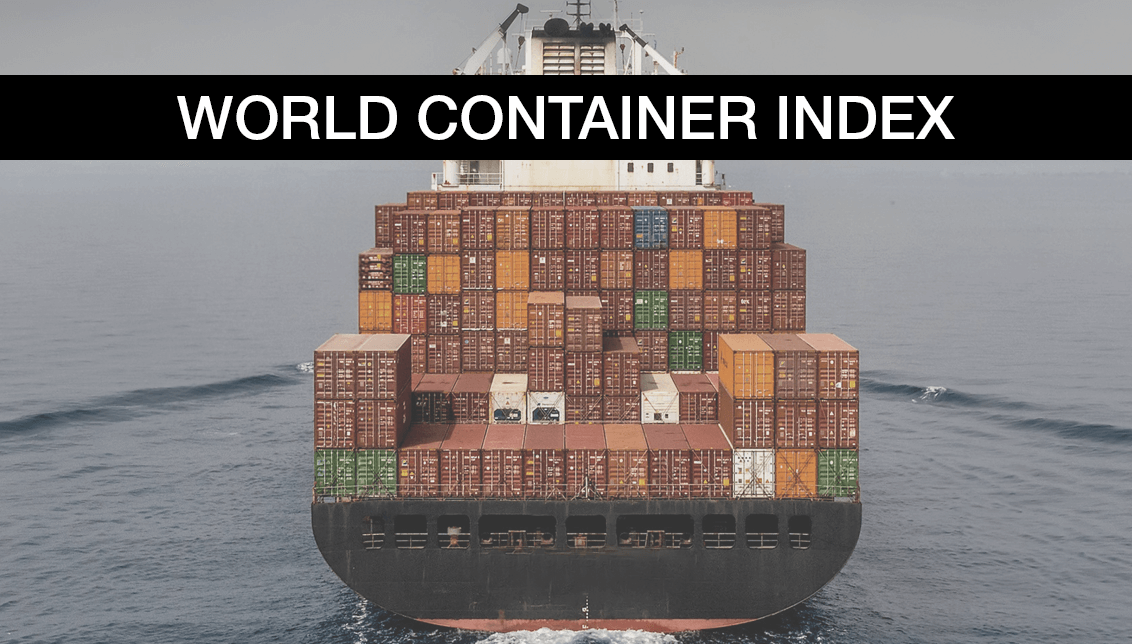
The Drewry World Container Index (WCI) rose 3% to $4,485 per 40ft container on October 15, defying the general downward trend in other freight sectors. This increase is partly attributed to carriers blanking 58,200 TEU of capacity on Far East to US West Coast routes to protect rates, even as offered capacity in the Red Sea doubled in six weeks to 448,273 TEU weekly. The divergence between dry bulk weakness and container strength highlights the structural differences in current market dynamics.
Greek Shipowners Dominate Tanker and Newbuild Markets
Greek shipowners have emerged as dominant players in the tanker market, executing 98 purchases and 133 sales of vessels over the past year, according to new data. Additionally, Greek armators have placed orders for 40 new ships in just 30 days, with total investments approaching $4 billion in known or estimated value. This aggressive expansion includes VLCCs, LNG carriers, and ammonia vessels, reinforcing China's shipyards as the primary beneficiaries of this newbuild cycle.

Local view
Greek Maritime Sector Local Greek outlets like NewMoney and Reporter.gr are highlighting the aggressive capital deployment by Greek shipowners. NewMoney reports that Greek-owned companies are leading the global second-hand tanker market, outperforming South Korean competitors in acquisition volume. The focus has shifted towards high-value newbuilds, with Greek armators leveraging strong equity markets to lock in future capacity, particularly in the tanker and gas segments.
Chinese Export Freight In China, the United Daily News (UDN) reports that the Shanghai Containerized Freight Index (SCFI) rose 0.42% to 3,679.58 points in the week ending October 16. European routes saw a 2.68% weekly gain, indicating a rebound in demand for Asia-Europe trade lanes, while US East and West Coast rates saw minor corrections. Analysts in Taipei note that the potential for a full Suez return is being closely watched by local carriers like Evergreen and Yang Ming, who stand to benefit from reduced transit times.
Context & numbers
- Baltic Dry Index: The BCI fell to 3,994 points on Oct 17, with Capesize daily earnings at $36,222. The index has declined for 8 straight sessions.
- Drewry WCI: $4,485/FEU as of Oct 15, up 3% week-on-week.
- SCFI: 3,679.58 points as of Oct 16, up 15.47 points (0.42%) from the previous week.
- Suez Transits: 753k TEU weekly average in early October, compared to 1,457k TEU in 2023.
- Greek Newbuilds: 40 new vessel orders in 30 days, valued at ~$4 billion.
On the radar
- Full Suez Return Timeline: Industry analysts predict a full return of container carriers to Suez routings by Q1 2027, with ONE and HMM expected to be among the next lines to fully transition back.
- Tanker Supply Glut: Xclusiv Shipbrokers warns that a massive influx of 179 million deadweight tons of new tanker capacity will arrive from 2027, potentially destabilizing the market if demand does not keep pace with the 32.5% orderbook-to-fleet ratio for VLCCs.
- US Blank Sailings: Carriers are actively managing capacity on trans-Pacific routes, blanking over 90,000 TEU combined on US West and East Coats to prevent rate erosion despite the easing of Red Sea premiums.
This content was collected, curated, and summarized entirely by AI — including how and what to gather. It may contain inaccuracies. Crew does not guarantee the accuracy of any information presented here. Always verify facts on your own before acting on them. Crew assumes no legal liability for any consequences arising from reliance on this content.
Powered by
