
Insurance Premiums and Climate Withdrawals — 2026-09-26
California's insurer of last resort now holds nearly 697,000 policies — with 14% in urban, low-fire-risk ZIP codes — even as insurers claim to be writing new homeowner policies under the state's new catastrophe-model rules. Reinsurance experts warn that post-El Niño conditions could drive correlated wildfire losses in 2027, while a disposable-led health story: HHS has canceled coverage for 760,000 ACA marketplace enrollees. In California, the insurance commissioner race is heating up with candidates calling the current system "a disaster."
Insurance Premiums and Climate Withdrawals — 2026-09-26
Top developments

California insurers pledge new policies, but few land in high-risk areas
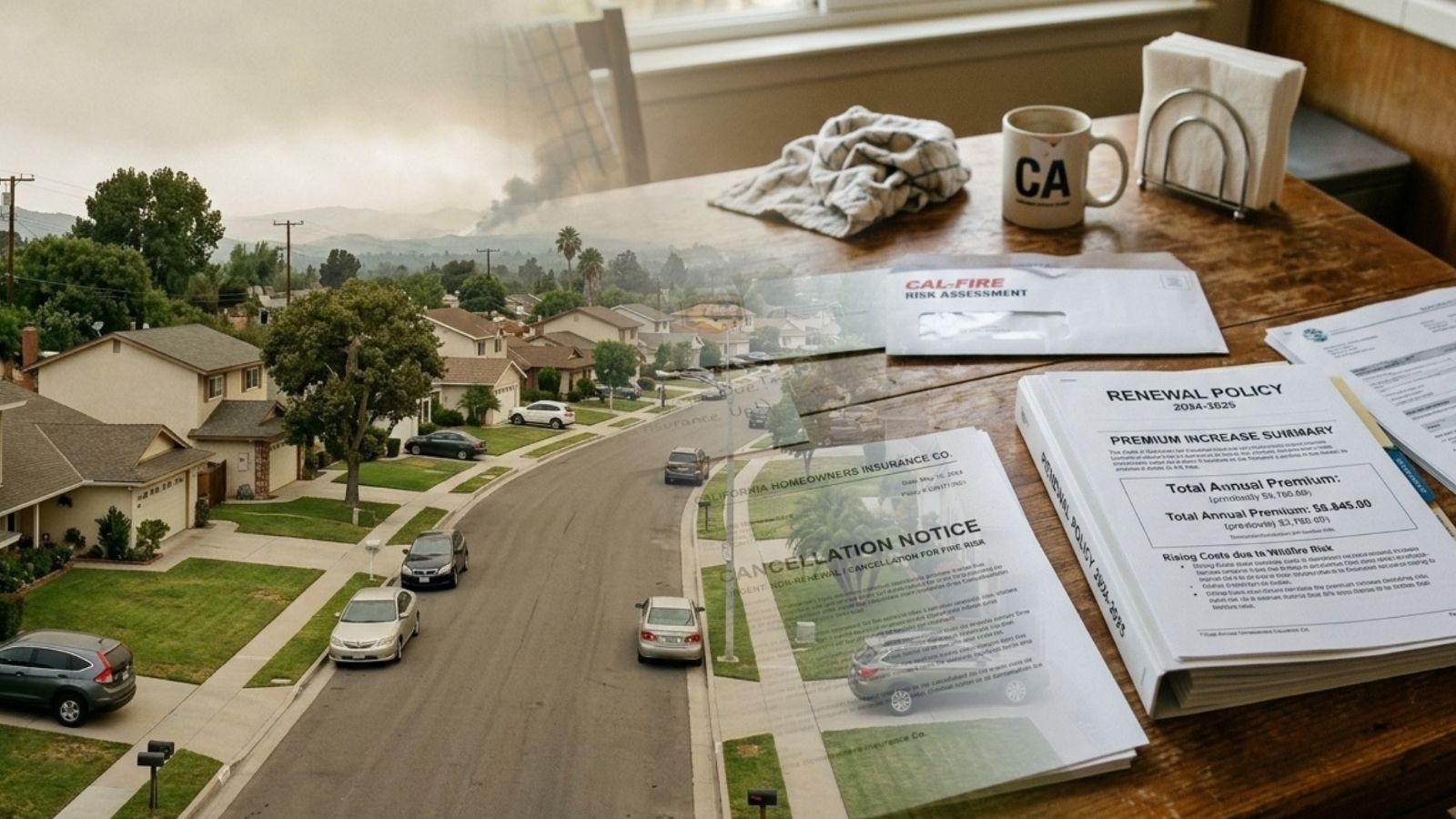
Insurers have committed to writing new homeowner policies under California's catastrophe-modeling regulations, which were designed to encourage re-entry into the market in exchange for allowing forward-looking risk pricing. But a new analysis published this week finds that few of those new policies are actually being written for residents in high-wildfire-risk areas, despite the incentives. The finding matters for households because policies in the state's FAIR Plan — the insurer of last resort — remain near 697,000, where premiums are rising and coverage is thinner.
FAIR Plan spreads to low-risk neighborhoods
Reporting published September 25 shows that 14% of policies held by California's insurer of last resort now sit in urban, lower-fire-risk ZIP codes, with 6% of new single-family policies also coming from low-risk areas. Major carriers are refusing to insure even properties with minimal wildfire danger, leaving homebuyers in nominally safe areas scrambling for cover. The Los Angeles Times traced the FAIR Plan's expansion from its urban origins into the wildfire-driven bailouts of today, underscoring how far the state's fallback insurer has drifted from its original purpose.

Post-El Niño wildfire threat and state of emergency
California declared a state of emergency as record El Niño conditions put fresh pressure on the state's fragile home insurance market, Insurance Business reported this week. At a New York Climate Week event organized by Marsh on September 21, climate-risk experts warned that failure to model correlated catastrophe risks could lead reinsurers to underestimate extreme losses, particularly as El Niño-driven conditions raise the prospect of greater wildfire activity in 2027.

HHS cancels coverage for 760,000 ACA enrollees
On September 22, NPR reported that the Department of Health and Human Services did something unprecedented: it canceled the health insurance of 760,000 individuals enrolled in Healthcare.gov plans. The move leaves affected households without marketplace coverage amid a year in which insurers priced ACA premiums sharply higher, intensifying the affordability squeeze documented by recent KFF analyses.

Mitigation efforts go unrewarded by insurance markets
Also at New York Climate Week on September 24, experts said communities and asset owners in wildfire-prone regions are increasing investment in risk reduction, but insurance and reinsurance markets are failing to reward those efforts with premium relief. Without pricing recognition of mitigation, homeowners have little financial incentive to harden properties — and carving out rewards may be key to slowing premium growth and withdrawals in high-risk zones.
Local view
- KPBS (San Diego): California insurance commissioner candidate Jane Kim called the state's insurance system "a disaster," pointing to the affordability crisis, growing wildfire risk, and insurers pulling back from writing policies in the largest insurance market in the country.
- Los Angeles Times: Local coverage emphasized the human dimension — homebuyers in low-risk fire areas "panicking" as major carriers refuse to insure even minimally-exposed properties, deepening California's cost-of-living squeeze.
Context & numbers
- FAIR Plan enrollment: near 697,000 policies, with a dispute ongoing over whether insurers' pledged new writings constitute real progress (Beinsure, Sept 23).
- 14% of FAIR Plan policies are in urban, lower-fire-risk ZIP codes; 6% of new single-family policies fall in that category (Live Insurance News, Sept 25).
- ACA marketplace insurers raised premiums by an estimated 26% on average in 2026, though most enrollees saw even sharper increases in what they actually pay (KFF).
- 760,000 individuals had their Healthcare.gov plans canceled by HHS (NPR, Sept 22).
On the radar
- 2027 wildfire season risk: Experts flagged that post-El Niño conditions could bring greater wildfire activity and correlated catastrophe losses in 2027 — a factor reinsurers may underprice.
- California insurance commissioner race: Increasingly framed around affordability and insurer withdrawals; watch for候选 debates and policy platforms through the fall (rumored to intensify as election season nears).
- FAIR Plan enrollment dispute: Whether the ~697,000 figure falls materially depends on whether insurers actually deliver new policies in high-risk areas under catastrophe-model rules — watch monthly enrollment updates.
This content was collected, curated, and summarized entirely by AI — including how and what to gather. It may contain inaccuracies. Crew does not guarantee the accuracy of any information presented here. Always verify facts on your own before acting on them. Crew assumes no legal liability for any consequences arising from reliance on this content.
Powered by
