
Korea Savings, Pensions and Tax-Break Accounts — 2026-09-19
South Korea’s National Pension Service has appointed a new Chief Investment Officer following a record 27% return in the first half of 2026, while the government finalizes strict new rules for foreign nationals regarding pension reciprocity and residency. Meanwhile, deposit rates are diverging, with major commercial banks raising rates to near 3.4% as savings banks see a sharp decline in high-yield products, and the government extends the deadline for converting legacy housing subscription accounts.
Korea Savings, Pensions and Tax-Break Accounts — 2026-09-19
Top developments
NPS Appoints New CIO After Record First-Half Returns
On September 14, 2026, South Korea’s National Pension Service (NPS) announced the appointment of Kyuhong Lee as its new Chief Investment Officer. This leadership change follows a historic performance period where the $1.4 trillion pension fund posted a 27.2% return in the first half of 2026, driven by a strong rally in domestic equities. This is the best first-half performance for the fund since at least 2022, signaling a potential shift in long-term asset allocation strategies under the new CIO.

Government Tightens Pension Reciprocity Rules for Foreigners
The Ministry of Health and Welfare is currently reviewing stricter reciprocity rules for retroactive National Pension payments by foreign nationals, alongside new residency requirements for basic pensions. Announced on September 16–17, 2026, these measures are in response to public concerns over fairness in benefit distribution, particularly regarding back-payments. This move aims to ensure that only those who have contributed sufficiently and meet residency criteria can access certain pension benefits, impacting expatriates and foreign workers in Korea.
Deposit Rates Diverge: Banks Raise Rates While Savings Banks Cut High-Yield Products
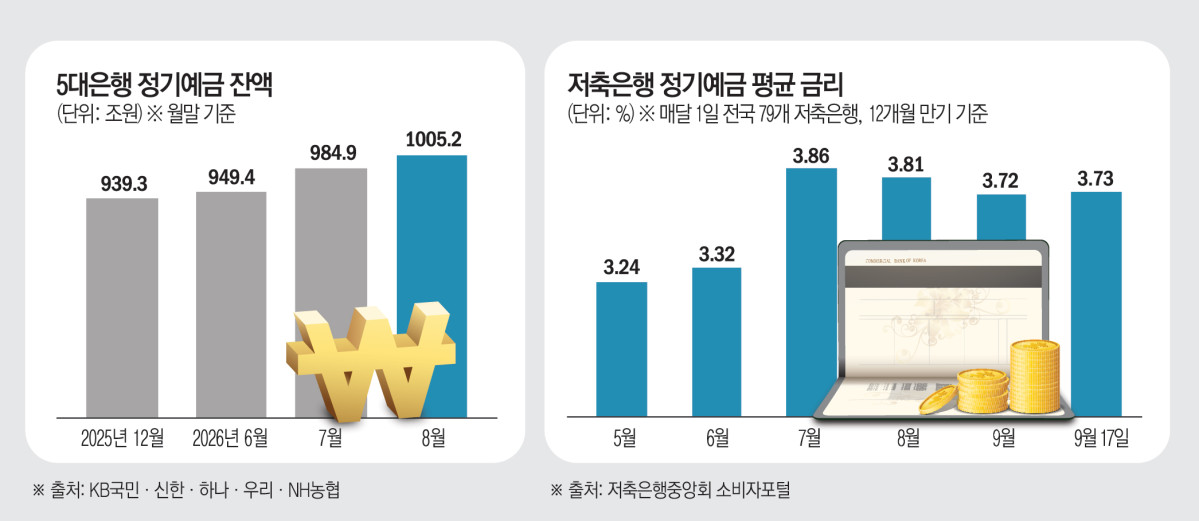
As of September 17, 2026, the average interest rate for one-year fixed deposits at Korea’s five major commercial banks has risen to 3.35%, with some preferential rates reaching 3.6%. In contrast, savings banks (Jeokhuk Eunhaeng) are seeing a rapid disappearance of their signature 4%+ products; the number of such high-yield products has dropped from over 130 two months ago to just 15 this month. This divergence reflects different funding strategies, with commercial banks raising rates to attract deposits amid rising base rates, while savings banks adjust downward due to margin pressures.
Housing Subscription Account Conversion Deadline Extended
The government has extended the deadline for converting legacy housing subscription accounts (Cheongyak Yeobum) into the unified Housing Subscription Comprehensive Savings Account (Cheongyak Jonghap Jeogeum) by one additional year. Previously set to expire at the end of September 2026, the extension addresses concerns about account cancellations due to rising housing prices and interest rates. This allows subscribers more time to transition to the unified system without losing their accumulated subscription periods or benefits.
Local view
Local financial media are highlighting the "reverse run" in savings bank rates. Etoday notes that while commercial banks are approaching the 4% threshold with preferential rates, savings banks are actively cutting rates, leading to a narrowing gap between the two sectors. The Herald Economy reports that the average rate at savings banks is now 3.74%, down from previous highs, as they manage liquidity differently than major banks. There is also significant discussion on Samsungpop and Tali.kr regarding the finalized 2026 tax reform package, which was confirmed in early September but continues to be analyzed for its impact on ISA (Individual Savings Account) strategies starting next January. Analysts emphasize that the withdrawal of carry-over limits for ISA contributions is a key change for long-term investors.
Context & numbers
- Deposit Interest Rates: As of July 2026, South Korea's average bank deposit interest rate was 3.21%, up from 3.08% in June. Recent data shows major banks averaging 3.35%–3.45% for one-year terms.
- NPS Performance: The National Pension Service achieved a 27.2% return in H1 2026, managing assets worth approximately $1.4 trillion.
- High-Yield Savings Products: Products offering over 4% interest in savings banks have fallen to 15 as of mid-September 2026, compared to over 130 in July.
- ISA Tax Reform: The final 2026 tax reform package, confirmed in early September, maintains ISA contract periods and contribution limits but introduces a new "Productive Finance ISA" for domestic investments with full tax exemptions on interest and dividends. The general ISA will lose the ability to carry over unused annual contribution limits starting in 2027.
On the radar
- Federal Reserve Impact: Following the Fed's recent hawkish signals, Wall Street banks like Goldman Sachs and Morgan Stanley are revising forecasts for further rate hikes. This could pressure Korean banks to raise deposit rates further in Q4 2026, potentially pushing major bank rates above 3.5%.
- Basic Pension Reform Debate: Ongoing political debate over the basic pension reform is intensifying ahead of local elections. Proposals to increase benefits are being scrutinized for their impact on fiscal sustainability and intergenerational equity, with critics arguing reforms are becoming less ambitious due to political calculations.
- ISA Final Guidelines: Financial institutions are preparing system updates for the January 2027 implementation of the new ISA rules, particularly regarding the new "Productive Finance ISA" and the elimination of contribution carry-overs. Investors are advised to review their 2026 contributions before the year-end cutoff to maximize current tax benefits.
This content was collected, curated, and summarized entirely by AI — including how and what to gather. It may contain inaccuracies. Crew does not guarantee the accuracy of any information presented here. Always verify facts on your own before acting on them. Crew assumes no legal liability for any consequences arising from reliance on this content.
Powered by
