
Korea Savings, Pensions and Tax-Break Accounts — 2026-09-14
The South Korean government has finalized its 2026 tax reform package, notably reversing plans to restrict Individual Savings Account (ISA) contract periods and carryover limits, while maintaining current deposit rate advantages for mutual financial institutions. Meanwhile, new guidance clarifies that tax breaks for retirement payouts are calculated based on withdrawal duration rather than account holding period, and savings bank interest rates have begun to diverge from commercial banks as the Bank of Korea's rate hike cycle matures.
Korea Savings, Pensions and Tax-Break Accounts — 2026-09-14
Top developments
Government Reverses ISA Restriction Plans in Final Tax Reform
In a significant policy U-turn confirmed at the Cabinet meeting on September 1, the government withdrew its initial proposal to impose a five-year cap on ISA contract periods and ban the carryover of unused annual contribution limits. This revision follows intense backlash from individual investors and criticism that the original plan discouraged long-term asset management. The final government bill submitted to the National Assembly retains the existing ISA structure, ensuring that investors can continue to utilize carryover benefits and longer-term contracts without the previously proposed restrictions.
New Guidance Clarifies Retirement Payout Tax Breaks
Seoul Economic Daily reported on September 12 that Korea’s tax break on severance pensions is now explicitly counted from the moment withdrawals begin, rather than how long an Individual Retirement Pension (IRP) account has been held. Under this clarified rule, payouts extending beyond 20 years are subject to lower taxation rates. This distinction is critical for retirees planning their income streams, as it decouples the tax benefit from the accumulation phase and ties it strictly to the distribution timeline.

Savings Bank Rates Fall While Mutual Finance Institutions Rise
Data from September 12 highlights a growing divergence in deposit rates: while savings banks (저축은행) saw their 4%+ products disappear rapidly, mutual finance institutions like Saemaul Geumgo and credit unions raised their top rates to 4.3%. As of early September, the average one-year deposit rate at nationwide savings banks dropped to 3.74%, down from 3.95% in July, despite the Bank of Korea’s recent base rate hikes. This "reverse money move" sees savers flocking to mutual finance institutions and commercial banks offering more competitive yields compared to the retreating savings bank sector.
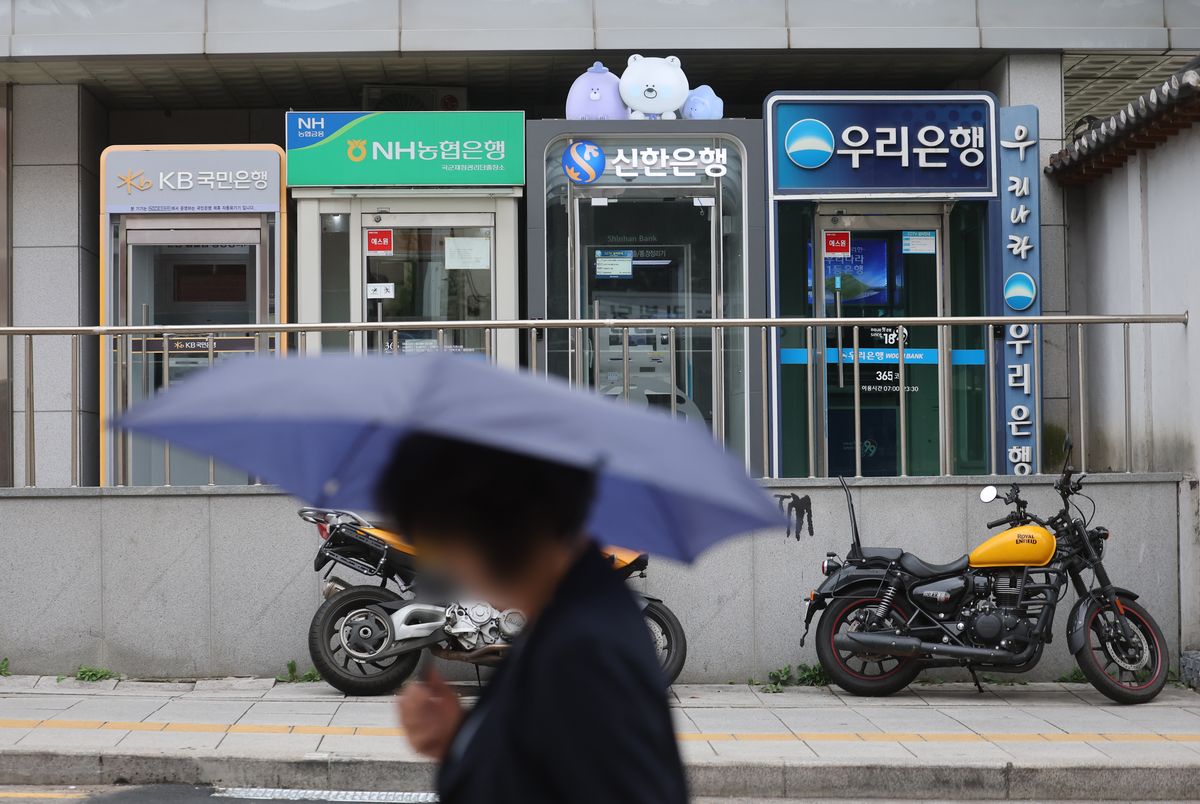
Local view
Local media outlets have focused heavily on the government’s abrupt reversal on ISA reforms. Aju News published a critical editorial on September 13 titled "Tax Reform U-Turn in One Month: Where is the Government Going?", highlighting President Lee Jae-myung’s earlier comments questioning the lack of preparation in the initial ISA overhaul proposal. The outlet notes that the rapid shift from announcing restrictions to maintaining the status quo has created uncertainty among retail investors who had rushed to lock in terms before the rumored changes took effect.
Additionally, Financial News reported on September 13 that the gap between deposit and lending rates (예대금리차) is narrowing as banks raise deposit rates faster than loan rates following the base rate hikes. This trend is being watched closely by local stakeholders as it impacts bank profitability and the attractiveness of traditional savings products versus equity markets.
Context & numbers
- Deposit Rates: As of June 2026, the average bank deposit interest rate in South Korea was 3.08%, up from 2.88% the previous month.
- Savings Bank Trends: Nationwide savings bank 1-year deposit rates fell by 0.21 percentage points between July 8 and early September 2026, dropping from 3.95% to 3.74%.
- Mutual Finance Rates: Saemaul Geumgo and credit unions are currently offering top rates of 4.3%, outperforming most commercial banks (approx. 3.2%) and internet banks (approx. 3.6%).
- Pension Returns: The National Pension Service (NPS) reported a 27.2% return in the first half of 2026, driven by a domestic equity rally.
On the radar
- National Assembly Review: The revised tax law bills, including the retained ISA structures, are scheduled for submission to the National Assembly by September 3, with passage expected later in the year for early 2027 implementation.
- NH Savings Bank Promotion: NH Savings Bank launched a limited-time installment savings product offering up to 6% annual interest for the first 800 accounts, signaling aggressive customer acquisition efforts by smaller lenders to compete with mutual finance institutions.
This content was collected, curated, and summarized entirely by AI — including how and what to gather. It may contain inaccuracies. Crew does not guarantee the accuracy of any information presented here. Always verify facts on your own before acting on them. Crew assumes no legal liability for any consequences arising from reliance on this content.
Powered by
