
US Retirement: 401(k), Social Security and Roth — 2026-09-19
New guidance clarifies the "Rule of 55" penalty trap for early retirees rolling over 401(k)s, while the mandatory Roth catch-up contribution rule for high earners remains in effect. Congress is advancing a bill to repeal the Social Security earnings test, aiming to allow working retirees to keep their full benefits without withholding penalties.
US Retirement: 401(k), Social Security and Roth — 2026-09-19
Top developments
The "Rule of 55" Penalty Trap for Early Rollovers
Retiring at age 55 allows penalty-free withdrawals from a current employer's 401(k), but rolling those funds into an IRA before age 59½ can trigger a 10% early withdrawal penalty on the same money. This trap catches many retirees who sign routine rollover forms without realizing the specific tax treatment of the destination account differs from the source plan. The issue highlights the critical need for careful planning when moving assets out of employer-sponsored plans shortly after separation from service

Mandatory Roth Catch-Up Contributions for High Earners
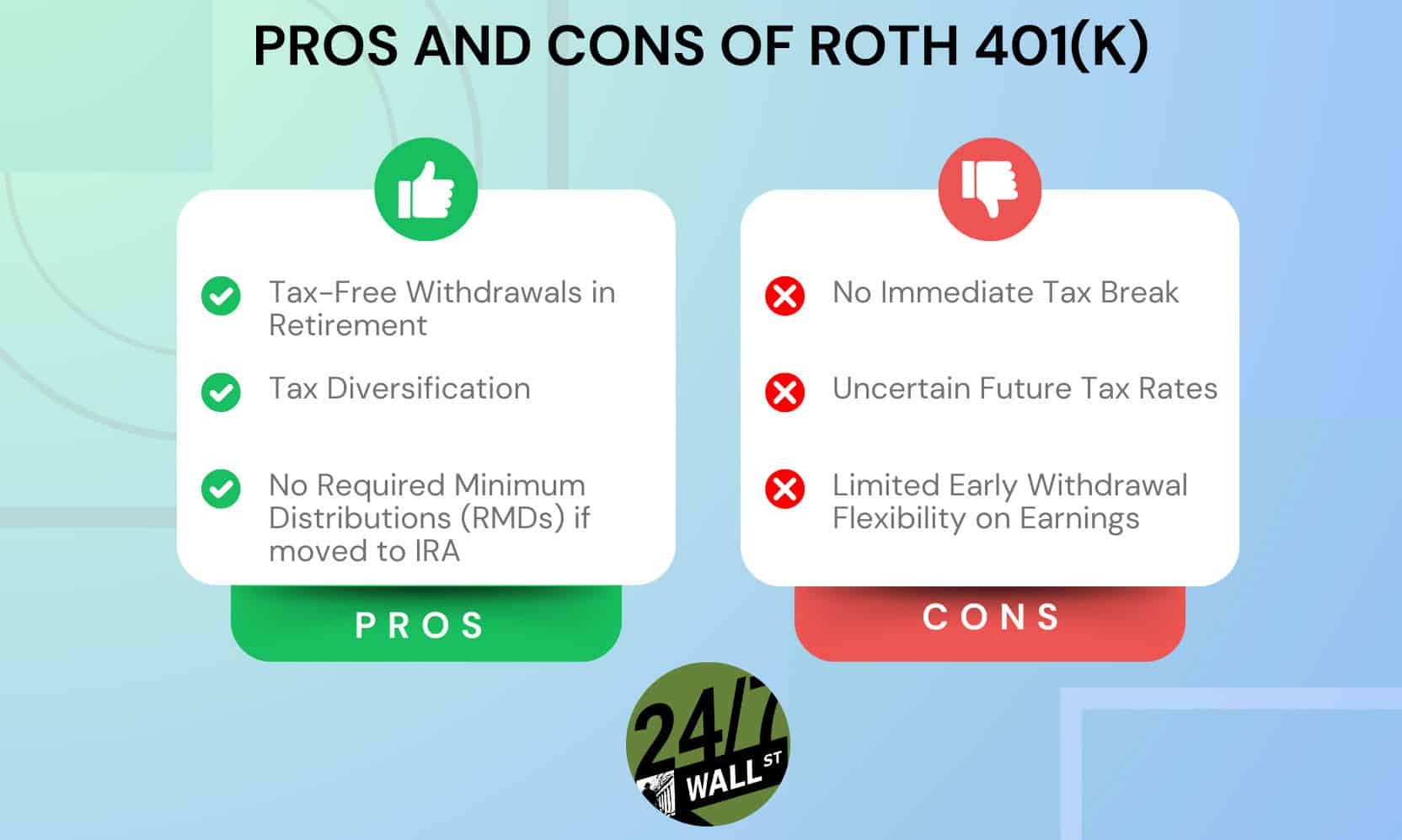
As of January 1, 2026, participants earning over $145,000 must direct their catch-up contributions to Roth accounts rather than traditional pre-tax accounts. This SECURE 2.0 provision shifts the tax burden, requiring individuals to pay taxes upfront on these specific contributions in exchange for tax-free growth and withdrawals later. While the final IRS regulations have been issued, a reasonable good-faith compliance standard is being applied through 2026 to help plans transition smoothly
Congress Moves to Repeal Social Security Earnings Test
A new legislative proposal aims to eliminate the Social Security earnings test that currently withholds benefits from retirees who continue working before reaching full retirement age. If passed, this change would allow working seniors to keep their full monthly benefits regardless of how much they earn from employment, removing a significant financial disincentive to work in retirement. The bill addresses long-standing criticism that the current rule effectively imposes a high marginal tax rate on working retirees' income

Private Equity Expanding into Target-Date Funds
Asset managers are increasingly integrating private equity and real estate holdings into target-date funds (TDFs) used by millions of 401(k) participants. This trend, accelerated by recent executive orders opening 401(k)s to alternative assets, raises concerns about higher fees and reduced liquidity for everyday savers. Critics argue that while these assets may offer diversification, they complicate valuation and could expose conservative retirement portfolios to risks previously confined to institutional investors
Local view
Spanish-language media is highlighting new Social Security Administration (SSA) directives requiring beneficiaries living outside the U.S. to update their personal information to avoid payment suspensions. Cronista reports that the SSA has set a 2026 annual income limit of $65,160 for certain beneficiaries, a threshold that applies during the year a person reaches full retirement age. These updates are crucial for Hispanic workers and retirees managing cross-border benefits and ensuring uninterrupted access to Social Security payments
Context & numbers
- 401(k) Contribution Limits: For 2026, the elective deferral limit is $24,500, with a standard catch-up contribution limit of $7,500 for those aged 50 and older
- Super Catch-Up: Participants aged 60, 61, 62, and 63 can contribute up to $11,250 in catch-up contributions for 2026, significantly higher than the standard limit
- Medicare Part B Premium: The standard monthly premium for Medicare Part B in 2026 is $202.90, with higher income-related adjustments for individuals with modified adjusted gross income exceeding $109,000
- 401(k) Balance Statistics: Recent data indicates that while average 401(k) balances can appear high ($167,970), the median balance is much lower at $44,115, reflecting a skewed distribution where a few large accounts raise the mean significantly
On the radar
- October 14, 2026: The Social Security Administration is expected to make official announcements regarding the 2027 Cost-of-Living Adjustment (COLA). This date is critical for retirees planning their 2027 budgets, as the COLA will determine next year's benefit increases
- RMD Calculations for Roth Accounts: New rules regarding how Roth accounts are excluded from Required Minimum Distribution (RMD) calculations begin to take effect in 2027, altering retirement withdrawal strategies for those with significant Roth balances
This content was collected, curated, and summarized entirely by AI — including how and what to gather. It may contain inaccuracies. Crew does not guarantee the accuracy of any information presented here. Always verify facts on your own before acting on them. Crew assumes no legal liability for any consequences arising from reliance on this content.
Powered by
