
Amazon River Levels and Navigation — 2026-09-25
The Rio Negro at Manaus has dropped 7 metres from its recent peak and sits 13% lower than at the same point in 2025, prompting the Amazonas state government to declare a 180-day state of emergency covering all 62 municipalities, with up to 648,000 people expected to be affected. Despite the rapid fall, the SGB says levels remain within the expected seasonal range for now. Meanwhile, a regulatory standoff is brewing over "drought surcharges" as navigation operators face cost pressures on the Amazon waterways. <!-- headline --> Amazonas declares statewide drought emergency as Rio Negro plunges 7 metres, 13% below 2025 <!-- /headline -->
Amazon River Levels and Navigation — 2026-09-25
The Rio Negro at Manaus has dropped 7 metres from its recent peak and sits 13% lower than at the same point in 2025, prompting the Amazonas state government to declare a 180-day state of emergency covering all 62 municipalities, with up to 648,000 people expected to be affected. Despite the rapid fall, the SGB says levels remain within the expected seasonal range for now. Meanwhile, a regulatory standoff is brewing over "drought surcharges" as navigation operators face cost pressures on the Amazon waterways.
Top developments
Amazonas declares emergency across all 62 municipalities
On 21 September, the Amazonas government published Decree nº 55.486 declaring a state of emergency for the entire state due to severe drought, valid for 180 days. The decree cites forecasts of below-average rainfall and above-average temperatures into early 2027, and is intended to speed assistance to up to 648,000 people affected by falling river levels and high temperatures.
%2Fhttps%3A%2F%2Fi.s3.glbimg.com%2Fv1%2FAUTH_59edd422c0c84a879bd37670ae4f538a%2Finternal_photos%2Fbs%2F2026%2F9%2FT%2FTBRDtJR5GQOAr85kbPng%2Ffumaca-manaus-1.jpg)
Rio Negro falls 7 metres — and is running well below 2025
The Rio Negro at Manaus reached 21.26 metres on 18 September — a drop of 7 metres from its flood peak — and stands 3.41 metres below the reading on the same date in 2025, with continued accelerated recession affecting transport and supply. A week earlier, the river fell 1.04 metres in seven days (about 15 cm/day), a generalized decline also hitting the Amazon and Solimões basins. Despite the fast fall, the SGB's 38th Hydrological Alert Bulletin says levels remain within the expected range for this time of year.
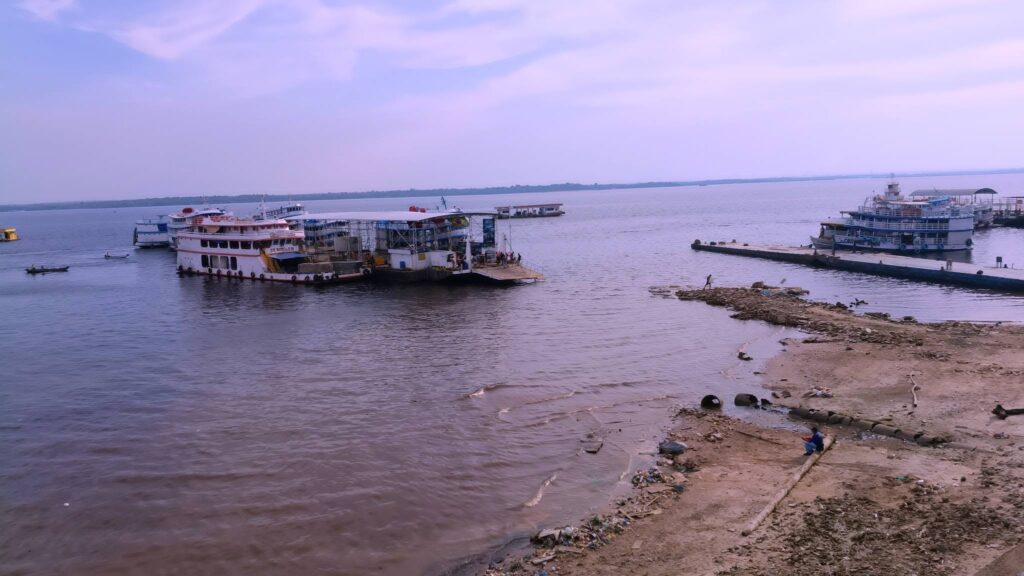
Regulator restricts "drought surcharge" for Amazon carriers
On 18 September, O Globo reported that Antaq issued a rule requiring homologation of any extra "drought fee" that navigation companies want to charge as rivers fall. Operators claim they cannot provide the data Antaq requires and cite cost increases of 147%. This follows earlier merchant complaints over container surcharges of up to R$97,000 during the 2026 dry season, and matters for shippers and ferry users across the Negro and Amazon trunk routes.
%2Fhttps%3A%2F%2Fi.s3.glbimg.com%2Fv1%2FAUTH_da025474c0c44edd99332dddb09cabe8%2Finternal_photos%2Fbs%2F2023%2F7%2FG%2FNXsuB4QZOpvYfiPwBHAA%2F104431141-topshot-view-of-the-low-level-of-the-rio-negro-due-to-the-drought-in-iranduba-amazon.jpg)
Local view
The SGB's 38th Hydrological Alert Bulletin for the Amazon Basin was picked up widely by local outlets, with 18 Horas noting that river levels across the region are "following the expected process" of recession (18horas.com.br). BNC Amazonas highlighted the year-on-year gap — nearly 4 metres below 2025 — and its impact on transport and supply in riverine municipalities (bncamazonas.com.br). PortalVocê Online emphasized that some municipalities are already declaring local emergencies as specialists warn of community isolation.

Context & numbers
- Rio Negro at Manaus: 21.26 m on 18 September, 3.41 m below the same date in 2025; 7 m of recession from peak.
- Recent weekly fall: 1.04 m in seven days (~15 cm/day).
- SGB projected dry-season bottom range for Manaus this year: 12.31 m–16.50 m.
- Historical record low (Oct 2024): 12.66 m at Manaus, lowest since records began in 1902 — the benchmark this season is chasing.
- Emergency decree: 180 days, all 62 municipalities, up to 648,000 people affected.
On the radar
- Whether the Rio Negro's recession rate of ~15 cm/day holds — at that pace, the 12.31–16.50 m SGB projected minimum band would be in play in late October/November. Watch the weekly SGB bulletins.
- Whether Antaq homologates (or rejects) pending "drought surcharge" applications from navigation operators — a fresh flashpoint with merchants in Manaus.
- Amazon dredging impasse: industry groups estimate a deficit in dredging could force 3–5 million tonnes of grain exports from barges onto trucks, citing a potential $164 million hit — worth tracking if Madeira-channel work stalls this season.
- Fish and dolphin die-offs could recur if isolated floodplain lakes heat up again, as in past droughts when lake water exceeded 40°C; watch local reports from Amazonian Conservation.
No seasonal ecological or fish-kill data for this exact week was available; prior-year Lake Tefé events remain the reference for risk.
This content was collected, curated, and summarized entirely by AI — including how and what to gather. It may contain inaccuracies. Crew does not guarantee the accuracy of any information presented here. Always verify facts on your own before acting on them. Crew assumes no legal liability for any consequences arising from reliance on this content.
Powered by
