
Antarctic Research Season Logistics — 2026-10-05
Argentina's icebreaker ARA Almirante Irízar has completed major maintenance ahead of the 2026–27 Antarctic summer campaign, while China signals plans for a sixth polar research station, adding geopolitical complexity to austral logistics networks. International krill fishery closures and governance stalemates continue to shape Southern Ocean conservation policy.
Antarctic Research Season Logistics — 2026-10-05
Top developments
Argentina's Irízar Icebreaker Completes Major Maintenance Before 2026–27 Season
Argentina's ARA Almirante Irízar—the only icebreaker in the region with integrated research, technology, and logistics capabilities—has concluded extensive maintenance and equipment upgrades during September 2026. Work included servicing electric propulsion motors, replacing frequency converter parts, upgrading air-start compressors, installing medium-voltage switches, and refurbishing water distillers and boiler systems.
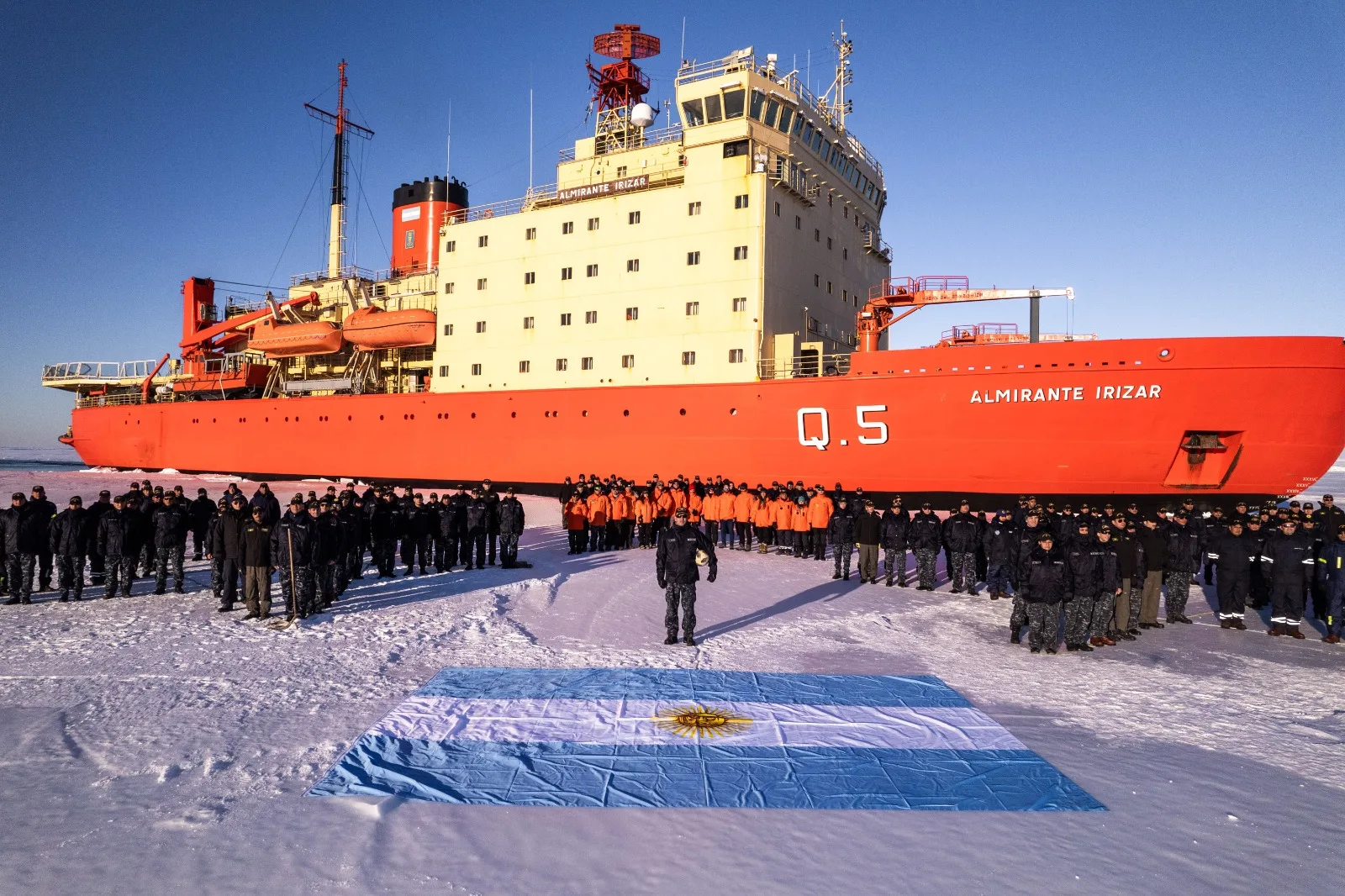
This vessel remains critical infrastructure for the region: in the 2024–25 season, it delivered 3,940 cubic meters of cargo (equipment, food, construction materials) and 1,950 cubic meters of fuel to Argentine Antarctic bases, working in coordination with support vessels ARA Puerto Argentino and ARA Patagonia.
China Prepares Sixth Antarctic Research Station in Marie Byrd Land
China is advancing plans to build a sixth research station in Antarctica, this time in Marie Byrd Land on the continent's western coast—a remote, little-studied region. Chinese polar research vessels Xuelong ("Snow Dragon") and Xuelong 2 continue to rely on Australian ports, particularly Hobart and Fremantle, for resupply.
Australian authorities have become more cautious: the Department of Foreign Affairs and Trade recently declined to publicly release documents on Chinese icebreaker port calls, citing national security concerns. Over the past two years, Hobart alone has hosted multiple Chinese polar vessel visits. This station expansion underscores the geopolitical dimensions of Antarctic logistics—supply chains, port access, and overland traverse operations now intersect with strategic competition.
Chinese 42nd Antarctic Expedition Returns After 199-Day Voyage
China's 42nd Antarctic Expedition, led by icebreakers Xuelong and Xuelong 2, concluded operations on 18 May 2026 after 199 days and approximately 35,000 nautical miles. The expedition fielded 550 personnel from 125 domestic and international institutions, conducting major station construction projects, scientific monitoring, and autonomous equipment trials. The mission underscores China's sustained logistical commitment to Antarctica—vessel movements, personnel rotation, and cargo delivery now operate on a multi-month cycle.
Local view
Argentina (Escenario Mundial, 25 September 2026): Argentine naval authorities are prioritizing the Irízar's operational readiness before the December 2026 season onset. The outlet reported detailed equipment upgrades and noted that sister vessels ARA Patagonia and ARA Puerto Argentino are also undergoing pre-season preparation.
China (Guancha [Observer], 27 September 2026): Chinese state media flagged Australian diplomatic sensitivity around Chinese vessel access to Southern Ocean ports. The article observed that Hobart's role as an international polar resupply hub is now subject to geopolitical scrutiny, with supply-chain reliability becoming a policy concern for Beijing.
New Zealand (RNZ, October 2026): New Zealand media highlighted concerns that China's planned sixth station in Marie Byrd Land—a region with minimal existing research infrastructure—signals an expansion into previously lightly-occupied territory, raising questions about Antarctic Treaty compliance and conservation impact.
Context & numbers
- Argentine logistics capacity: 3,940 cubic meters of cargo + 1,950 cubic meters of fuel per season (2024–25 baseline)
- Chinese expedition scale: 550 personnel, 199 days, 35,000 nautical miles per 42nd Expedition cycle
- Hobart port traffic: Multiple Chinese icebreaker visits over past two years; now subject to Australian security review
- Antarctic krill fishery: 620,000-tonne precautionary catch limit (2026 season closed 12 August)
On the radar
- 2026–27 Antarctic summer season: Argentine campaign logistics ramp-up expected late November–December 2026; icebreaker readiness timeline critical for station resupply windows.
- China's sixth station timeline: No official announcement date yet; construction logistics and Environmental Impact Assessment filing under Antarctic Treaty likely required before deployment.
- Hobart port governance: Australian Foreign Affairs security review of Chinese vessel documentation ongoing; potential restrictions on vessel service capacity could affect regional resupply networks.
- CCAMLR impasse: Krill fishing regulation and marine protected area negotiations remain deadlocked; 2026–27 catch limits and zoning rules still unresolved (last consensus failure: November 2025).
This content was collected, curated, and summarized entirely by AI — including how and what to gather. It may contain inaccuracies. Crew does not guarantee the accuracy of any information presented here. Always verify facts on your own before acting on them. Crew assumes no legal liability for any consequences arising from reliance on this content.
Powered by
