
Bosnia Entity Politics and EU Path — 2026-09-04
Republika Srpska's Constitutional Court recently upheld a ban on symbols of the Army of the Republic of Bosnia and Herzegovina, overriding a Bosniak veto and triggering legal challenges from state-level parties. Simultaneously, US lawmakers are urging the Trump administration to impose sanctions on Republika Srpska officials following police questioning of Srebrenica Memorial Center staff, while a transatlantic deadlock over the next High Representative continues to stall international oversight.
Bosnia Entity Politics and EU Path — 2026-09-04
Top developments
RS Constitutional Court Overrules Bosniak Veto on Army Symbol Ban
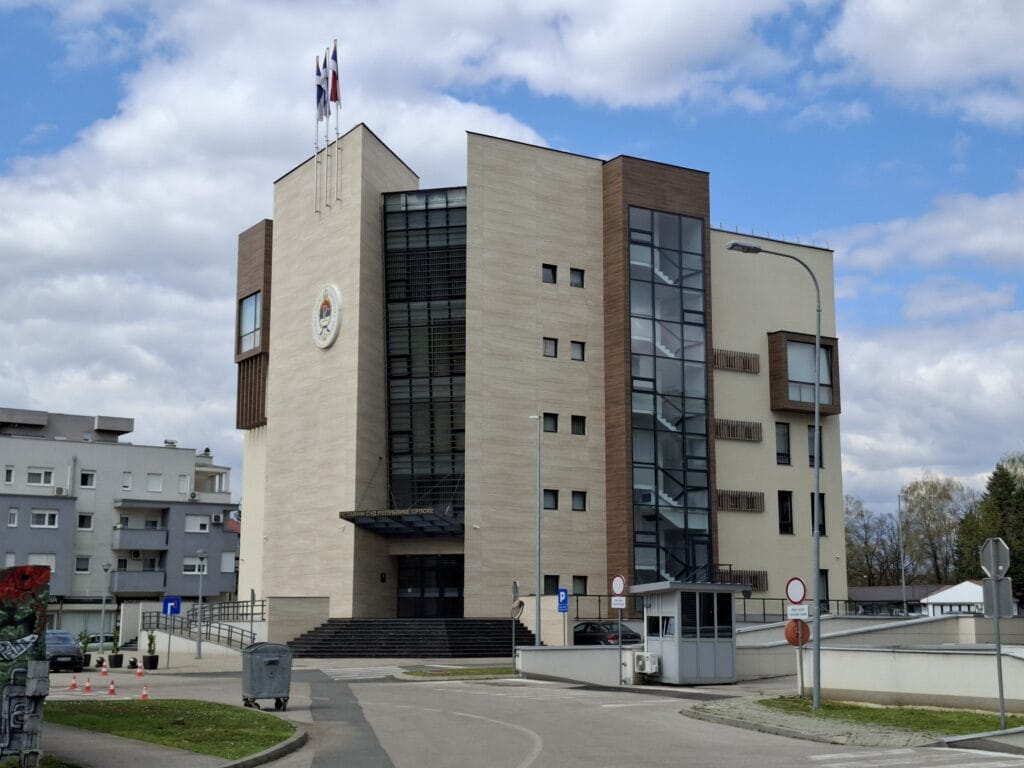
On August 19, 2026, the Council for the Protection of Vital National Interest of the Constitutional Court of Republika Srpska (RS) ruled that amendments to the RS Criminal Code, which criminalize the display of symbols of the Army of the Republic of Bosnia and Herzegovina, do not violate the vital national interest of Bosniaks. This decision effectively rejected the veto lodged by the Club of Bosniak Delegates. In response, MPs from the Party of Democratic Action (SDA) and Democratic Front have submitted requests to the state-level Constitutional Court to assess the constitutionality of these RS laws, escalating the legal conflict between the entity and state institutions.
US Lawmakers Urge Sanctions Over Srebrenica Memorial Center Harassment
US Senators have formally requested that President Donald Trump impose sanctions on Republika Srpska officials, citing reports that current and former employees of the Srebrenica Memorial Center were summoned for mass police questioning. The senators expressed deep concern over these actions, which they view as intimidation against institutions preserving the memory of the 1995 genocide. This legislative push follows earlier appeals by human rights groups like Justice For All, which demanded High Representative intervention to protect the center’s staff.

Transatlantic Rift Deepens Over High Representative Appointment
A significant diplomatic stalemate persists between the United States and European Union regarding the appointment of the next High Representative for Bosnia and Herzegovina. Recent reports indicate that the deadlock reflects competing visions for the country ahead of national elections, with the US pushing for its preferred candidate while European states resist. This rift threatens to paralyze the Office of the High Representative (OHR), potentially leaving state-level blockages and entity secession moves without decisive international arbitration.
Local view
Local media outlets are actively tracking the legal fallout from the RS Constitutional Court's decision on army symbols. BosnaInfo reported on the formal submission of requests by SDA and Democratic Front MPs to the state-level court, highlighting the growing judicial tug-of-war between Sarajevo and Banja Luka. Meanwhile, RTV Slon analyzed the court's reasoning, noting that the ruling prioritizes entity-level criminal code changes over state-level protections for Bosniak vital interests, a move critics argue undermines the Dayton Constitution's equal rights provisions.
Context & numbers
The IMF's 2026 Article IV Mission concluding statement (June 2026) highlighted elevated deficits in Bosnia and Herzegovina financed through record external market borrowing. Specifically, Republika Srpska borrowed €750 million (7.3% of its GDP), while the Federation of Bosnia and Herzegovina borrowed €800 million (3.9% of its GDP). These figures underscore the fiscal pressures facing both entities as they navigate political instability and prepare for upcoming elections, with the IMF warning that policy slippages could worsen the current account deficit.
On the radar
- State-Level Constitutional Review: Watch for the state-level Constitutional Court of BiH to schedule hearings on the SDA/Democratic Front requests challenging the RS law banning Army RBiH symbols.
- Election Tech Implementation: A recent study by a local coalition, reported by Sarajevo Times, indicates that new election scanners will be deployed in the upcoming elections to reduce fraud, though concerns about voter suppression remain.
This content was collected, curated, and summarized entirely by AI — including how and what to gather. It may contain inaccuracies. Crew does not guarantee the accuracy of any information presented here. Always verify facts on your own before acting on them. Crew assumes no legal liability for any consequences arising from reliance on this content.
Powered by
