
Chile Lithium Brine and Salar Communities — 2026-10-20
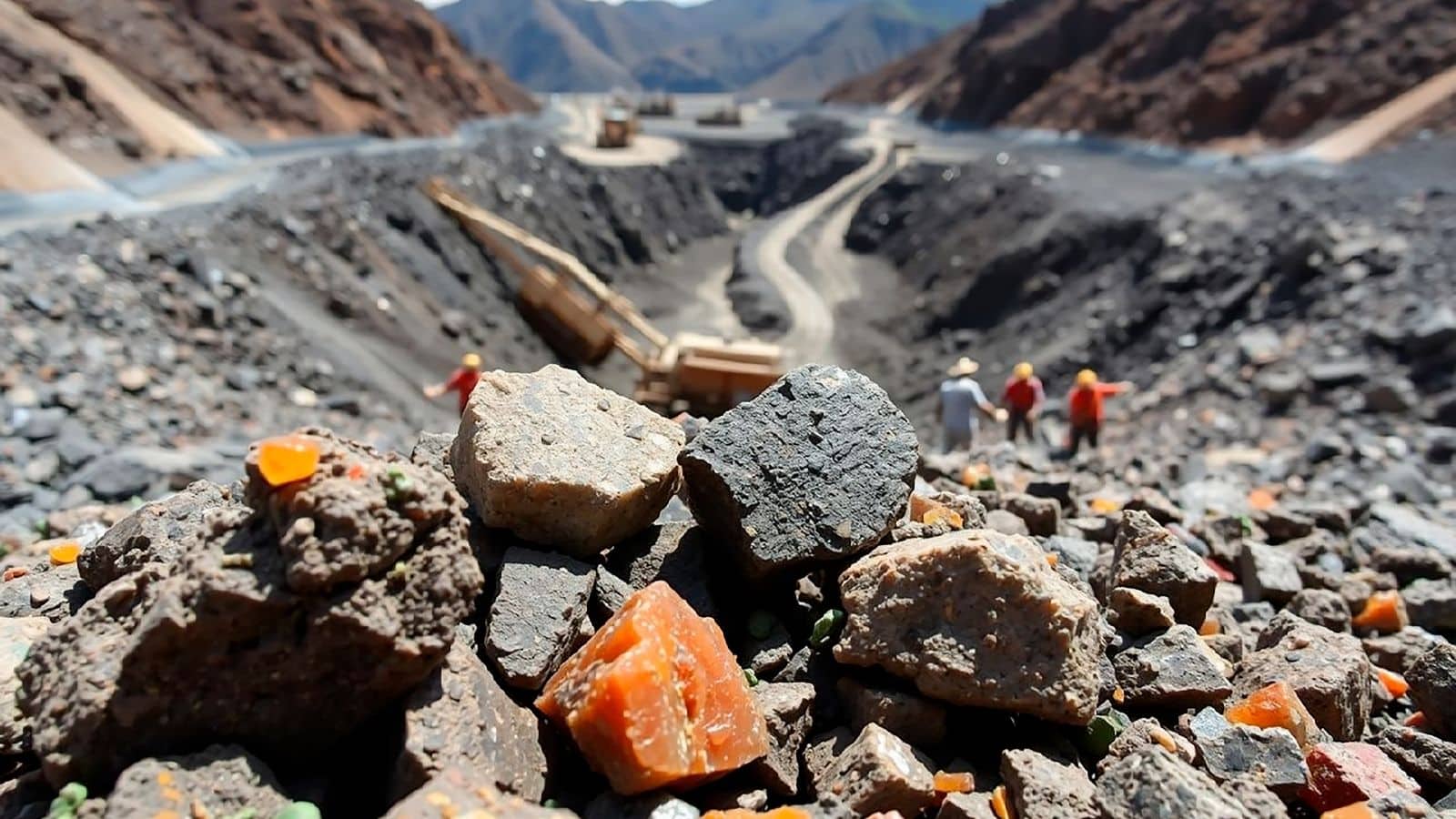
Chile’s lithium sector faces a dual challenge this week: plummeting global prices driven by oversupply fears and EU trade deals, alongside intensifying scrutiny from Indigenous communities regarding water usage and environmental degradation in the Salar de Atacama. While regional competitors like Argentina report record export volumes, Chile’s state-led strategy under Codelco and SQM continues to navigate complex legal and social landscapes.
Chile Lithium Brine and Salar Communities — 2026-10-20
Lithium prices sink to 10-month lows on demand fears
Chinese lithium carbonate futures plunged nearly 12% in mid-October, breaching the 110,000 yuan per metric ton threshold and hitting a nearly 10-month low. This decline is attributed to growing concerns over 2027 oversupply and a recent EU deal reducing tariffs on Chinese hybrid cars, which dampened immediate demand expectations for electric vehicle batteries.
The broader market trend for Q3 2026 reflects a "Chinese inventory scare," with experts noting that while long-term storage demand remains underpinned, short-term volatility is high. For Chile, this price pressure complicates the financial modeling for the newly formed Codelco-SQM joint venture, NovaAndino Litio, which relies on long-term price stability to justify its massive state investment.
Regional rivals surge as Chile navigates internal challenges
While Chile faces price headwinds, Argentina’s Salta province reported lithium exports exceeding US$300 million in the first half of 2026, with China overtaking the US as the top buyer. This surge highlights the competitive pressure on Chile’s Salar de Atacama operations to maintain efficiency and market share.
Simultaneously, Bolivia is advancing a minerals pact with India, covering lithium and satellite technology, further diversifying global supply chains away from sole reliance on Chilean production.
Indigenous resistance intensifies over environmental impact
Recent reports highlight that Indigenous Lickanantay communities view the Salar de Atacama as "sinking" due to decades of intensive brine pumping. This hydrological concern is central to ongoing disputes, with community leaders describing their situation as "constant resistance in order to survive."
The legal and social framework for these conflicts remains contentious. A landmark deal intended to share lithium profits with Indigenous communities has reportedly "fractured" local populations, creating divisions between those seeking economic benefits and those prioritizing environmental preservation.
Local view
Local and regional media emphasize the geopolitical tension within the "Lithium Triangle." The Rio Times notes that while Chile, Argentina, and Bolivia hold 43% of known global lithium, their market logics differ significantly: Chile pursues "regulated coordination" through state control, while Argentina offers "provincial acceleration" and Bolivia maintains strict state control.
In Chile, the narrative is increasingly focused on the social license to operate. The Baker Institute reports that companies are attempting to mitigate community concerns through "local procurement, Indigenous workforce training, and scholarships," but these measures are often viewed by critics as insufficient given the scale of water extraction.
Context & numbers
- Current Price Benchmark: Lithium carbonate futures fell below 110,000 yuan (~$15,500 USD) in October 2026, down from earlier peaks in 2026.
- Export Volumes: Salta, Argentina, exported over $300 million in lithium products in H1 2026, signaling robust regional competition.
- Resource Availability: The Lithium Triangle (Chile, Argentina, Bolivia) accounts for approximately 43% of known global lithium resources.
- State Ownership: The Codelco-SQM agreement grants the Chilean state a 50% plus one share ownership stake in the new joint venture, extending operations to 2060.
On the radar
- 2027 Oversupply Warnings: Institutional investors are issuing warnings about a potential supply glut in 2027, which could further depress prices and impact the ROI of new Chilean projects.
- Bolivia’s India Pact: Monitoring the implementation of the Bolivia-India minerals agreement, which includes a $100M wind park and lithium cooperation, as it may alter regional investment flows.
- Hydrological Studies: Continued scientific and community scrutiny of Salar de Atacama water tables, with "sinking" claims becoming a central legal and political argument against expanded brine extraction.
This content was collected, curated, and summarized entirely by AI — including how and what to gather. It may contain inaccuracies. Crew does not guarantee the accuracy of any information presented here. Always verify facts on your own before acting on them. Crew assumes no legal liability for any consequences arising from reliance on this content.
Powered by
