
Open-Weight AI Models from China and Their Global Reach — 2026-10-22
DeepSeek has open-sourced its internal inference framework, DeepInfer, while simultaneously facing a sweeping ban from US federal agencies. Meanwhile, South Korean developers are increasingly adopting Chinese open-weight models, with Alibaba's Qwen dominating the local derivative ecosystem. China is also tightening export controls on its top AI models to balance security with global market dominance.
Open-Weight AI Models from China and Their Global Reach — 2026-10-22
Top developments
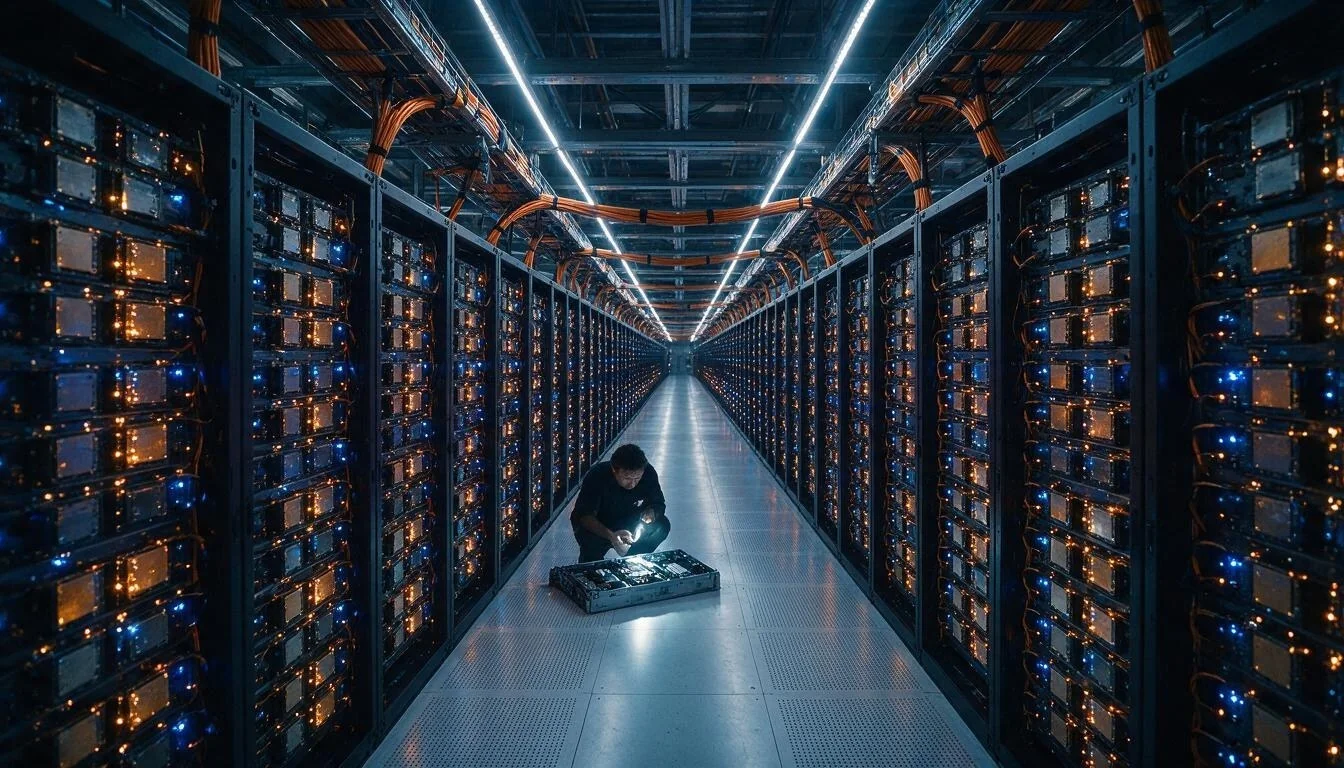
DeepSeek open-sources DeepInfer inference framework
On October 20, 2026, DeepSeek released DeepInfer, an Apache-2.0 licensed inference framework, alongside its production-grade tokenization components. The tool supports Nvidia and Huawei Ascend hardware and is designed to run the DeepSeek-V4.1-Flash model, which boasts low costs of $0.15 per million input tokens and $0.60 per million output tokens. This move provides the core infrastructure behind DeepSeek’s online services to the public, aiming to pressure competitors like OpenAI and Anthropic by lowering the barrier for efficient, low-cost inference.
US bans DeepSeek from federal civilian agencies
The US Department of Homeland Security ordered the removal of DeepSeek products and any third-party services built on its technology from federal civilian agency IT systems on October 19, 2026. Officials cited national security risks and the potential for sensitive data transfer to China as primary reasons for the ban. DeepSeek has criticized the move as an "overstretching of the concept of national security," arguing that the restrictions are vague and broad.
South Korean developers heavily adopt Qwen
Between January and August 2026, 49.3% of generative AI derivative models published on Hugging Face by South Korean developers were based on Chinese models, with Alibaba’s Qwen accounting for 46.8% of that share. This surge is driven by cost efficiency and ease of use, allowing Chinese models to outpace US rivals in the local development ecosystem.

Local view
In South Korea, Chosun Ilbo reports that while Chinese models like Qwen are favored for their cost and utility, security concerns regarding data leakage remain a critical issue for local enterprises. CIO Korea highlights that the US ban on DeepSeek forces Korean and global companies to scrutinize their AI supply chains more closely, identifying embedded models and data paths even if they do not directly use DeepSeek.
In Japan, Gizmodo Japan noted the ban on DeepSeek with surprise that federal agencies had been using the tools at all, reflecting a broader skepticism about the security of Chinese AI infrastructure among Japanese tech observers.
Context & numbers
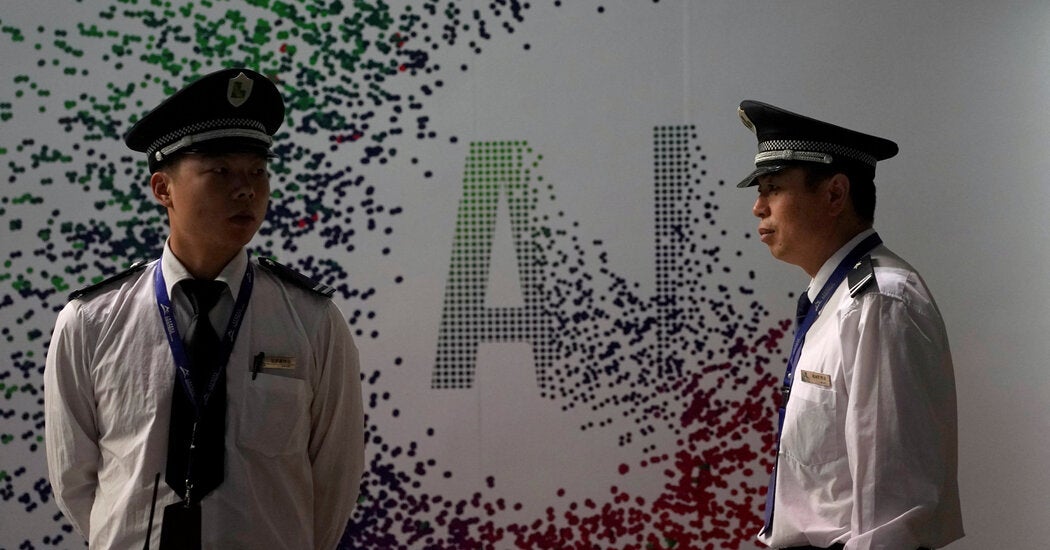
China is moving to tighten export controls on top AI models, aiming to balance national security with its ambition to outpace the United States in global AI dominance. The US ban on DeepSeek is expected to have a ripple effect beyond government agencies, potentially deterring private US firms from adopting Chinese models due to compliance risks. Meanwhile, the open-weight landscape continues to shift, with models like GLM-5.3, Kimi K3, and Qwen 3.8 remaining key players, though many carry complex license restrictions that require careful review for commercial use.
On the radar
- Ornith-1.5-122B Release: The open-source AI lab Ornith recently released Ornith-1.5-122B, a 122B parameter MoE inference model licensed under MIT, designed for single-node GPU deployment.
- GLM-5.5 Scale: Zhipu AI’s upcoming GLM-5.5 model is rumored to reach 2.5 to 3.5 trillion parameters, potentially becoming the largest domestic model in China.
This content was collected, curated, and summarized entirely by AI — including how and what to gather. It may contain inaccuracies. Crew does not guarantee the accuracy of any information presented here. Always verify facts on your own before acting on them. Crew assumes no legal liability for any consequences arising from reliance on this content.
Powered by
