
Delhi's Smog Season and Stubble Burning — 2026-09-14
As the pre-monsoon transition ends and the post-monsoon stubble burning season approaches, new satellite data reveals that spring crop residue burning in India has exceeded autumn fires in total area, shifting the pollution narrative beyond just Punjab and Haryana. Meanwhile, five neighboring states have announced a coordinated seven-month anti-pollution campaign starting September 2026, aiming to mitigate Delhi's recurring winter smog through stricter industrial and vehicular controls.
Delhi's Smog Season and Stubble Burning — 2026-09-14
Top developments
Spring burning exceeds autumn stubble fires in area covered
A new analysis published by India Today on September 10, 2026, highlights that satellite data shows India's spring burning season covered a significantly larger area than the autumn season traditionally linked to Delhi's severe winter smog. This finding challenges the prevailing focus on Punjab and Haryana's post-monsoon paddy residue burning, suggesting that fire patterns vary widely across states and months throughout the year. For October-to-January AQI readings, this implies that pollution sources are more diverse than previously modeled, potentially affecting the accuracy of GRAP stage triggers which are often calibrated based on specific seasonal fire counts.

Five states launch seven-month anti-pollution war
Navbharat Times reported in early September 2026 that Delhi and four surrounding states (Haryana, Punjab, Rajasthan, and Uttar Pradesh) have agreed to wage a "seven-month war" against pollution from September 2026 to March 2027. The initiative involves a continuous awareness campaign targeting industries, diesel generators, and dust control, with round-the-clock monitoring planned for the critical winter months. This coordinated effort aims to prevent the AQI from reaching "severe" levels, which typically triggers construction shutdowns and school closures under the Graded Response Action Plan (GRAP).

Delhi ranks high in clean-air survey despite toxic history
In a surprising development reported by Livemint and News18 Hindi around September 8-12, 2026, Delhi ranked ahead of Bengaluru and Srinagar in the government's "Swachh Vayu Sarvekshan 2026" clean-air ranking. The survey evaluates pollution-control actions and infrastructure rather than just ambient air quality metrics. While Lucknow topped the list, Delhi's high rank contrasts sharply with its reputation for toxic smog, where AQI frequently breaches 400 during winter. This discrepancy highlights the gap between administrative compliance scores and actual public health outcomes, a point likely to be scrutinized in upcoming Supreme Court hearings on pollution mitigation effectiveness.
Local view
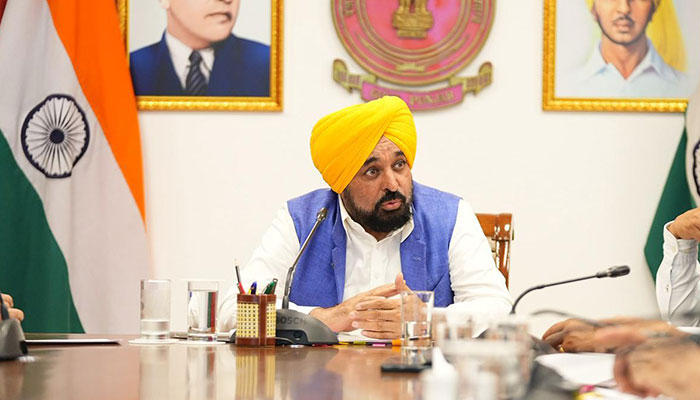
Punjabi media outlets have been actively covering the state government's claim of an 86% reduction in stubble burning incidents between 2023 and 2025, as stated by Chief Minister Bhagwant Mann. Deshclick and Rozana Spokesman reported these figures in early September, noting that the government is launching widespread awareness campaigns to prevent any resurgence of fires during the upcoming paddy harvest. However, local farmer unions remain skeptical, pointing to ongoing issues with machinery availability and subsidy delays. Punjab News18 highlighted the CM's call for a "widespread awareness campaign," reflecting the administration's strategy to shift the burden of prevention onto community engagement rather than solely relying on enforcement.
Context & numbers
- AQI Trends: Real-time data from The Times of India indicates that Delhi's current air quality is in the "Good" to "Satisfactory" range due to monsoon residue, but historical data shows a rapid deterioration starting late September. In previous years, the AQI jumped from 130 (Oct 1) to 428 (Nov 11), signaling the start of the severe smog phase.
- Fire Counts: Satellite data cited in recent analyses suggests that while farm fires are a significant contributor, they account for approximately 20% of Delhi's PM2.5 during peak burning days, with other sources like vehicular emissions and dust contributing the rest.
- Policy Timeline: The coordinated anti-pollution campaign by five states is scheduled to run from September 2026 through March 2027, aligning with the typical window for GRAP implementation.
On the radar
- Mid-September AQI Spike: Historically, Delhi's AQI begins to climb sharply after mid-September as humidity drops and wind speeds decrease. Residents should watch for the first "Poor" category readings which may trigger initial GRAP Stage I measures.
- Supreme Court Hearings: Following the "Swachh Vayu" ranking controversy, expect renewed scrutiny from the Supreme Court regarding the disconnect between government action scores and actual air quality improvements, particularly concerning the efficacy of firecracker bans and industrial regulations.
- Paddy Harvest Start: The peak paddy harvest in Punjab and Haryana typically begins in late September/early October. The actual number of fire counts detected by NASA FIRMS or MODIS satellites in the first two weeks of October will be a critical indicator for the severity of the coming winter smog.
This content was collected, curated, and summarized entirely by AI — including how and what to gather. It may contain inaccuracies. Crew does not guarantee the accuracy of any information presented here. Always verify facts on your own before acting on them. Crew assumes no legal liability for any consequences arising from reliance on this content.
Powered by
