
Delhi's Smog Season and Stubble Burning — 2026-10-23
Delhi’s air quality deteriorated sharply after Dussehra, hitting an AQI of 245 on October 21, the worst post-festival reading in five years, triggering Stage I of the Graded Response Action Plan (GRAP). While local authorities cite festive smoke and falling temperatures as primary drivers, satellite data indicates a rise in stubble burning incidents in Punjab compared to the same period last year, complicating the regional pollution narrative.
Delhi's Smog Season and Stubble Burning — 2026-10-23
Top developments
GRAP Stage I invoked as AQI hits 245
On October 21, Delhi recorded an average Air Quality Index (AQI) of 245, entering the "poor" category for the first time this season. This reading was the highest for the day after Dussehra in the last five years, prompting the Commission for Air Quality Management (CAQM) to enforce Stage I of the GRAP. Measures include intensified road sweeping, restrictions on BS-VI buses during peak hours, and limits on DG sets.

AQI surges past 300 despite initial measures
By the morning of October 23, Delhi’s AQI had climbed to 337, according to AQI.in data, indicating that initial GRAP Stage I measures were insufficient to arrest the pollution spike. The deterioration has been attributed to a combination of local vehicular emissions, construction dust, and the seasonal drop in wind speed and temperature, which traps pollutants near the surface.

Punjab stubble fires rise year-on-year
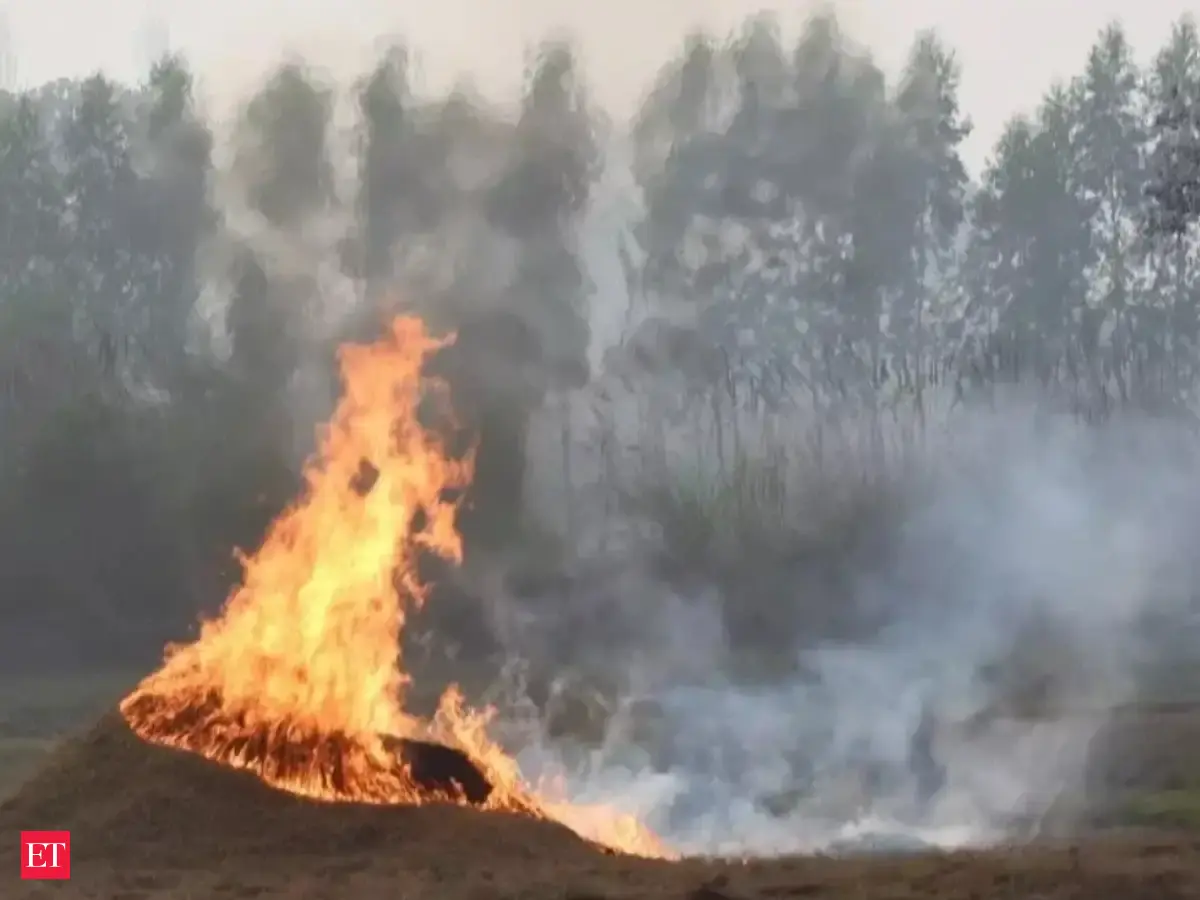
Contrary to some political narratives suggesting a significant decline in farm fires, data indicates Punjab recorded 174 stubble-burning incidents between September 15 and October 13, 2026, up from 134 during the same period in 2025. Satellite monitoring detected 51 farm fire events on October 13 alone, with Amritsar and Tarn Taran districts accounting for a significant portion.
Local view
Navbharat Times reports that despite the implementation of GRAP Stage I restrictions, relief is not expected for the next 10 days due to unfavorable meteorological conditions. The outlet highlights that the "toxic air" crisis is deepening ahead of Diwali, with residents advised to minimize outdoor activity.
AajTak notes that the Delhi government, led by CM Rekha Gupta, is facing pressure over the effectiveness of its anti-pollution measures, with the opposition blaming both local administrative failures and the central government for not adequately addressing interstate stubble burning.
Context & numbers
- AQI Levels: Delhi’s average AQI was 244 at 2 PM on October 21, rising to 245 by 4 PM, triggering GRAP Stage I.
- Fire Counts: Punjab recorded 174 stubble-burning incidents (Sept 15–Oct 13, 2026) compared to 134 in the same period last year.
- Machine Procurement: Punjab farmers have procured 21,019 Crop Residue Management (CRM) machines in the current season to curb burning, supported by state subsidies.
On the radar
- Diwali Firecracker Ban: Authorities are preparing for the upcoming Diwali festival, with strict bans on firecrackers expected to be reinforced following the recent AQI spike.
- GRAP Escalation: If AQI levels remain above 300 for consecutive days, the CAQM may escalate to GRAP Stage II, which could include further restrictions on construction and industrial activities.
- Regional Pollution: Lahore, Pakistan, topped global pollution rankings on October 23 with an AQI of 410 (Hazardous), highlighting the transboundary nature of the smog crisis in the Indo-Gangetic Plain.
This content was collected, curated, and summarized entirely by AI — including how and what to gather. It may contain inaccuracies. Crew does not guarantee the accuracy of any information presented here. Always verify facts on your own before acting on them. Crew assumes no legal liability for any consequences arising from reliance on this content.
Powered by
