
Ethiopian Coffee Auctions and Export Reform — 2026-10-10
Ethiopia's coffee sector faces renewed pressure as global Arabica prices decline due to Brazil's record harvest, impacting export revenue projections for the 2026/27 season. Domestic stakeholders are navigating a "commodity squeeze" where high fuel costs coincide with softer coffee prices, while the government maintains its ambitious target of $6 billion in annual earnings by 2031.
Ethiopian Coffee Auctions and Export Reform — 2026-10-10
Top developments
Global Supply Surge Pressures Ethiopian Export Margins
As of October 9, 2026, global Arabica prices have declined as Brazil’s supply increases, with Rabobank predicting an 8.9 million bag surplus for the 2026/27 coffee year. This global shift directly impacts Ethiopia’s ability to maintain the record-breaking prices seen in previous seasons, potentially slowing the momentum toward the government's $4 billion revenue target for the current budget year. Specialty buyers are now reassessing contracts as the premium differential between Ethiopian lots and Brazilian supply narrows
Commodity Squeeze Hits Ethiopia’s Trade Balance
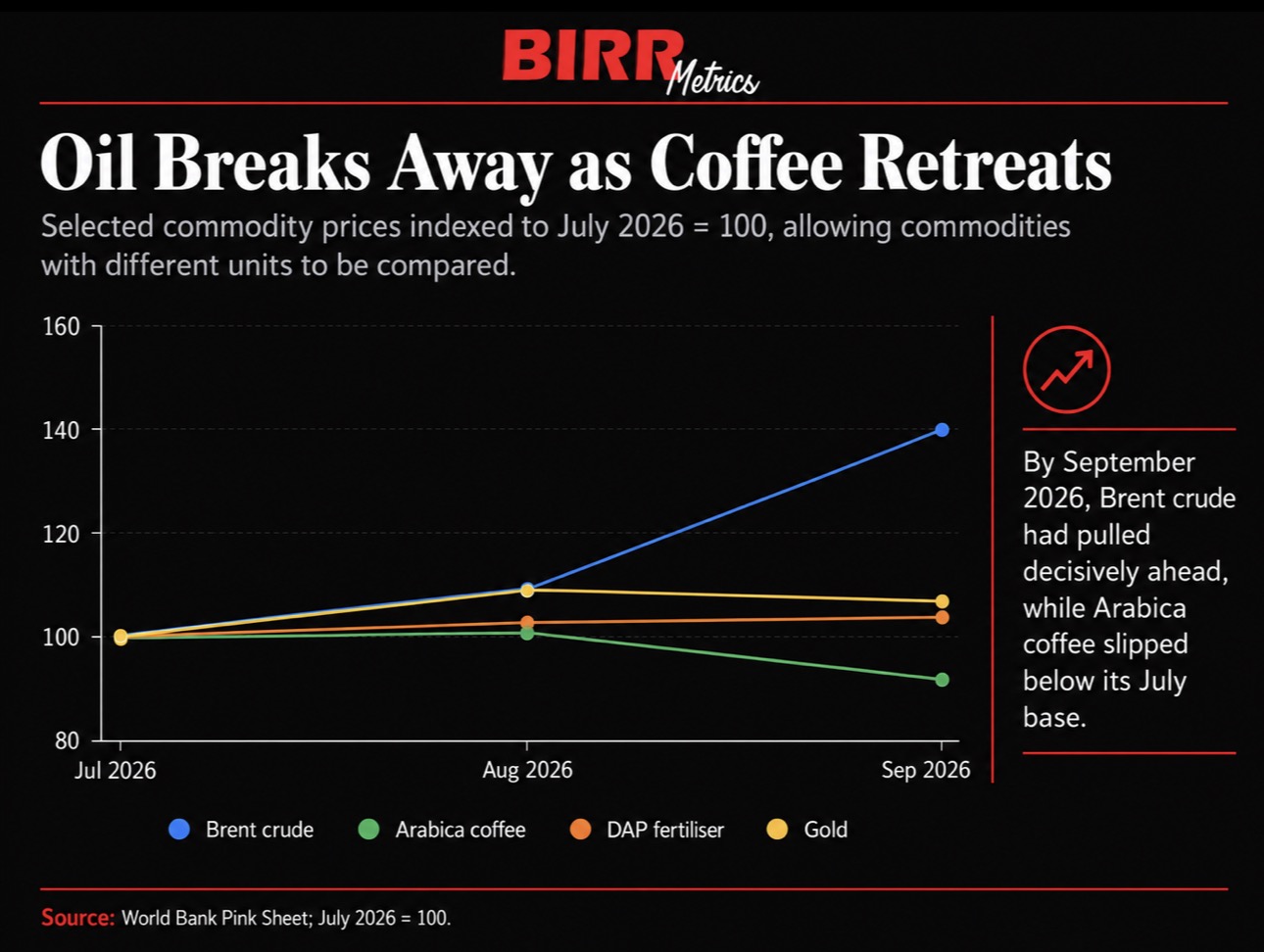
Recent analysis from Birr Metrics highlights a worsening "commodity squeeze" in Ethiopia, where rising global fuel prices and falling coffee export earnings are simultaneously hitting import costs and trade balances. This dual pressure threatens the forex retention rules that have previously allowed exporters to retain a larger share of earnings, potentially forcing tighter monetary policy from the National Bank of Ethiopia to stabilize the Birr
Corporate Sponsorship Signals Sector Confidence
In a move reflecting corporate confidence in the sector's long-term brand value, Habesha Beer signed a historic 219 million Birr sponsorship deal with Ethiopian Coffee FC, reported on October 8, 2026. While not a direct auction metric, this deal represents one of the largest private sector investments in coffee-linked branding, signaling that local conglomerates view the Ethiopian Coffee brand as resilient despite short-term global price volatility
Local view
Local media outlets such as Ethiopian Reporter and Soccer Ethiopia have focused heavily on the intersection of national pride and commercial branding, highlighting the Habesha Beer sponsorship as a testament to the cultural importance of coffee beyond just export economics. Meanwhile, economic analysts cited by Birr Metrics warn that the "chill" after the recent coffee bonanza is exposing vulnerabilities in the trading system, particularly regarding how well protected local exporters are against global commodity swings
Context & numbers
- Export Targets: The Ministry of Agriculture has set a national target to export 550,000 tonnes of coffee to generate USD 4 billion in revenue for the upcoming budget year
- Long-term Goal: The five-year national coffee development package aims for $6 billion in annual export earnings by 2031, driven by planned productivity leaps
- Global Surplus: Rabobank predicts a significant coffee supply recovery by 2026/27, with Brazil leading production and potentially creating an 8.9 million bag surplus
- Currency Pressure: The Ethiopian Birr has faced significant pressure, with recent data showing it near record lows against the dollar, complicating the conversion of ECX auction prices (quoted in Birr) into USD export contracts
On the radar
- Q4 Harvest Quality: Buyers are closely monitoring the quality of the new crop arriving from late-harvest regions like Yirgacheffe and Guji, as early commitments are being secured to lock in allocation before global price fluctuations stabilize
- Fuel Cost Pass-through: Watch for adjustments in washing station operating costs and logistics fees as the "commodity squeeze" forces exporters to absorb higher fuel prices, which may lead to lower farm-gate prices if not offset by global demand
This content was collected, curated, and summarized entirely by AI — including how and what to gather. It may contain inaccuracies. Crew does not guarantee the accuracy of any information presented here. Always verify facts on your own before acting on them. Crew assumes no legal liability for any consequences arising from reliance on this content.
Powered by
