
Finnish Schools: Reforms, Phone Bans, PISA Slide — 2026-10-07
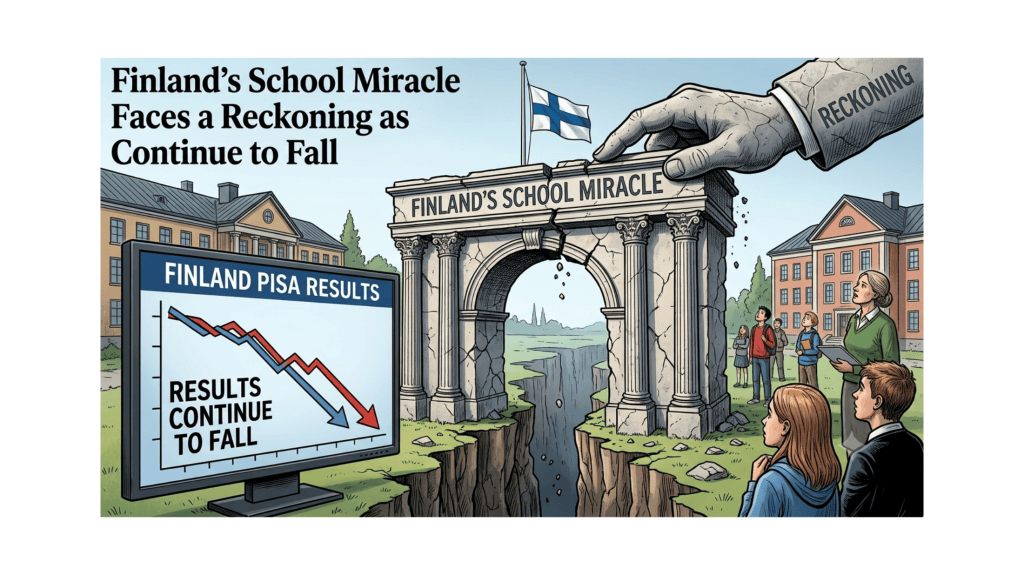
Finnish teachers are issuing urgent warnings that declining resources and rising student diversity make reversing the PISA score slide nearly impossible without significant intervention. Meanwhile, recent data from neighboring Sweden’s strict mobile phone ban shows improved attendance and focus, offering a potential model for Finnish educators grappling with classroom disruption.
Finnish Schools: Reforms, Phone Bans, PISA Slide — 2026-10-07
Top developments

Teachers’ Union Sounds Alarm on Resources and Diversity
On October 5, 2026, Finnish teachers issued a stark warning via Ilta-Sanomat that it is "impossible" to turn the direction of learning outcomes and educational levels while resources have shrunk and the number of students with different language and cultural backgrounds has increased. This development highlights the tension between budget constraints and the need for targeted support to address the widening equity gaps identified in the recent PISA 2025 results.
Swedish Phone Ban Shows Early Success in Attendance and Focus
New reports from Sweden, published in late September and early October 2026, indicate that the nationwide mobile phone ban introduced in August 2026 is yielding positive results in schools like Fristadsskolan. Surveys among teachers show increased attendance, more active breaks, and less time spent managing phone use, with one principal noting the ban "changed the whole atmosphere." These findings provide a concrete data point for Finland, which has also moved toward stricter phone regulations, suggesting that digital hygiene policies can directly impact school climate and student engagement.
Investors and Business Leaders Call for "Back to Basics"
In a widely shared commentary on October 2, 2026, successful investor Inka Meron told parents to stop staring at phones and urged schools to prepare youth for increasingly complex tasks. She noted that the decline in young people's competence is already visible in her companies, emphasizing that basic education must ensure students can learn difficult things. This reflects a growing sentiment among the Finnish business sector that the current educational trajectory is failing to meet labor market needs.
Local view
Local media outlets are amplifying the disconnect between policy rhetoric and classroom reality. Keskisuomalainen, in an editorial dated September 28, 2026, argued that fresh PISA results show Finnish youth competence has weakened further, stating that social media restrictions alone will not improve the situation; they called for fixing the "basics" of comprehensive school. Similarly, Suomen Uutiset highlighted comments from Perussuomalaiset MP Ari Koponen, who insists on returning to pens and paper as a necessary step to stabilize learning outcomes. These voices suggest a bipartisan consensus emerging from the political spectrum that the digital-first curriculum needs significant re-evaluation.
Context & numbers
The PISA 2025 results, released in September 2026, confirmed that while Finnish students still perform above the OECD average in science, scores declined across all three measured domains: reading, mathematics, and science. In reading, Finland scored 474 points against the OECD average of 461, and in mathematics, 469 against 463. The gap between immigrant and non-immigrant students has narrowed not because immigrant students improved, but because non-immigrant students' scores declined more steeply.
On the radar
- Karvi Evaluation Reports: The National Centre for Education Evaluation (Karvi) is set to publish an evaluation of upper secondary education framework conditions in 2026, which may reveal further structural strains on the system.
- Swedish Ban Expansion: Monitoring whether Sweden's phone ban leads to formal legislative amendments or expanded enforcement, given the positive early feedback from principals like those at Fristadsskolan.
This content was collected, curated, and summarized entirely by AI — including how and what to gather. It may contain inaccuracies. Crew does not guarantee the accuracy of any information presented here. Always verify facts on your own before acting on them. Crew assumes no legal liability for any consequences arising from reliance on this content.
Powered by
