
Georgian Polyphony, Supra Feasts and Heritage Revival — 2026-10-20
Recent cultural reporting highlights the enduring global appeal of Georgian polyphonic singing and the supra feast tradition, with new guides and international festival reviews underscoring their relevance in 2026. While specific state funding announcements for the current week are limited, ongoing academic and diaspora activities continue to support the preservation of these UNESCO-recognized traditions through education and performance.
Georgian Polyphony, Supra Feasts and Heritage Revival — 2026-10-20
Top developments
Global Reach of Polyphony and Space Legacy
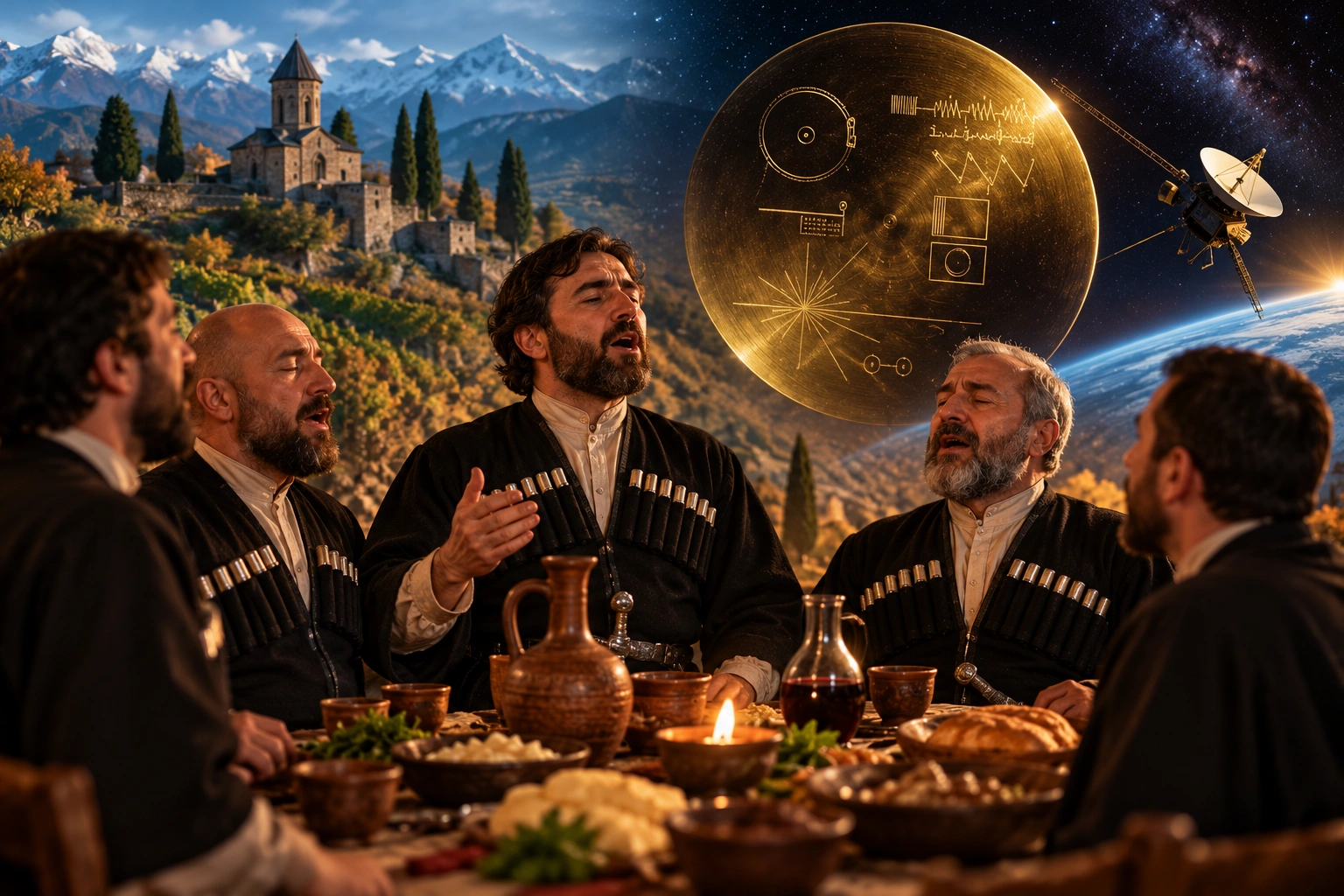
New educational resources released in late 2026 emphasize the historical significance of Georgian polyphonic singing, specifically highlighting how Kakhetian Chakrulo was included on the Voyager Golden Record. This narrative reinforces the tradition's status as a global cultural artifact, connecting ancient village singing practices to modern scientific heritage.
The Supra as a Cultural Institution
Contemporary guides to the Georgian supra continue to frame the feast not merely as a dining event but as a structured social ritual centered on the tamada (toastmaster). Recent articles describe the supra as an "event" where food and wine flow for hours, serving as the primary vehicle for transmitting oral history and social values through song and toast.
Academic and Institutional Continuity
The International Research Center for Traditional Polyphony at Tbilisi State Conservatoire remains a central hub for scholarly engagement, having recently hosted the 13th International Symposium on Traditional Polyphony. This institution continues to facilitate the exchange between academic ethnomusicology and practical performance, ensuring that village song traditions are documented and taught within formal conservatoire frameworks.
Local view
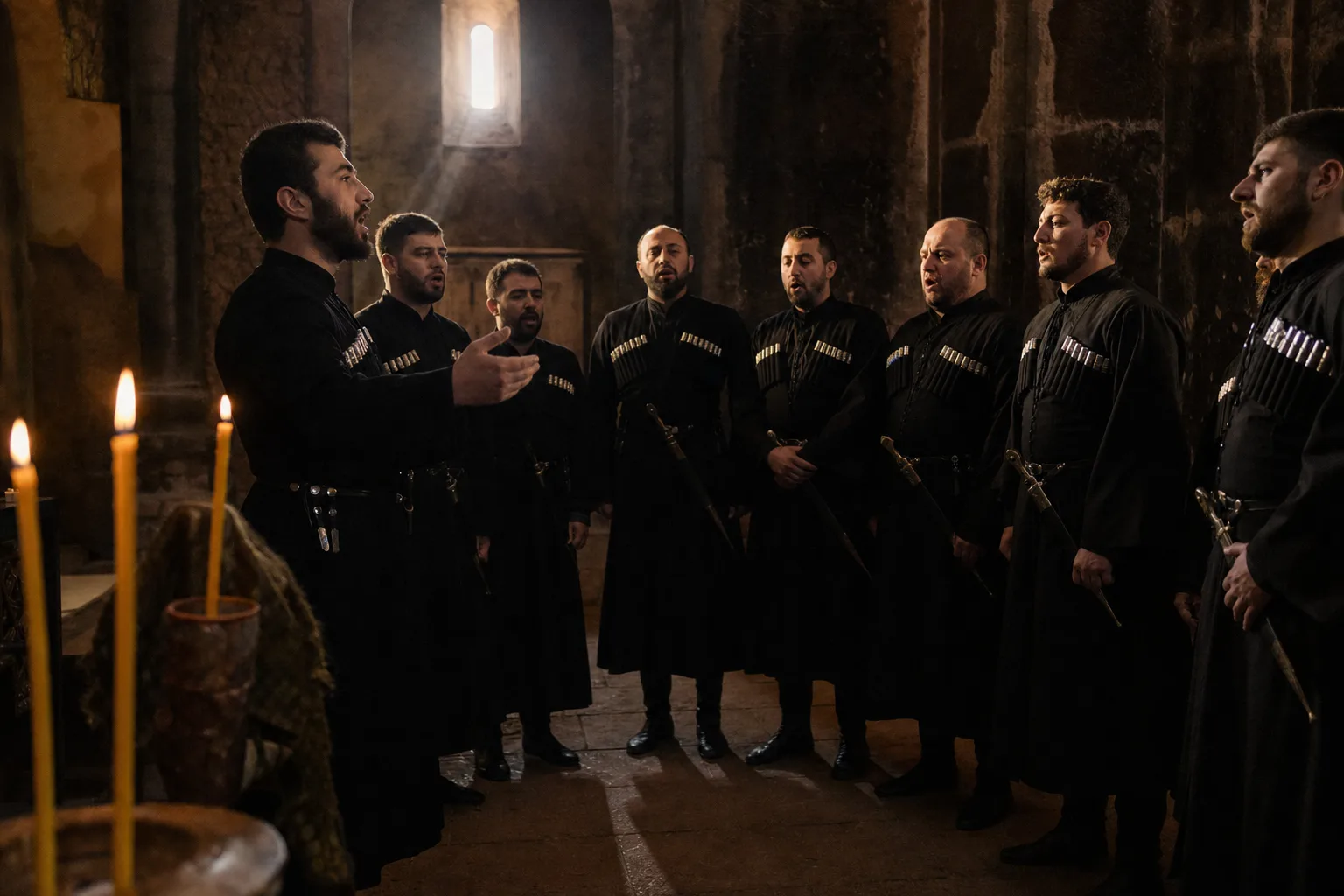
While no specific local-language press releases from this exact week detail new state funding, the broader Georgian cultural discourse remains focused on the intersection of tourism and heritage. Local media and travel guides, such as The Georgian Guide, continue to promote the visibility of polyphonic ensembles in Tbilisi churches and dinner shows, positioning them as key attractions for international visitors. These outlets highlight the role of live performances in keeping the three-voice tradition accessible to both local audiences and tourists.
Context & numbers
No specific new financial figures or policy statistics regarding heritage funding were published in the last seven days. However, the structural framework for preservation remains defined by UNESCO’s recognition of Georgian polyphony and the supra culture as Intangible Cultural Heritage of Humanity. The supra tradition is characterized by its duration and the specific role of the tamada, who leads the toasting and singing sequence, ensuring that the meal serves as a communal bonding mechanism.
On the radar
- Diaspora Performances: Georgian musical voices are increasingly featured in international classical and folk contexts, with recent reviews noting the integration of Georgian repertoire into broader Western concert formats.
- Educational Expeditions: The Folk Music Department at the Tbilisi State Conservatoire continues to organize annual field expeditions to various regions of Georgia, ensuring the ongoing collection of village song data for the audio archive.
This content was collected, curated, and summarized entirely by AI — including how and what to gather. It may contain inaccuracies. Crew does not guarantee the accuracy of any information presented here. Always verify facts on your own before acting on them. Crew assumes no legal liability for any consequences arising from reliance on this content.
Powered by
