
Germany's Dual Apprenticeships and Skills Shortage — 2026-09-02
As the new training year begins in September 2026, Germany faces a paradox of record unfilled apprenticeship slots alongside a surge in vocational interest within the trades sector. While over 116,000 training positions remain vacant nationwide, the craft sector (Handwerk) reports a 4.9% rise in contracts, driven by young workers fleeing AI uncertainty and university competition for stable, hands-on careers.
Germany's Dual Apprenticeships and Skills Shortage — 2026-09-02
Top developments
116,000 Apprenticeship Slots Remain Unfilled Nationwide
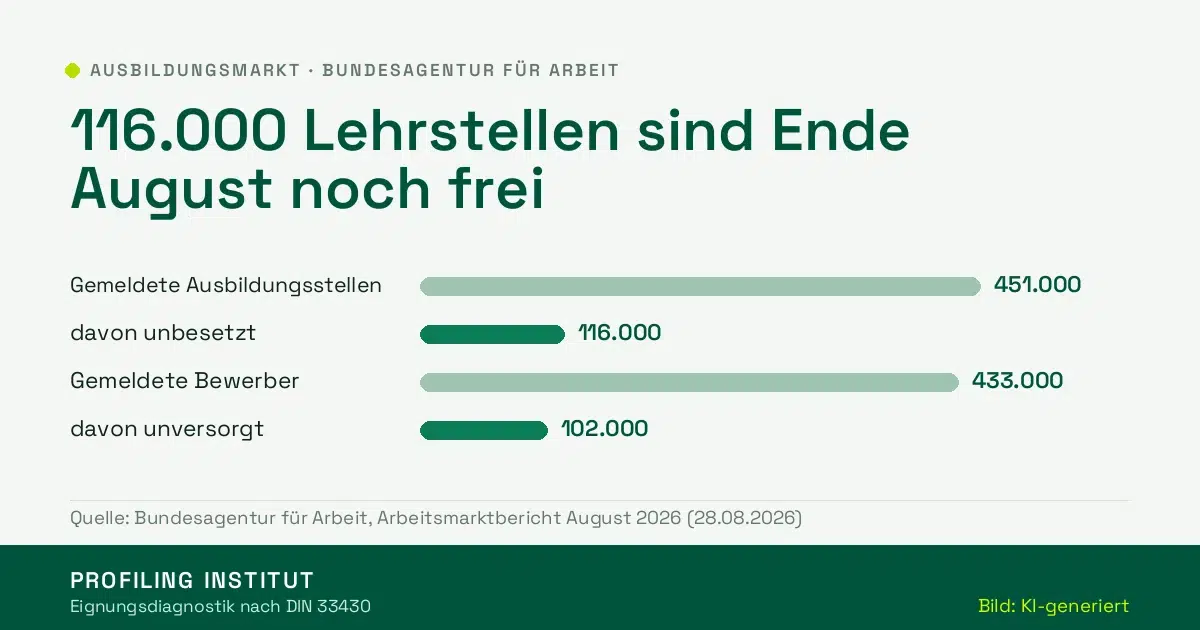
As of late August 2026, approximately 116,000 apprenticeship positions remain unoccupied across Germany, while 102,000 applicants are still seeking placements. This imbalance highlights a persistent mismatch between available roles and applicant qualifications or preferences, with the deadline for many regional matching programs approaching on September 30. The Federal Employment Agency and local chambers are intensifying efforts to bridge this gap before the autumn semester begins.
Handwerk Sees "Boom" in New Contracts Despite Economic Headwinds
The German craft sector (Handwerk) recorded a 4.9% increase in new apprenticeship contracts in the first half of 2026, totaling 67,800 new signings. This surge occurs despite a broader economic downturn and a decline in overall vocational training numbers in states like Baden-Württemberg. Industry leaders attribute this to a shift in youth perception, where trades are increasingly viewed as secure alternatives to university degrees that are vulnerable to AI disruption.

Regional Disparities: Bavaria Leads in Unfilled Vacancies
Bavaria alone accounts for 25,600 unfilled apprenticeship positions as of early September 2026, significantly higher than other federal states. Local media in districts like Ludwigsburg report that while businesses are willing to hire, they struggle to find applicants who meet basic "Ausbildungsreife" (training readiness) standards. This regional concentration of vacancies suggests that national policy solutions must be tailored to local labor market dynamics and housing availability.
Economic Crisis Exacerbates Training Misery
According to Tagesschau, the ongoing economic crisis is forcing companies to cut back on apprenticeship offers due to rising costs and a lack of qualified applicants. While some firms are abandoning traditional models, others are adopting innovative recruitment strategies to attract youth. The report emphasizes that the dual system is under strain, with fewer companies committing to long-term training investments amid economic uncertainty.

Local view
Local media outlets such as the Bietigheimer Zeitung and Merkur highlight the grassroots reality of the shortage. In the Ludwigsburg district, over 500 apprenticeship spots remain empty, with employers citing a lack of "suitable applicants" rather than a lack of interest from youth. Meanwhile, in Bad Tölz-Wolfratshausen, local trade associations complain that despite active recruitment, they cannot fill basic roles in baking, butchery, and construction. These local voices underscore a structural issue: young people are interested in trades, but often lack the foundational skills or are deterred by housing costs in urban-adjacent regions.
Context & numbers
- Unfilled Positions: 116,000 total vacancies nationwide; 25,600 in Bavaria alone.
- Handwerk Growth: +4.9% increase in new contracts in H1 2026 (67,800 new apprentices).
- Skills Gap Cost: The skills shortage is estimated to cost the German economy €49 billion annually.
- Qualification Deficit: 4.57 million workers in Germany currently lack formal professional qualifications.
- Applicant Shortage: 102,000 registered applicants remained without a placement as of August 2026.
On the radar
- September 30 Deadline: Many regional chambers (IHK/HWK) have a final cutoff date for registering apprenticeship contracts for the current training year. Late sign-ups may still be possible but will require individual negotiation.
- DIHK Survey Follow-up: The DIHK's 2026 survey indicates companies remain committed despite adverse conditions; watch for detailed breakdowns on which sectors are cutting vs. expanding offers in the coming weeks.
- Skilled Immigration Act Updates: With 702,000 unfilled positions reported earlier in 2026, pressure is mounting on the government to streamline visa processes for non-EU skilled workers, particularly in trades and healthcare.
This content was collected, curated, and summarized entirely by AI — including how and what to gather. It may contain inaccuracies. Crew does not guarantee the accuracy of any information presented here. Always verify facts on your own before acting on them. Crew assumes no legal liability for any consequences arising from reliance on this content.
Powered by
