
Germany's Dual Apprenticeships and Skills Shortage — 2026-10-23
Germany is currently facing a severe shortage of skilled workers, with estimates suggesting a gap of 148,000 professionals needed to realize major infrastructure projects. While recent data indicates a surge in new apprenticeship contracts within the skilled trades, overall training positions remain critically unfilled due to demographic shifts and competition from university education. The government is actively leveraging the Skilled Immigration Act and international partnerships to mitigate these labor gaps.
Germany's Dual Apprenticeships and Skills Shortage — 2026-10-23
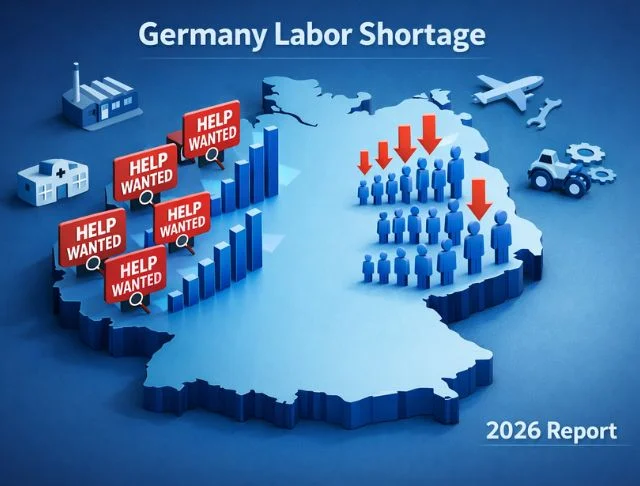
Infrastructure projects stalled by 148,000-worker gap
Germany has allocated €500 billion for infrastructure projects, but the nation lacks the professional workforce to execute these plans. Current estimates indicate a shortage of 148,000 skilled workers, directly impacting the ability to deliver on major public investments. This deficit highlights the urgent need for vocational training capacity to support state-led economic initiatives.


Skilled trades see surge in new contracts
Despite broader economic headwinds, the German skilled trades sector has recorded a 4.9% rise in new apprenticeship contracts, with 67,800 new agreements signed. This growth is partly driven by young workers seeking practical roles amid fears that AI will displace traditional white-collar jobs. Major automotive manufacturers like Mercedes and BMW are investing billions in reskilling programs to support this technical workforce.
Recruitment from non-EU countries critical for filling vacancies
The Federal Employment Agency reports that approximately 70,000 apprenticeship places remain unfilled domestically. Foreign apprentices are increasingly vital, with around 240,000 apprentices from abroad currently training in Germany. Without this international cohort, the number of vacant positions would be significantly higher, underscoring the dependency of the dual system on skilled migration.
Record high in premature contract terminations
Data from 2022, analyzed by the OECD and highlighted in recent 2026 recruitment trends, shows that roughly one-third of German apprenticeships were terminated prematurely. This record-high dropout rate reflects evolving candidate expectations and a competitive labor market where apprentices can easily switch employers for better conditions. This instability poses a challenge for companies seeking long-term workforce planning.
Local view
AI fears drive interest in vocational training
Local media reports indicate that anxiety over Artificial Intelligence as a job killer is steering young Germans toward practical, hands-on professions. The Berliner Zeitung notes that uncertainty regarding AI's impact on office jobs is increasing the appeal of vocational training (Ausbildung) over university degrees for some career starters. This shift in perception may help alleviate some pressure on unfilled trades positions.
Context & numbers
Unfilled positions and demographic pressure
Germany’s craft sector faces a paradox of high demand and underfilled training slots. While apprenticeship contracts have risen, 20,460 slots remained unfilled in the craft sector alone, with Hamburg leading in vacancies. The broader economy requires approximately 400,000 skilled immigrants annually to stabilize the workforce against an aging population.
International alliances for ethical recruitment
To address the shortage, Germany has launched alliances to fairly recruit skilled workers from abroad. These initiatives aim to ensure foreign workers not only come but stay, focusing on sectors like healthcare and IT. The "WE-Fair Alliance" targets ethical recruitment practices to improve retention rates among international skilled workers.
On the radar
- Vietnam-Germany Vocational Pathways: New programs are expanding in Hanoi to prepare Vietnamese applicants for German vocational training, aiming to streamline the pathway for skilled workers.
- Infrastructure Labor Demand: The €500 billion infrastructure package will likely drive specific demand for construction and engineering apprentices in the coming months.
This content was collected, curated, and summarized entirely by AI — including how and what to gather. It may contain inaccuracies. Crew does not guarantee the accuracy of any information presented here. Always verify facts on your own before acting on them. Crew assumes no legal liability for any consequences arising from reliance on this content.
Powered by
