
Greenland Minerals and Self-Rule Politics — 2026-10-23
Greenland’s parliament has voted to suspend seabed mining until at least 2029, signaling a pause in deep-sea resource extraction amidst growing great-power competition. Simultaneously, the European Union unveiled a new Arctic strategy emphasizing closer cooperation with Greenland, while a new US-Denmark-Greenland defense agreement expands American military presence and imposes stricter foreign investment controls.
Greenland Minerals and Self-Rule Politics — 2026-10-23
Top developments
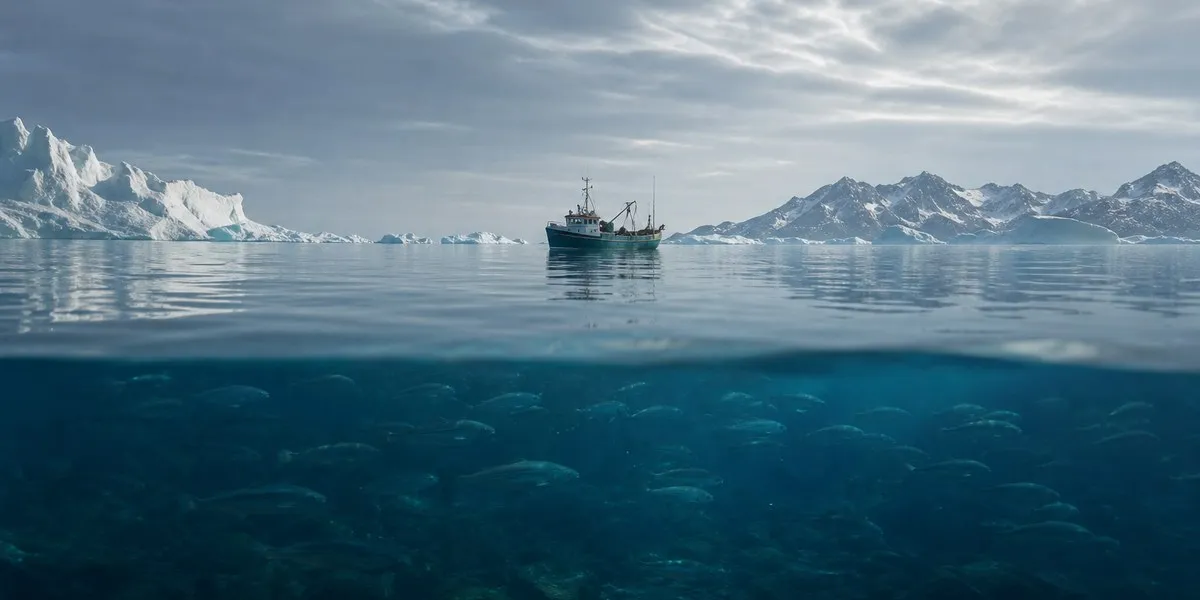
Parliament Votes to Suspend Seabed Mining Until 2029 On October 22, 2026, Greenland’s Parliament (Inatsisartut) instructed the government (Naalakkersuisut) to draft legislation suspending seabed mineral extraction until at least 2029. The measure, described as "a decision to decide," aims to delay deep-sea mining while the government assesses environmental impacts and regulatory frameworks. This pause comes as WWF Greenland welcomed the proposal to ban deep-sea mining, calling it a critical step for environmental protection.
EU Unveils Arctic Strategy with Focus on Greenland Cooperation On October 20, 2026, the European Commission presented a new Arctic strategy aimed at strengthening ties with Greenland through increased investment in energy, infrastructure, and security. The strategy highlights the need for more icebreakers, stronger surveillance, and protected undersea cables to counter intensifying competition for Arctic resources. European Relations analysts note that this accord protects Greenland's self-determination while shaping the security choices of a future independent state.
New US-Denmark-Greenland Defense Agreement Expands Military Presence A new agreement between the United States, Denmark, and Greenland, signed on September 22, 2026, amends the 1951 Defense Agreement to expand the US military footprint in Greenland. The deal grants the US a greater role in the island's security and introduces new restrictions on foreign investments in sensitive sectors, requiring joint security assessments for investors. A UK House of Commons briefing released on October 22, 2026, confirmed the agreement’s implications for Arctic security and the exclusion of Chinese influence.
US Investors Must Follow Greenlandic Law on Resource Projects Following statements by US officials, the Greenlandic Ministry clarified that American oil and mineral projects must adhere strictly to Greenlandic law, rejecting any notion of "first rights" for US investors. This stance reinforces Greenland’s autonomy in resource management despite the increased US security presence.
Local view
Sermitsiaq.ag Highlights Legislative Priorities The Greenlandic newspaper Sermitsiaq reported on the Inatsisartut’s decision to propose a ban on deep-sea mining, noting the support from environmental organizations like WWF Greenland. The outlet also covered the Danish government’s 2027 finance bill proposal, which includes specific allocations for human rights work in Greenland, highlighting the ongoing fiscal and political interdependence.
Context & numbers
Economic Dependence on Fishing Fisheries remain the backbone of Greenland’s economy, accounting for over 90% of its exports. The sector employs approximately 6,500 people out of a national population of roughly 56,452. Recent economic growth has been driven by larger quotas for shrimp, the primary export, alongside increased construction activity in the capital, Nuuk.
Mineral Policy and Legal Frameworks Greenland’s mineral policy has seen procedural changes in exploitation licences, with the 2021 "Uranium Act" continuing to block projects like Kvanefjeld due to uranium content exceeding 100 parts per million. In contrast, the Tanbreez rare-earth deposit, with uranium levels below this threshold, has been approved, illustrating the technical and legal distinctions driving licensing decisions.
On the radar
Upcoming Legislation on Seabed Mining The government is expected to present the detailed law suspending seabed mining to the Inatsisartut in early 2027, following the current parliamentary instruction.
Arctic Security Dynamics Analysts continue to monitor the implementation of the new US-Denmark-Greenland defense pact, particularly regarding how joint security assessments for foreign investments will affect non-Western resource projects in the region.
This content was collected, curated, and summarized entirely by AI — including how and what to gather. It may contain inaccuracies. Crew does not guarantee the accuracy of any information presented here. Always verify facts on your own before acting on them. Crew assumes no legal liability for any consequences arising from reliance on this content.
Powered by
