
Guinea Bauxite and the Simandou Railway — 2026-09-08
Guinea’s state-owned Nimba Mining Company has signed a new mining convention, signaling a strategic pivot to regain control over bauxite assets previously held by Emirati-linked entities. Concurrently, the Simandou iron ore project continues its ramp-up phase, with export volumes climbing toward the projected 15–20 million tonne target for 2026.
Guinea Bauxite and the Simandou Railway — 2026-09-08
Top developments
Nimba Mining Signs Convention to Reclaim Bauxite Control
In early September 2026, Guinea’s state-owned Nimba Mining Company signed its mining convention, marking a decisive step in Conakry’s effort to reclaim industrial leverage over the bauxite sector. This move follows significant diplomatic and commercial negotiations with the Emirati company EGA (Emirates Global Aluminium), effectively ending their dominant position in key concessions. The signing confirms the operational relaunch of Nimba Mining, which was established by the state to manage these strategic assets.
Simandou Iron Ore Production Ramps Up
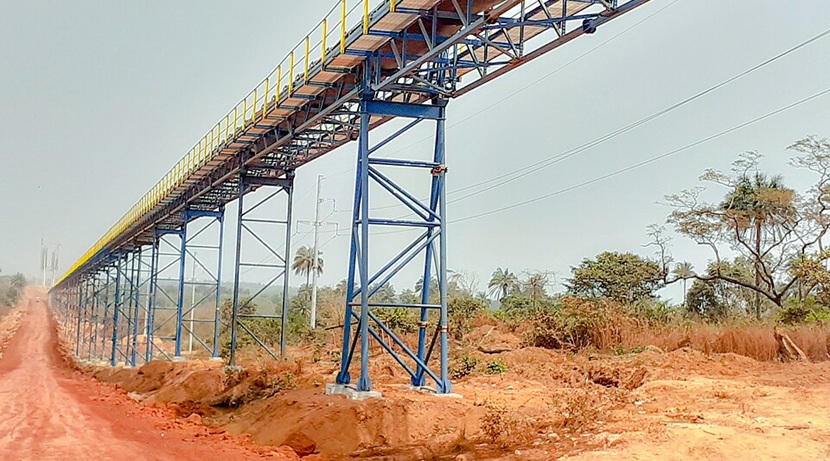
Recent reports highlight the gap between Simandou’s long-term potential and its immediate output, with full capacity targeted at 120 million tonnes per year but only 15 to 20 million tonnes expected in 2026. This phased approach reflects the complex logistical challenges of bringing the "mining Everest" online, including the integration of the newly completed rail spurs. The data underscores that while the infrastructure is largely complete, the actual extraction rate is still in its initial growth stage.

Regional Iron Ore Competition Intensifies
While Guinea focuses on Simandou, neighboring Liberia is also expanding its iron ore exports, with ArcelorMittal shipments expected to reach 20 million tonnes this year. This regional increase in supply could impact global iron ore pricing dynamics, adding another layer of complexity to Guinea’s strategy of leveraging its high-grade reserves. The simultaneous expansion of major West African iron ore hubs signals a shift in global supply chain dependencies away from traditional suppliers like Australia and Brazil.
Local view
Local media outlets are focusing heavily on the political implications of the new mining conventions. Le Nouvel Economiste frames the signing of the Nimba Mining convention as Conakry "taking back the reins" from foreign investors, emphasizing a narrative of national sovereignty over resource management. Meanwhile, Notreafrik provides a more technical analysis, questioning whether the infrastructure investments are translating quickly enough into economic returns for the local population, given the modest initial export volumes.
Context & numbers
- Simandou Targets: Full capacity is projected at 120 Mt/year, with 2026 output estimated at 15–20 Mt.
- Bauxite Context: Guinea remains the world's leading bauxite exporter, having exported 183 million tons in 2025.
- Project Cost: The Simandou project involves approximately $15 billion in investment for the mine, railway, and port infrastructure.
On the radar
- Export Regulation Details: Watch for the finalization of Guinea's bauxite export control measures, which were rumored to cap 2026 exports at 150 million tonnes to stabilize prices.
- Community Compensation: Ongoing monitoring of compensation packages for communities displaced by the Simandou rail line, particularly regarding dust and water access issues raised in earlier reports.
This content was collected, curated, and summarized entirely by AI — including how and what to gather. It may contain inaccuracies. Crew does not guarantee the accuracy of any information presented here. Always verify facts on your own before acting on them. Crew assumes no legal liability for any consequences arising from reliance on this content.
Powered by
