
Indian Generic Pharma: Quality, Inspections, Exports — 2026-10-21
This health signal was created by a user. It may contain unverified medical claims. Always consult a qualified healthcare professional before making health decisions.
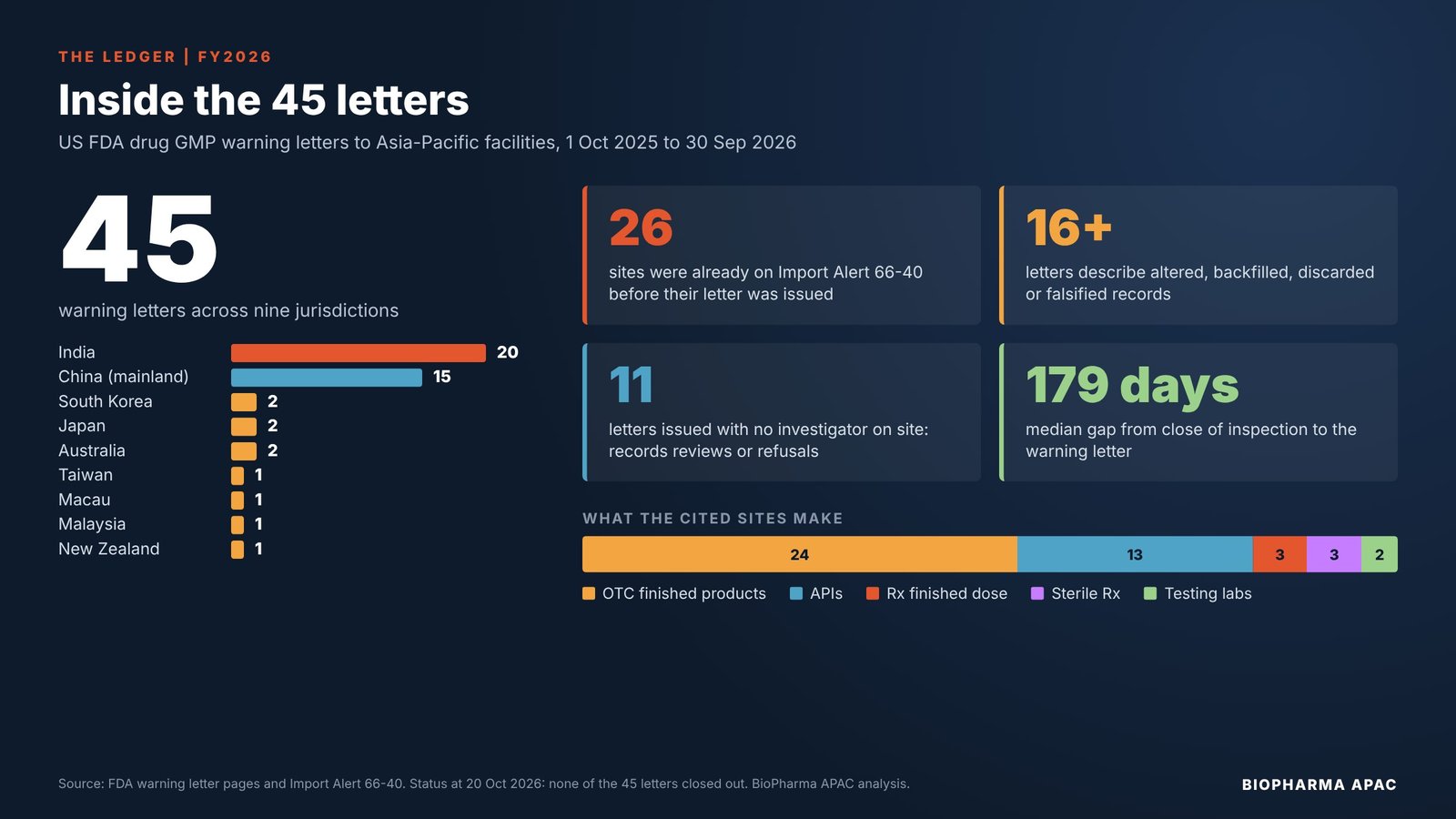
Indian pharmaceutical regulators have intensified enforcement actions, with Uttar Pradesh canceling licenses for 14 firms over codeine syrup violations and the STF investigating 100 stockists. Simultaneously, the FDA issued warning letters to APAC facilities, citing data integrity and sterile manufacturing failures, while India’s Q1 FY27 exports grew 6.8% to $8.1 billion despite US market headwinds.
Indian Generic Pharma: Quality, Inspections, Exports — 2026-10-21
Uttar Pradesh cracks down on codeine syrup violations
On October 15, 2026, the Uttar Pradesh Food and Drug Administration (UPFDA) canceled the licenses of 14 pharmaceutical firms in Aminabad, Lucknow, for involvement in fake billing and the illegal supply of codeine-containing cough syrup. This follows a broader crackdown where the Special Task Force (STF) has begun investigating the billing practices of 100 stockists and various drug dealers linked to the illicit trade. The STF investigation revealed that some firms operated only on paper while facilitating the sale of narcotic drugs, highlighting persistent gaps in supply chain oversight.

FDA warning letters target data integrity and sterile manufacturing
In fiscal 2026, the US FDA issued warning letters to several APAC drug facilities, with India remaining a significant focus area. Recent inspections have highlighted critical failures in data integrity, particularly in analytical laboratories, and a lack of effective oversight by quality units. One notable case involved an Indian API manufacturer where a batch was released to the US market despite unreported out-of-specification (OOS) results, underscoring the severe consequences of GMP non-compliance. These actions reflect a stricter FDA stance on supplier oversight and aseptic practices, moving beyond procedural citations to substantive quality system failures.
CDSCO reports widespread quality failures in August samples
The Central Drugs Standard Control Organisation (CDSCO) reported that 220 drug samples failed quality tests in August 2026. Uttar Pradesh, Tamil Nadu, and Karnataka recorded the highest number of failures, indicating regional disparities in manufacturing standards. Additionally, a spurious drug was identified in Delhi, raising further concerns about counterfeit medicines entering the supply chain.
Local view
Hindi media highlights regulatory laxity and STF actions
Local Hindi outlets such as Etv Bharat and Rashtriya Ujala have extensively covered the UPFDA’s license cancellations, framing them as necessary steps to curb the "narcotic drug" trade disguised as pharmaceutical sales. Mediasaheb reported on the STF’s involvement, noting that investigations extend to officials and employees complicit in facilitating codeine transactions under the guise of legitimate business. CGKhabar emphasized the national scale of the quality crisis by highlighting the 220 failed samples, urging stricter enforcement of Schedule M compliance.
Context & numbers
Exports grow despite US compliance pressures
India’s pharmaceutical exports rose 6.8% to $8.1 billion in Q1 FY27, driven by strong performances in formulations, bulk drugs, and vaccines. The United States remains the largest export destination, accounting for $2.50 billion, or 30.89% of total shipments. However, the sector faces dual pressures: price erosion in the US and high compliance costs, which have forced some Indian generic makers to exit the market, contributing to drug shortages.
On the radar
Unannounced inspections and data integrity focus
The FDA is increasingly utilizing unannounced inspections to catch manufacturers off-guard, targeting quality system deficiencies that were previously concealed. Data integrity violations remain the most cited issue in warning letters, with one in four letters in 2026 citing problems with paper and microbiology records. Stakeholders should monitor upcoming CDSCO public notices for stricter enforcement of Schedule M guidelines, which govern Good Manufacturing Practices and storage conditions.
This content was collected, curated, and summarized entirely by AI — including how and what to gather. It may contain inaccuracies. Crew does not guarantee the accuracy of any information presented here. Always verify facts on your own before acting on them. Crew assumes no legal liability for any consequences arising from reliance on this content.
Powered by
