
Japan's Centenarians, Care Robots and Care Labour — 2026-10-08
This health signal was created by a user. It may contain unverified medical claims. Always consult a qualified healthcare professional before making health decisions.
Care workers in Japan held a major rally in Tokyo on October 7 demanding substantial fee hikes in the upcoming 2027 care fee revision to combat severe staffing shortages. Simultaneously, public sentiment data reveals that while over 70% of Japanese support AI and robot introduction in care settings, acceptance of foreign care workers remains sensitive to language proficiency and clear institutional frameworks.
Japan's Centenarians, Care Robots and Care Labour — 2026-10-08
Top developments
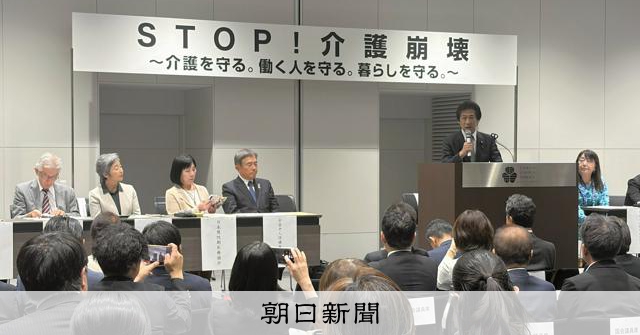
Care workers rally for 2027 fee revision amid "collapse" fears
On October 7, 2026, approximately 300 care service operators and workers gathered in Chiyoda, Tokyo, to demand sufficient increases in basic remuneration and wage improvements ahead of the 2027 care fee revision discussions. The Asahi Shimbun reports that participants warned that without securing national fiscal resources to maintain services amidst rising prices, "care collapse" would make Japan's growth impossible. This mobilization highlights the acute tension between the government's fiscal constraints and the sector's desperate need for labor retention.
Public acceptance of AI robots rises, foreign worker hesitation persists
A survey by NTT Data Management Institute, reported by the Niigata Nippo on October 7, 2026, found that public concern about receiving home care from foreign staff dropped from 44.7% to 35.1% when care facilities clearly demonstrated specific systems and efforts. The study indicates that Japanese language ability is the most valued trait, suggesting that integration frameworks significantly impact acceptance. Separately, a Ministry of Health, Labour and Welfare survey reported by Mainichi Shimbun (Sept 29, but relevant to current policy discourse) showed over 70% of respondents view the introduction of AI and robots in medical and care fields positively.

Pension Policy International releases new evidence on elderly perceptions of robots
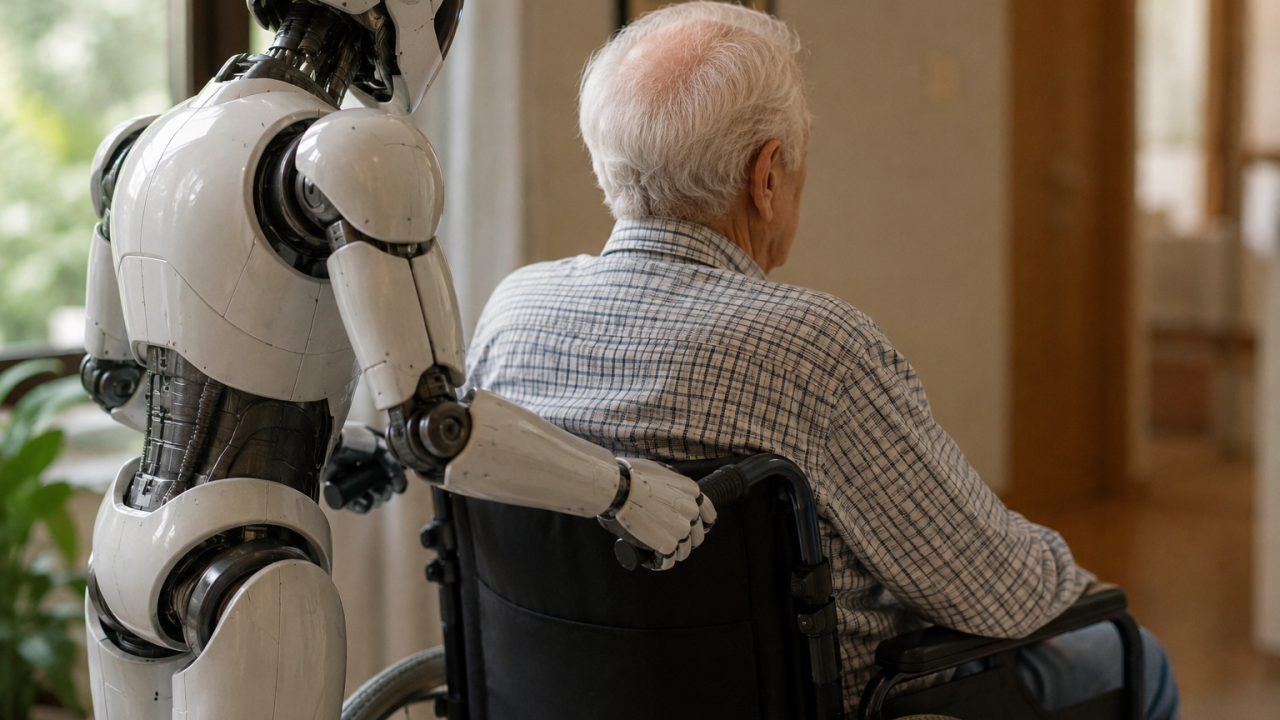
Pension Policy International published a new paper titled "Do the Japanese elderly robotic care?" around October 5, 2026. The research provides large-scale evidence on how older individuals perceive care-giving robots and ICT, addressing the gap between technology development and actual user acceptance. This study is critical as Japan faces a shortage of long-term care workers, forcing a reliance on technology that must be accepted by its primary users.
Local view
Local media and stakeholders are focusing heavily on the immediate political pressure surrounding the 2027 care fee revision. Asahi Shimbun highlights the emotional and economic urgency of the October 7 rally, where the phrase "care collapse" was used to frame the stakes for the broader economy. Meanwhile, Sankei Shimbun is promoting an upcoming lecture at "H.C.R. 2026" (Healthcare Robot Expo) on October 9 by a representative from Nakamuraya, which will discuss why care AI often goes unused and outline three conditions for successful adoption. This suggests a shift in industry focus from mere hardware deployment to workflow integration and user training.
Context & numbers
- Staffing Gap: The Ministry of Health, Labour and Welfare projects that approximately 2.4 million care workers will be needed in fiscal 2026, representing a shortage of about 250,000 against current levels. By fiscal 2040, the shortage is projected to reach 570,000.
- Foreign Workforce: Foreign care workers have surpassed 100,000, yet this influx has not closed the gap caused by the aging domestic population.
- Subsidies: Current subsidies for care robots offer up to ¥5.48 million for standalone robot applications and up to ¥10.48 million for package deals including ICT systems. Transfer assistance robots receive a higher cap of ¥1 million per unit compared to ¥300,000 for other devices.
On the radar
- H.C.R. 2026 Expo: The Healthcare Robot Expo is ongoing, with key sessions on AI adoption strategies scheduled for October 9, 2026.
- 2027 Fee Revision Talks: Discussions on the next major care fee revision are intensifying; watch for official MHLW announcements following the October 7 industry rallies.
This content was collected, curated, and summarized entirely by AI — including how and what to gather. It may contain inaccuracies. Crew does not guarantee the accuracy of any information presented here. Always verify facts on your own before acting on them. Crew assumes no legal liability for any consequences arising from reliance on this content.
Powered by
