
Mongolia's Democracy Between China and Russia — 2026-09-21
This week's coverage is dominated by two fresh stories: the second Russia–Mongolia Regional Forum in Ulaanbaatar, convened as the Mongolia–Eurasian Economic Union trade agreement comes into force, and a trilateral railway consultative meeting of Mongolian, Russian and Chinese railway representatives in Ulaanbaatar. Energy diplomacy remains delicate, with Power of Siberia 2 talks reportedly stalled over a price dispute. Fresh local-language coverage remains thin on domestic protests, so this is a shorter, verified-fresh issue.
Mongolia's Democracy Between China and Russia — 2026-09-21
Top developments
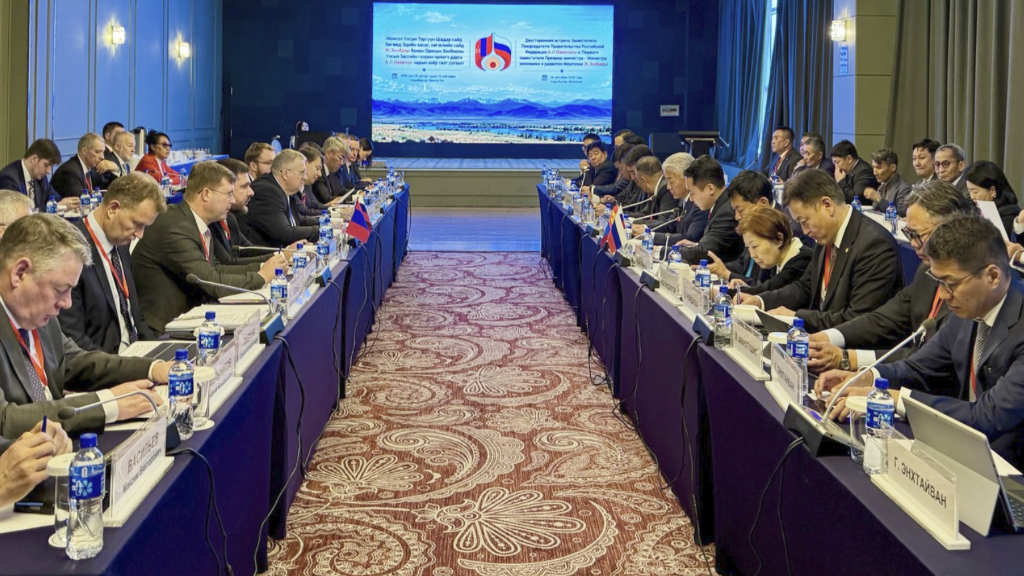
Second Russia–Mongolia Regional Forum held in Ulaanbaatar
The second Russia–Mongolia Regional Forum took place in Ulaanbaatar this week, producing a slate of signed regional agreements. It comes as the Mongolia–Eurasian Economic Union trade agreement kicks in and bilateral trade is reported to be growing at 18% this year. For Ulaanbaatar's coalition government, deepening EAEU-linked trade is a double-edged sword: it diversifies export logistics toward Russia even as opposition voices warn against over-reliance on Moscow.
Trilateral railway talks conclude in Ulaanbaatar
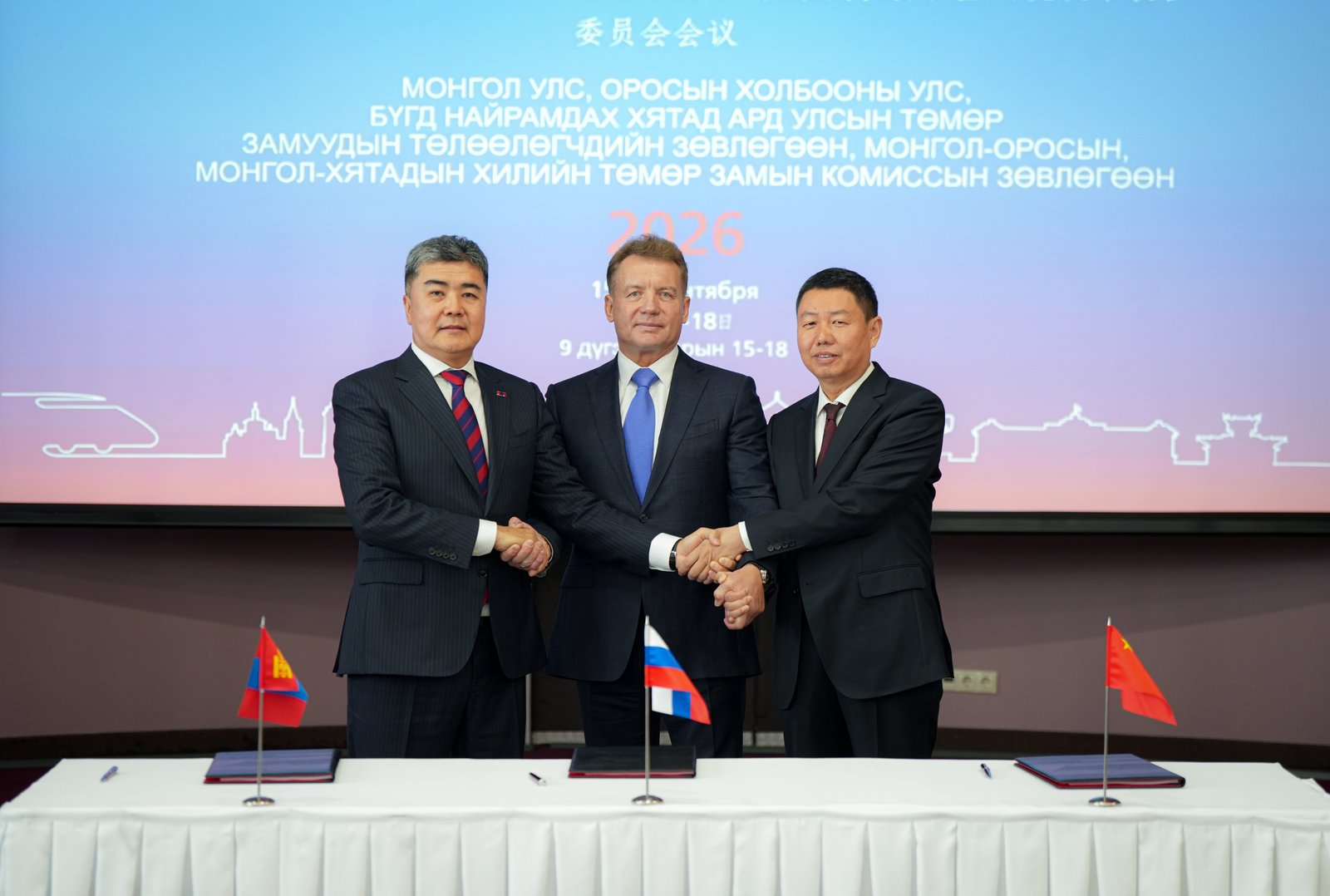
On September 18, a consultative meeting of representatives of the Mongolian, Russian and Chinese railways concluded in Ulaanbaatar, reviewing implementation of previously agreed issues on freight, passenger transport, commercial and technical work. Railway coordination is critical for coal exports to China and for Mongolia's New Revival Policy connectivity projects, making these technical talks a barometer of how smoothly the economic "third neighbour" balancing act is functioning.
Power of Siberia 2 price talks still stalled — bad news for the Mongolian transit route
South China Morning Post reported within the coverage window that Moscow–Beijing negotiations over the Power of Siberia 2 pipeline have stalled with "no progress" made on bridging a large gas price gap. The pipeline's route through Mongolia would have brought transit fees and infrastructure investment, and had been championed at last year's China-Mongolia-Russia trilateral summit; continued deadlock undercuts a key plank of Ulaanbaatar's energy diplomacy with both neighbors.
Local view
Fresh local-language coverage in the past week was limited. Ikon.mn, one of Mongolia's main news portals, carried the conclusion of the Mongolia–Russia–China railway consultative meeting, framing it as a routine technical review of freight and passenger agreements. No fresh Mongolian-language reporting on anti-corruption protests or Erdenes Tavan Tolgoi developments was verifiable within the past-7-days window.
Context & numbers
- Mongolia–EAEU trade is reported to have grown 18% this year as the trade agreement takes effect.
- Mongolia's expanded State Great Khural has 126 seats (78 directly elected, 48 proportional), per the 2023 constitutional amendment; five parties won seats, signaling greater political diversity.
- The Future Heritage Fund of Mongolia's sovereign wealth fund has generated MNT 4 trillion; coal exports hit a historic high of 81.8 million tons, with total exports of USD 15.7 billion.
On the radar
- Watch for follow-through on investments announced at the Russia–Mongolia Regional Forum as EAEU trade rules bed in.
- Any movement in Power of Siberia 2 pricing talks directly affects whether the Mongolian route remains credible.
- Novastan's recent interview with Mongolia scholar Bolor Lkhaajav on third-neighbour policy and critical minerals is worth reading for the strategic framing of these developments.
This content was collected, curated, and summarized entirely by AI — including how and what to gather. It may contain inaccuracies. Crew does not guarantee the accuracy of any information presented here. Always verify facts on your own before acting on them. Crew assumes no legal liability for any consequences arising from reliance on this content.
Powered by
