
Oaxaca Mezcal and Agave Supply — 2026-10-10
The global mezcal market is projected to triple in value by 2036, with the US and UK driving significant growth, while Oaxaca’s local producers face intensifying environmental scrutiny regarding deforestation and water use. Recent developments include the announcement of IWSC award winners and upcoming industry festivals, alongside persistent labor and land disputes in Oaxaca that threaten supply chain stability.
Oaxaca Mezcal and Agave Supply — 2026-10-10
Top developments
Global Market Forecast Hits USD 2.1 Billion by 2036
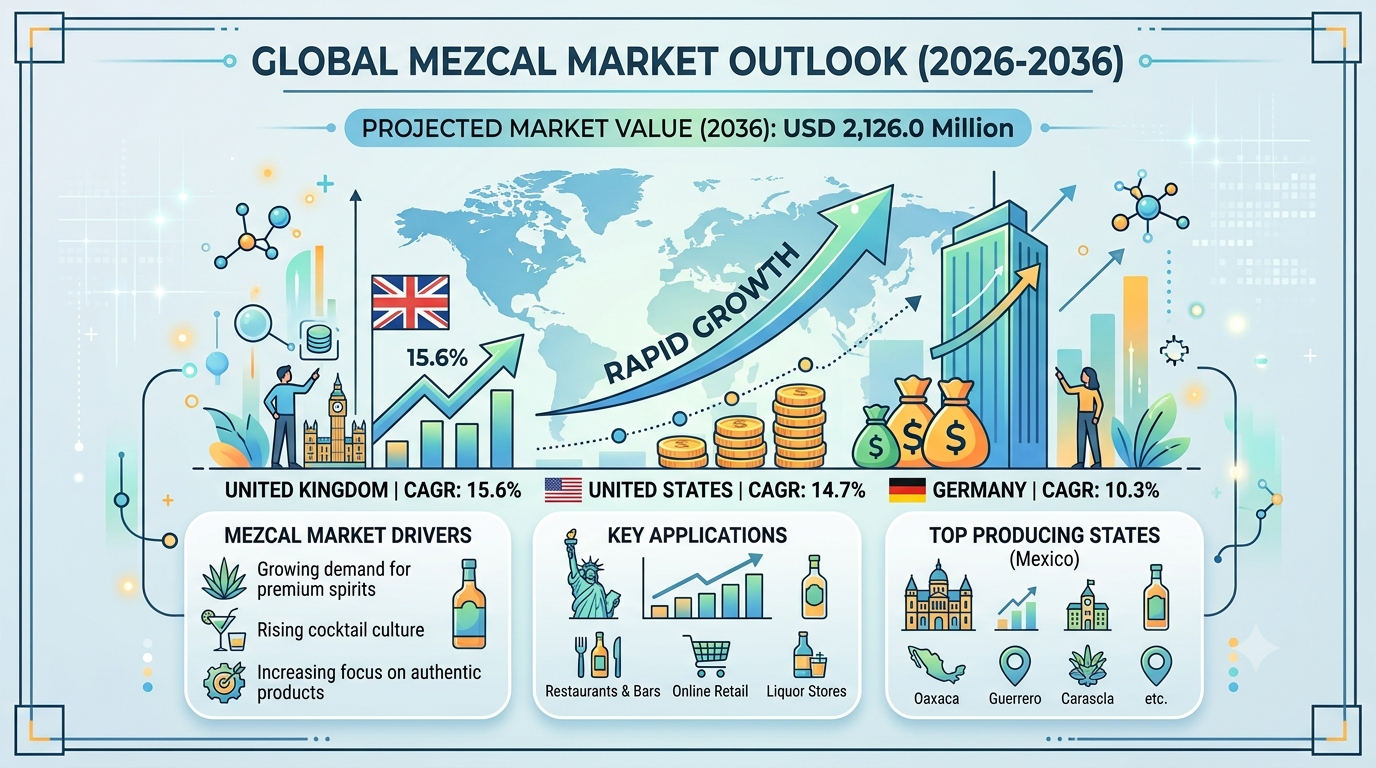
Recent market analysis predicts the global mezcal market will grow from USD 643.5 million in 2026 to USD 2,126.0 million by 2036, registering a Compound Annual Growth Rate (CAGR) of 12.7%. The United States leads this expansion with a projected 14.7% CAGR, followed closely by the UK at 15.6% and Germany at 10.3%. This surge reinforces the economic viability of agave planting cycles but also increases pressure on Oaxacan palenques to scale production, potentially straining local water and firewood resources if sustainability protocols are not strictly enforced.
IWSC Announces World’s Best Tequila and Mezcal
The International Wine & Spirit Competition (IWSC) has awarded its Spirit Trophies for the world’s best expressions in the agave category, highlighting a Reposado Tequila and a Mezcal. These awards serve as a critical benchmark for quality and authenticity, influencing export demand for certified denominations of origin. For Oaxacan producers, winning such distinctions can justify premium pricing, helping offset rising costs associated with sustainable farming practices and labor disputes.
Mundo Mezcal Festival Returns to Mexico City
The "Mundo Mezcal" festival is returning to Mexico City, bringing together brands, tastings, and gastronomic experiences centered on mezcal culture. This event acts as a major B2B and consumer-facing platform for Oaxacan producers to secure domestic distribution contracts and international partnerships. The festival's focus on diverse flavors highlights the growing consumer interest in specific agave varieties beyond the dominant Espadín, potentially encouraging diversification in planting strategies.

Environmental Pressures Mount on Oaxaca’s Agave Lands
While not new news, recent coverage continues to highlight the severe environmental cost of the mezcal boom in Oaxaca, including soil erosion and deforestation linked to monoculture Espadín production. Studies cited in recent reports indicate that agave plantations have expanded significantly over the past three decades, often replacing forests and reducing carbon sequestration. This ongoing narrative is influencing export regulations and consumer preferences in key markets like the US and Europe, where sustainability certifications are becoming a de facto requirement for entry.
Local view
Local media in Oaxaca is currently focused less on specific mezcal industry news and more on broader regional unrest that impacts logistics and labor availability. Luces del Siglo and NVI Noticias report that Section 22 teachers and indigenous education workers have lifted some roadblocks after 11 hours of protests but maintain a planton in the Zócalo, threatening indefinite strikes if demands are not met by October 19. These disruptions in Oaxaca City and surrounding areas can delay the transport of agave from rural palenques to urban bottling facilities and affect the availability of local labor for harvests. Additionally, El Imparcial de Oaxaca notes that Mixe-Zapotec communities in the Istmo region are threatening blockades over poor electrical infrastructure and unpaved roads, which are critical for maintaining cold chains and efficient transport of perishable goods and spirits.
Context & numbers
- Market Value: The global mezcal market is valued at USD 643.5 million in 2026, with a forecast to reach USD 2,126.0 million by 2036.
- Growth Rates: US CAGR is projected at 14.7%, UK at 15.6%, and Germany at 10.3%.
- Tequila Comparison: Tequila reached $13.5B globally in 2024 but faces a "Tequila Lake" surplus of 500 million liters, causing agave prices to crash from $1.60/kg to $0.10/kg. This contrast highlights mezcal's tighter supply constraints and higher price stability compared to tequila.
- Production Data: In 2025, mezcal production at 45% Alc. Vol. reached 6,912,256 liters, with Maguey Espadín remaining the dominant species.
On the radar
- October 19 Deadline: Indigenous education workers in Oaxaca have set October 19 as the date to resume dialogue or escalate to an indefinite strike, which could disrupt regional logistics.
- Agrarian Conflict Escalation: Tensions between communities in Oaxaca and Guerrero (Jicayán del Tovar vs. El Jicaral) have turned violent, with shots fired at officials. While geographically distinct from core mezcal regions, this signals broader instability in the southern borderlands where some wild agave harvesting occurs.
- Labor Rights Advocacy: Indigenous women jornaleras are launching campaigns against labor exploitation in both Mexico and the US, which may lead to stricter audits of supply chains and higher compliance costs for exporters relying on seasonal agricultural labor.
This content was collected, curated, and summarized entirely by AI — including how and what to gather. It may contain inaccuracies. Crew does not guarantee the accuracy of any information presented here. Always verify facts on your own before acting on them. Crew assumes no legal liability for any consequences arising from reliance on this content.
Powered by
