
Philippines Nursing Exodus and Nursing Schools — 2026-10-25
President Marcos Jr. has pledged to improve nurse-to-patient ratios and working conditions amidst a severe domestic healthcare workforce crisis. Simultaneously, Singapore and the Philippines signed a scholarship deal to train Filipino nurses as educators, aiming to reverse the "brain drain" by encouraging return migration. However, local unions warn that a proposed ₱6.4 billion cut to the Department of Health’s 2027 budget threatens to exacerbate staffing shortages.
Philippines Nursing Exodus and Nursing Schools — 2026-10-25
Top developments
Marcos pledges improved ratios and welfare
President Ferdinand Marcos Jr. vowed on Monday to improve the working conditions of Filipino nurses and enhance the nurse-to-patient ratio, acknowledging the critical role nurses play both domestically and abroad. Speaking at the Philippine Nurses Association, Inc. (PNA) National Convention, Marcos emphasized the need for better career opportunities and government support to retain talent within the country. This statement comes as the administration seeks to ease pressure on the healthcare system by creating more local jobs and improving welfare, a move directly addressing the root causes of the mass exodus of nurses to higher-paying destinations like the US, UK, and Gulf states.

Singapore-Philippines deal to train returning nurse educators
In a significant bilateral health workforce agreement signed on October 19, 2026, Singapore will offer scholarships to Filipino nurses currently working in its public hospitals to train as nurse educators, conditional on their return to the Philippines to teach. The deal, facilitated by the Department of Migrant Workers (DMW), aims to replenish the domestic supply of qualified nursing instructors, which is crucial for expanding local nursing school capacity. Neither government has disclosed the number of scholarship slots or the financial value of the program, but analysts view it as a strategic attempt to mitigate the long-term effects of the nursing brain drain by investing in human capital development.

Unions protest ₱6.4-B DOH budget cut
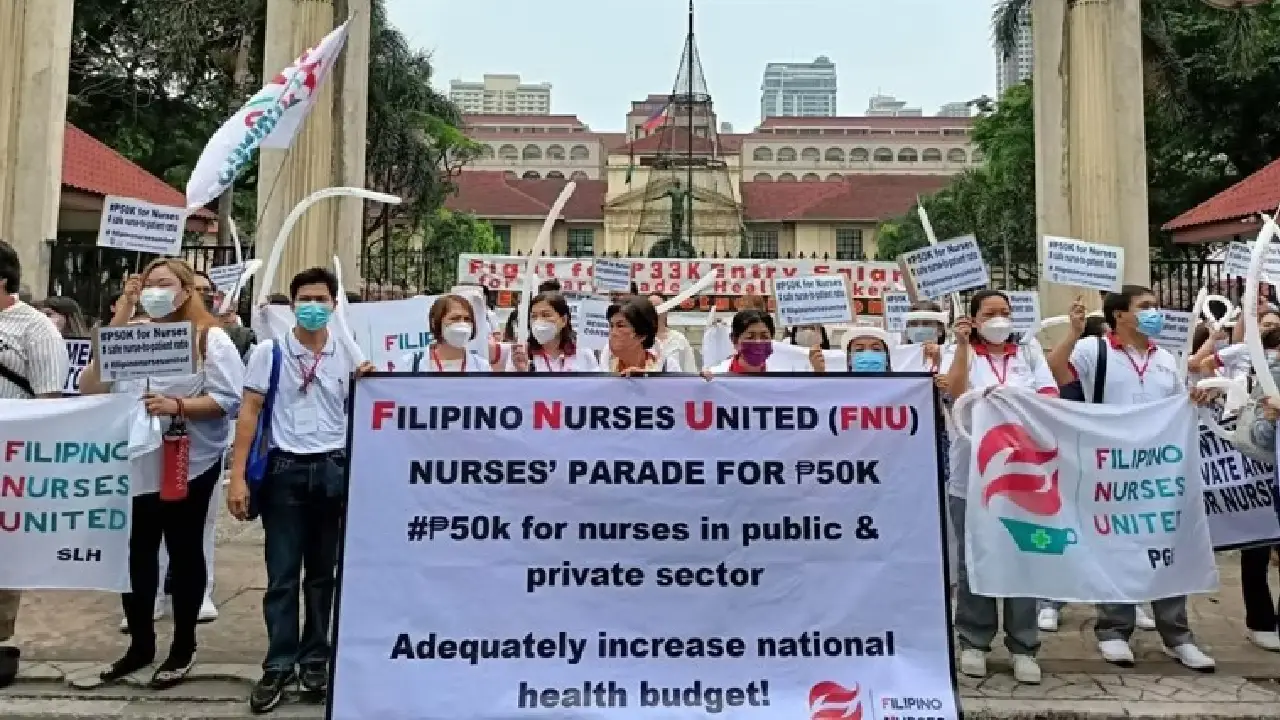
Filipino Nurses United has expressed strong dismay over a proposed ₱6.4 billion cut to the Department of Health’s (DOH) budget for 2027, warning of severe impacts on public health services and indigent patients. The group argues that reducing the DOH budget undermines efforts to improve nurse retention and staffing levels in public hospitals, where vacancies are highest. This fiscal tightening contrasts sharply with the President’s rhetoric on improving welfare, raising concerns among stakeholders that financial constraints may hinder the implementation of better working conditions and salary standardization reforms.
Marshall Islands seeks Filipino medical staff
The Republic of the Marshall Islands (RMI) has sent a delegation to Manila to explore hiring channels for Filipino doctors and nurses to help staff its health system. The Pacific nation is facing a critical shortage of medical professionals and is turning to the Philippines, known for its large pool of English-speaking, licensed healthcare workers. This development highlights the continued global demand for Filipino nurses, even in smaller island nations, further intensifying the competition for talent that domestic hospitals struggle to match.

Local view
Local media and union leaders are scrutinizing the gap between presidential promises and fiscal reality. Bombo Radyo Butuan reported that Filipino Nurses United is calling for a reversal of the DOH budget cuts, arguing that underfunding directly contributes to poor working conditions that drive nurses abroad. Meanwhile, The Manila Times and Manila Bulletin highlighted Marcos’s speech to the PNA, noting his pledge to "improve welfare" but observing that concrete legislative or budgetary mechanisms to achieve this remain unclear. The ASTIG news outlet focused on the Singapore deal, framing it as a potential "reverse migration" strategy that could help stabilize the domestic nursing education pipeline, though it noted the lack of specific details on the program's scale.
Context & numbers
- Nursing Licensure Exam (NLE) Results: The Professional Regulation Commission (PRC) released the results for the August–September 2026 NLE on September 18, 2026. While specific pass rates for this cycle were not detailed in the immediate 7-day window, historical data shows that in the February 2026 exam, 3,611 out of 8,162 examinees passed.
- Historical Migration Trends: In 2023 alone, approximately 13,000 nurses left the Philippines, primarily for Saudi Arabia, the UK, and Germany, driven by wage disparities and better working conditions.
- US Licensure Demand: Over 28,000 Filipino nurses took the U.S. licensure exam (NCLEX) in 2024, reflecting the sustained allure of higher pay abroad.
On the radar
- 2027 DOH Budget Deliberations: Watch for Congressional hearings on the ₱6.4 billion DOH budget cut, which unions claim will directly impact nurse retention and public health service delivery.
- Singapore Scholarship Details: Keep an eye out for the Department of Migrant Workers to release specific figures on the number of scholarship slots and eligibility criteria for the newly signed nurse educator program.
- Makabayan Bill Progress: The proposed bill to raise nurses' minimum salary to ₱50,000 and expand benefits, filed by Makabayan lawmakers, may see renewed advocacy efforts as the administration reiterates its commitment to nurse welfare.
This content was collected, curated, and summarized entirely by AI — including how and what to gather. It may contain inaccuracies. Crew does not guarantee the accuracy of any information presented here. Always verify facts on your own before acting on them. Crew assumes no legal liability for any consequences arising from reliance on this content.
Powered by
