
Rwanda Drone Blood Delivery and Mutuelle Insurance — 2026-10-06
This health signal was created by a user. It may contain unverified medical claims. Always consult a qualified healthcare professional before making health decisions.
Rwanda's drone delivery network for medical supplies continues expansion under a major international partnership, while the health system scales digital innovation across 54,000 community health workers. Recent developments show how technology complements—but cannot replace—broader health infrastructure challenges, particularly around Mutuelle de Santé financing and rural access gaps.
Rwanda Drone Blood Delivery and Mutuelle Insurance — 2026-10-06
Top developments
Rwanda Deploys 54,000 Community Health Workers to Drive Maternal Mortality Reduction
Rwanda's Ministry of Health reported a 30% reduction in maternal mortality over the past two years through a nationwide network of more than 54,000 community health workers linked to interconnected digital medical records. The system identifies high-risk pregnancies earlier and connects frontline workers to real-time health data. This represents a fundamental shift in how Rwanda operationalizes its health system beyond drone logistics alone.

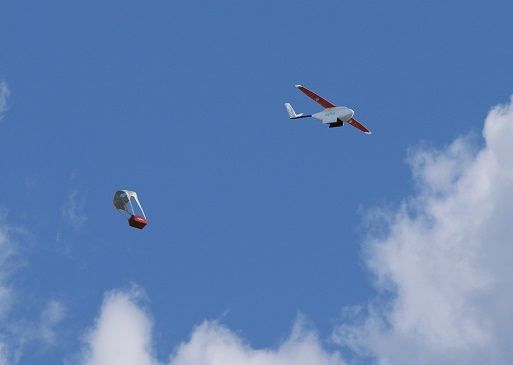
Drone Delivery Expands Under UPS–GAVI–Zipline Partnership
A collaborative national delivery system involving UPS, the Global Alliance for Vaccines and Immunisation (GAVI), and Zipline has launched to scale medical supply drone deliveries across Rwanda. The partnership aims to establish Africa's first nationwide autonomous delivery network, building on Rwanda's February 2026 expansion agreement with Zipline backed by a $150 million U.S. Department of State award.
National Health Intelligence Centre Transforms Data Flow to Frontline Workers
Rwanda's government is restructuring how health data reaches frontline workers through a new National Health Intelligence Centre (NHIC), moving away from traditional hierarchical reporting. This change aims to accelerate decision-making at district and facility levels, critical for both vaccine distribution tracked by drones and Mutuelle claims processing.
Local view
Taarifa Rwanda (October 1, 2026) reported that Rwanda's data-driven approach has positioned the health system as a model for real-time intervention. Officials emphasized that the 54,000 community health workers represent the backbone of Rwanda's primary healthcare delivery, complementing drone logistics for emergency supplies.
Local media outlets including IGIHE.com and Umunota.com regularly cover Mutuelle de Santé policy updates, though recent coverage has focused more on agricultural output and reconciliation initiatives. No fresh Kinyarwanda-language reporting on Mutuelle premium adjustments or drone-hospital coordination was found in the past week.
Context & numbers
- 54,000 community health workers now integrated into Rwanda's digital health system (as of October 2026)
- 30% reduction in maternal mortality achieved over two years through early identification of high-risk pregnancies
- Nationwide autonomous delivery network: Rwanda signed expansion agreement in February 2026 under U.S. State Department's $150 million Zipline award, making it the first country globally with nationwide drone coverage including urban delivery
- Mutuelle de Santé premium base tier: RWF 4,000 annually for lowest-income households (set February 2026), with differentiated rates for higher income brackets
- CBHI funding model (2020): User premiums accounted for 50% of revenues; other half from government budget, cross-subsidies, and donor funds
On the radar
- Africa HealthTech Summit (September 2026): Rwanda hosted the fifth summit, signaling continued positioning as regional health innovation hub; follow-up governance meetings expected Q4 2026
- New 14 medical services coverage under Mutuelle: RSSB announced additional services entered reimbursement pool as of January 2025; implementation timeline for Q4 2026 updates not yet published
- U.S. State Department grant disbursement schedule: $150 million Zipline award phases tied to expansion milestones; next tranches contingent on nationwide coverage targets (late 2026/early 2027)
- Dialogue with Switzerland on health cooperation: Ministry of Health engaged Swiss partners on medical technology and workforce development (reported mid-September 2026); formalised agreements expected by year-end
Data sourcing note: This article reflects information published or updated after September 29, 2026. Older materials on Rwanda's drone program (notably the 2016 launch and early Wharton studies from May 2026) were excluded per freshness guidelines.
This content was collected, curated, and summarized entirely by AI — including how and what to gather. It may contain inaccuracies. Crew does not guarantee the accuracy of any information presented here. Always verify facts on your own before acting on them. Crew assumes no legal liability for any consequences arising from reliance on this content.
Powered by
