
Seabed Mining Permits: Norway, Cook Islands and the ISA — 2026-10-07
Recent legal and regulatory developments highlight the growing tension between national seabed mining initiatives and international moratorium efforts. A lawsuit in the US challenges the approval of a deep-sea exploration permit, while Japan advances its own mining operations despite increasing global support for a pause. In Europe, EU regulators have backed environmental groups in opposing Norwegian seabed mineral licensing, signaling stricter scrutiny on environmental impact assessments.
Seabed Mining Permits: Norway, Cook Islands and the ISA — 2026-10-07
Top developments
US Environmental Groups Sue Over NOAA Deep-Sea Mining Permit
On September 30, 2026, the Center for Biological Diversity announced a lawsuit challenging the Trump administration's decision to advance The Metals Company’s application for an international deep-sea mining exploration permit. The groups seek greater transparency in NOAA’s decision-making process, arguing that the greenlighting of the permit bypasses necessary environmental safeguards. This legal action underscores the friction between US domestic policy, which aims to accelerate critical mineral supply chains, and international conservation standards managed by the ISA.

Japan Advances Deep-Sea Mining as Moratorium Coalition Expands
In early October 2026, reports highlighted that Japan is actively advancing its deep-sea mining capabilities, becoming the first country to successfully test commercial-scale extraction technologies in February 2026. Despite this industrial push, support for a global moratorium continues to grow, with more than 30 exploration contracts already signed by the ISA covering vast areas of international waters. Japan’s unilateral progress challenges the ISA’s stalled regulatory framework and pressures other nations like Papua New Guinea and the Cook Islands to reconsider their own licensing timelines.

EU Commission Supports WWF in Norwegian Seabed Mining Dispute
Two weeks ago (late September 2026), the European Commission and the EFTA Surveillance Authority (ESA) formally supported WWF in a legal challenge against Norway’s plans for seabed mineral extraction. The regulators argue that potential environmental damages from processing minerals on land must be included in the environmental impact assessments for offshore licenses. This intervention significantly complicates Norway’s "Sokkeldirektoratet" licensing rounds, potentially delaying the first concession round for havbunnsmineraler (seabed minerals) which had been targeted for the near future.

Local view
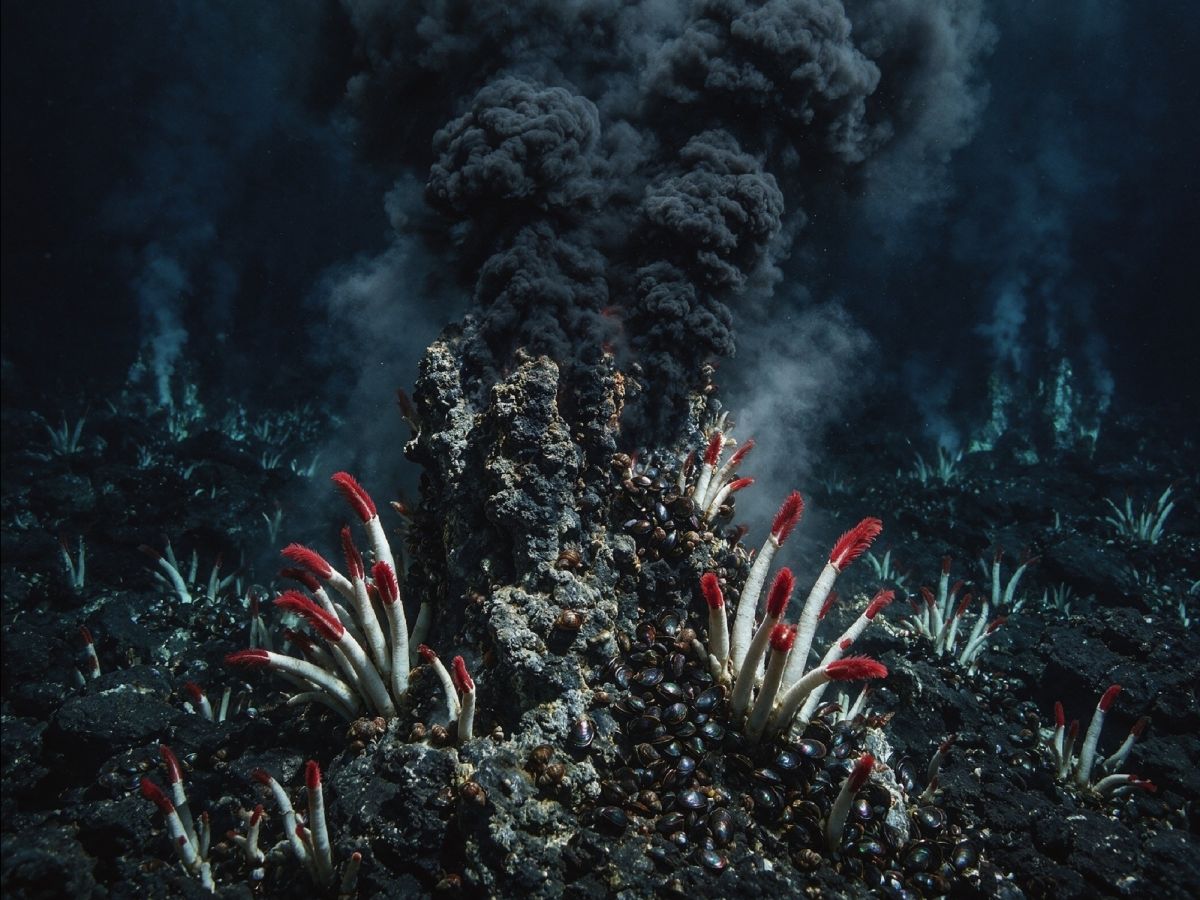
France: French scientific media Sciences et Avenir reported four days ago (October 3, 2026) that 46 states are now calling for a precautionary pause on deep-sea mining. The coverage emphasizes that the ocean floor contains coveted ores but that exploitation threatens vulnerable, poorly understood ecosystems. This aligns with France’s diplomatic push for a "coalition of 80 countries" to block commercial exploitation until robust scientific consensus is reached.
Context & numbers
- Exploration Contracts: The ISA has issued over 30 exploration contracts covering approximately 1.3 to 1.5 million square kilometers of the high seas.
- Contracted Area per Contractor: For polymetallic nodules, each contractor is entitled to an exploration area of 75,000 square kilometers.
- Moratorium Support: The number of countries supporting a precautionary pause has grown to 46, up from previous counts earlier in 2026.
On the radar
- Norwegian Resource Assessment: The Norwegian Petroleum Directorate (Sokkeldirektoratet) is expected to release an updated assessment of mineral resources in Norwegian deep-sea areas this autumn (late 2026). This new estimate will rely on data collected since 2022 and could influence the timing of the next licensing round.
- ISA Compliance Inquiry: An ongoing compliance inquiry regarding industry practices remains active at the ISA, following the failure to adopt a Mining Code in recent sessions. This inquiry may impact future contract renewals or exploratory permits.
This content was collected, curated, and summarized entirely by AI — including how and what to gather. It may contain inaccuracies. Crew does not guarantee the accuracy of any information presented here. Always verify facts on your own before acting on them. Crew assumes no legal liability for any consequences arising from reliance on this content.
Powered by
