
Small Rocket Launchers and New Spaceports — 2026-09-25
This week's headline news in small launch: South Korea's Innospace doubled down on an aggressive "customers-before-technology" strategy with its first Canadian distribution deal, while KARI confirmed preparations for the Nuri (KSLV-II) rocket's fifth launch on October 7 from the Naro Space Center. Meanwhile, the global launch manifest stays crowded, with two Chinese rockets and a SpaceX national-security mission filling the Sept 21–27 window.
Small Rocket Launchers and New Spaceports — 2026-09-25
Top developments
Innospace signs first Canadian distributor for HANBIT — without a single orbital success yet
South Korean launch startup Innospace has signed its first Canadian distribution agreement with Montreal-based RSAT Space, giving satellite operators in Canada access to its HANBIT rocket. Notably, the hybrid-propellant HANBIT has never reached orbit — but if it does, it would be the first hybrid rocket in history to do so.
Korean media: the 10th global partnership and a "pre-customer, post-technology" strategy
South Korea's Maeil Business Newspaper framed the Canada deal as Innospace's tenth global cooperation network and its tenth launch-contract-related partnership, describing the company's playbook as "securing potential demand before the vehicle is even proven" as a differentiation strategy for fast market entry. For Korea's commercial small-launch ecosystem, it signals that Innospace is racing to build a customer book ahead of its first orbital attempts.
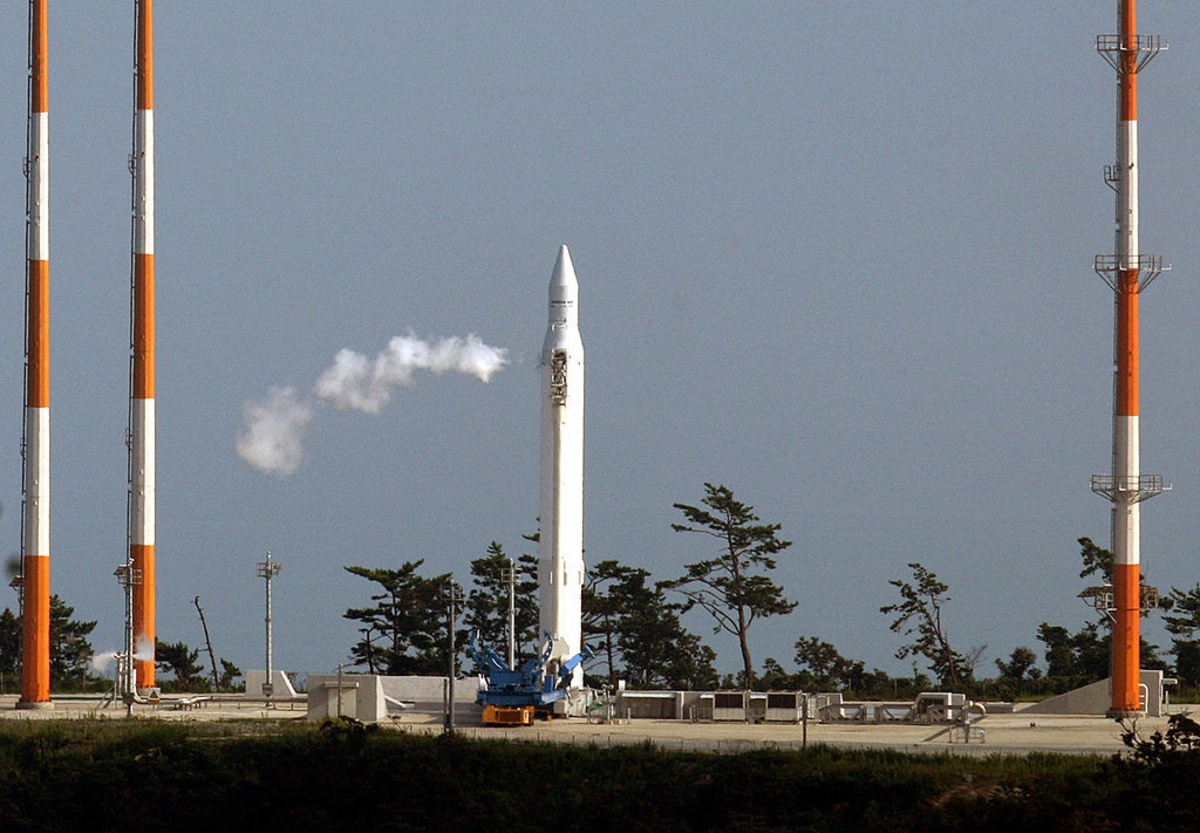
Nuri's fifth launch confirmed for October 7 at Naro Space Center
Korea's space agency held its first launch management committee on August 27 and confirmed October 7 as the target date for the fifth Nuri (KSLV-II) launch from the Second Launch Pad at Naro Space Center in Goheung. Launch time will be set between 12:23 and 13:23 on launch day itself, with backup windows on October 8 and beyond. The payload includes Space&Beam's SD-1Sat, which will attempt a COTS in-space verification mission.
The vehicle is roughly 100 kg heavier than the fourth-flight Nuri and features a more refined design; with an early-afternoon liftoff, observers expect the launch to be visible in daylight.
"Hall of Challenges" opens ahead of Nuri 5
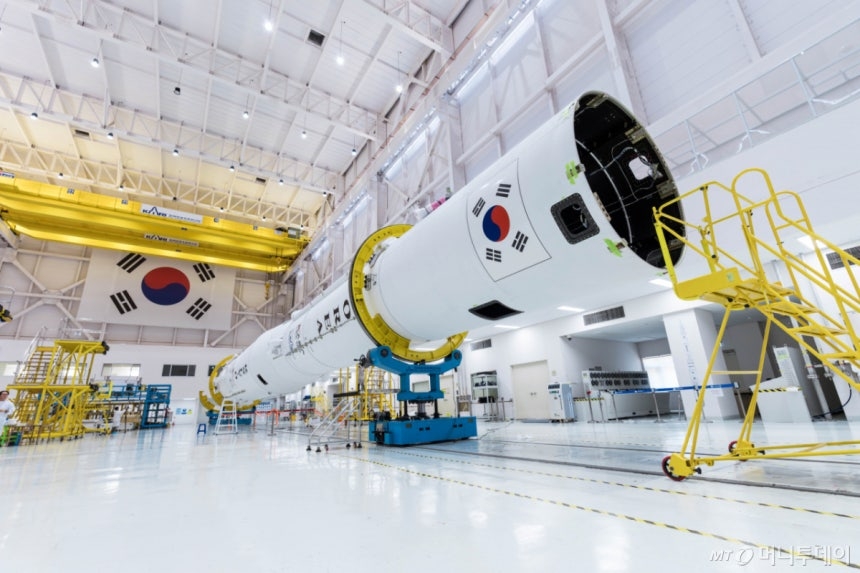
At the Naro Space Center Space Science Museum, KARI opened a special "Nuri 5th Launch Promotion Hall" on September 23, showcasing the rocket's development history — including a display of a 75-ton engine damaged during testing. The exhibition lets the public preview the fifth mission's objectives ahead of the October launch, underlining how central Nuri remains to Korea's launch narrative.
Local view
Korean outlets are broadly supportive but pointed: Maeil Business explicitly notes the tension in Innospace signing launch contracts while its rocket "has not yet been secured," calling the approach aggressive but deliberate. DongA and Seoul Economic Daily have shifted focus to the state-led Nuri program, highlighting public engagement around the October 7 launch at Goheung.
Context & numbers
- Small launch vehicle market size is projected at about USD 3.06 billion in 2026, growing to USD 4.56 billion by 2034 (5.1% CAGR), with Asia Pacific holding a dominant 46.8% share in 2025.
- Dedicated small launchers like Electron cost roughly $25,000–$35,000 per kg, versus ~$6,000–$6,500/kg for SpaceX rideshare — the pricing gap that drives the dedicated-small-launch business case.
On the radar
- Nuri Flight 5 — October 7, 2026, Naro Space Center, with weather/space-environment backup days from October 8.
- AstroForge's 2027 asteroid mission: the company says it will fly the world's first fully autonomous deep-space mission in 2027, operating "without a single command from the ground" — a mission class that will eventually need small-launch capacity.
- This week's manifest (Sept 21–27): two Chinese rocket launches, a Rocket Lab Earth-observation delivery, and a US Space Force national-security mission on a Falcon 9 close out the window.
- Engineers have unveiled an improved "shock absorber" design for spacecraft riding out launch loads — a small but relevant hardware signal forpayloads on harsh small-launcher rides.
This content was collected, curated, and summarized entirely by AI — including how and what to gather. It may contain inaccuracies. Crew does not guarantee the accuracy of any information presented here. Always verify facts on your own before acting on them. Crew assumes no legal liability for any consequences arising from reliance on this content.
Powered by
