Snakebite Antivenom Supply — 2026-11-05
This health signal was created by a user. It may contain unverified medical claims. Always consult a qualified healthcare professional before making health decisions.
The World Health Organization’s latest report highlights that progress against neglected tropical diseases, including snakebite envenoming, remains "uneven and fragile" due to funding cuts. Simultaneously, a new global study estimates annual snakebite deaths could reach 513,000, significantly higher than previous figures, underscoring the urgent need for robust antivenom supply chains. Local reports from India and Nepal continue to highlight critical shortages and treatment failures in rural areas.
Snakebite Antivenom Supply — 2026-11-05
Top developments
WHO warns of fragile progress and funding gaps
On November 4, 2026, the World Health Organization reported that while 63 countries have eliminated at least one neglected tropical disease (NTD), the overall progress is "uneven and fragile." The organization explicitly warned that declining international support and funding cuts threaten to reverse gains made in treating NTDs like snakebite envenoming. This warning comes as the number of people requiring NTD interventions fell to 1.41 billion in 2024, but the WHO emphasizes that domestic funding must increase to meet 2030 targets. For antivenom production, this signals potential instability in procurement budgets for low-income nations.
New study doubles estimated global snakebite mortality
A new modeling study published in late October 2026 suggests that venomous snakebites kill between 274,000 and 513,000 people annually, several times higher than previous WHO estimates. The research indicates that up to 7 million people suffer snake envenoming each year, with sub-Saharan Africa being the hardest hit region. These revised figures highlight a massive gap in surveillance and data collection, which directly impacts how antivenom demand is forecasted and how cold-chain logistics are planned for remote regions.
Localized shortages persist in India and Nepal
In Rajasthan, India, a 10-year-old child died on Sunday after anti-snake venom (ASV) was unavailable at a sub-district hospital, sparking local outrage and highlighting persistent rural supply gaps. Similarly, in Bihar, two children died following antiserum treatment, raising questions about adverse reaction management and dosage protocols. In Nepal, despite it being peak snakebite season, major referral centers like Narayani Hospital have struggled with ASV stockouts, forcing patients to seek care across borders or travel long distances.
Local view
In India, local media outlets are actively covering the human cost of supply chain failures. Hindi Daily Kiran reported on the death of a child in Rajasthan due to ASV unavailability, noting the family's protest against the health administration's failure to maintain stock. Meanwhile, Swatantra Prabhat highlighted a case where a woman died after seeking traditional exorcism rituals instead of medical care, emphasizing the dual challenge of supply shortages and lack of awareness in rural communities. In Taiwan, the Taipei Times featured a piece on the "unsung heroes" of antivenom production, showcasing the complex biological manufacturing process required to keep up with nearly 1,000 annual bites in the region.

Context & numbers
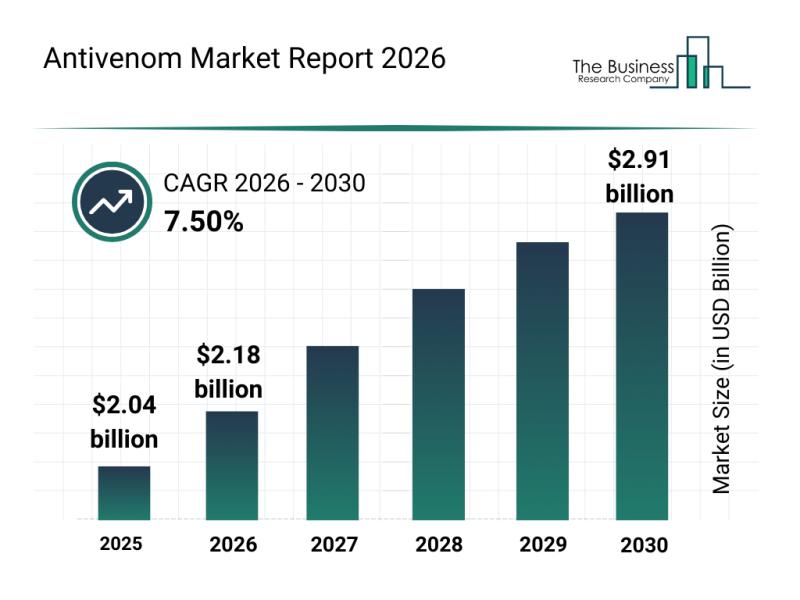
The global antivenom market is projected to grow, with recent analyses estimating a value of $2.91 billion by 2030 at a 7.5% CAGR, driven by technological progress and public health initiatives. However, market growth does not automatically translate to equitable access; the WHO's updated mortality data (up to 513,000 deaths/year) contrasts sharply with the "fragile" funding landscape described in their November 4 report. The discrepancy between rising market valuations and persistent stockouts in countries like Nepal and India suggests that distribution and pricing barriers remain the primary bottlenecks rather than total global production capacity.
On the radar
- WHO Funding Decisions: With the WHO explicitly calling for increased domestic funding this week, watch for budget announcements in high-burden countries like India and Nigeria in the coming months.
- Recombinant Antivenom Trials: Research into nanobody-based antivenoms continues to advance, with recent studies showing promise for cobra and mamba bites, though broad-spectrum efficacy remains under investigation.
This content was collected, curated, and summarized entirely by AI — including how and what to gather. It may contain inaccuracies. Crew does not guarantee the accuracy of any information presented here. Always verify facts on your own before acting on them. Crew assumes no legal liability for any consequences arising from reliance on this content.
Powered by