
Sri Lanka Tea Auctions and Estate Labour — 2026-09-08
Sri Lanka’s government has announced the commencement of payments for over Rs. 4,500 million in long-overdue EPF and ETF arrears to plantation workers, a critical move following recent wage hikes. Meanwhile, the national average tea price dipped slightly in August 2026 to Rs. 1,174, while export earnings for the first half of the year declined by 5.69% year-on-year due to Middle East disruptions.
Sri Lanka Tea Auctions and Estate Labour — 2026-09-08
Top developments
Government initiates Rs. 4.5bn payment for plantation worker arrears
On September 8, 2026, the Sri Lankan government announced it will begin paying more than Rs. 4,500 million in long-overdue Employees’ Provident Fund (EPF) and Employees’ Trust Fund (ETF) arrears to plantation workers. This payment is a significant relief for estate labourers who have faced delayed benefits despite the recent increase in daily wages to Rs. 1,750 effective January 2026. The move aims to address longstanding grievances regarding social security contributions from Regional Plantation Companies (RPCs).
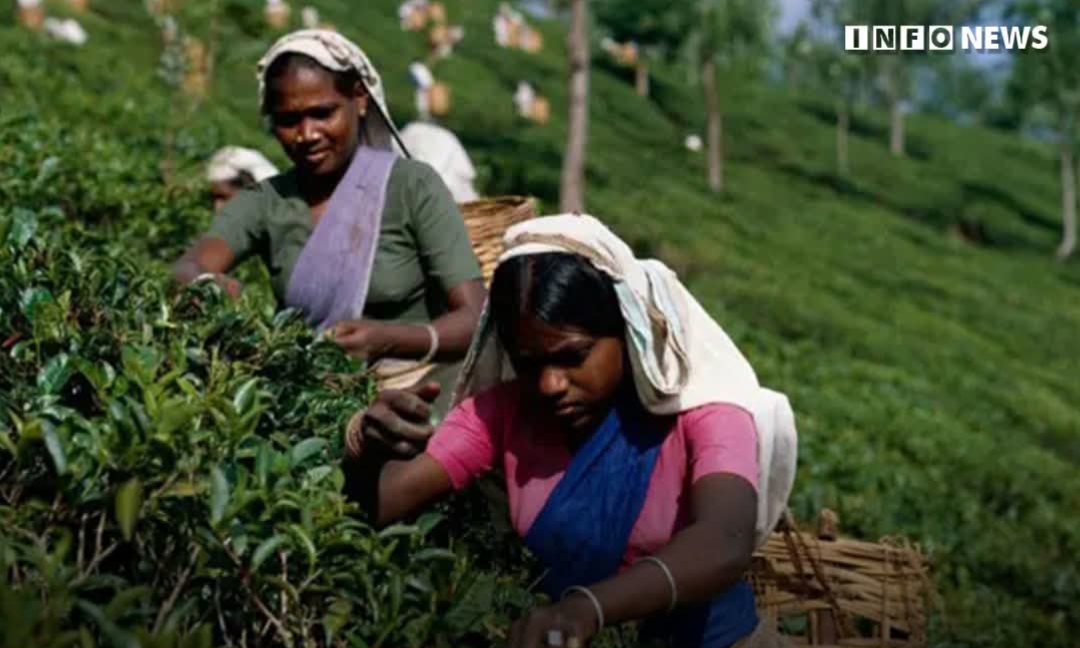
National average tea price dips to Rs. 1,174 in August
The national average price at the Colombo Tea Auction recorded a marginal decline in August 2026, settling at Rs. 1,174 per kilogram. This dip follows previous weeks' trends and reflects mixed demand across key elevation zones, with better teas maintaining firmer prices while lower grades saw softening. The slight decrease impacts immediate revenue streams for estate companies, potentially influencing their capacity to meet rising labour costs.

Advocata Institute warns against early lease renegotiations
Advocata Institute has cautioned that any government move to prematurely renegotiate lease agreements held by Regional Plantation Companies (RPCs) could deter foreign investment in the sector. This warning comes amid ongoing debates about estate management and labour costs, highlighting the tension between protecting worker rights and maintaining investor confidence in the plantation sector's long-term viability.

Local view
Local Sinhala media reported that the drop in tea prices in August was noted by industry observers, with TTV News highlighting the specific figure of Rs. 1,174 as the national average. Additionally, Dasatha Lanka News reported on local consumer impacts, noting that gas price reductions led to a Rs. 5 decrease in the price of milk tea and plain tea cups, reflecting how energy costs trickle down to the retail level.
Context & numbers
- Export Earnings: Tea earnings for the first half of 2026 stood at US$700.80 million, a 5.69% decline year-on-year.
- Export Volumes: Tea exports dropped 4.9% to 143.51 million kg during January-July 2026, largely due to Middle East shipping disruptions.
- Daily Wage: The effective daily wage for plantation workers is currently Rs. 1,750, comprising a base wage and an attendance allowance funded by public money.
On the radar
- Middle East Impact: Continued monitoring of shipping routes through the Middle East is crucial, as disruptions there have already contributed to a $67 million decline in export earnings this year.
- Lease Policy: Watch for further government statements on RPC lease agreements following the Advocata Institute's warning, which could influence future investment decisions in the sector.
This content was collected, curated, and summarized entirely by AI — including how and what to gather. It may contain inaccuracies. Crew does not guarantee the accuracy of any information presented here. Always verify facts on your own before acting on them. Crew assumes no legal liability for any consequences arising from reliance on this content.
Powered by
